
This is an old revision of the document!
Table of Contents
Naked Action 5 DIY Manual
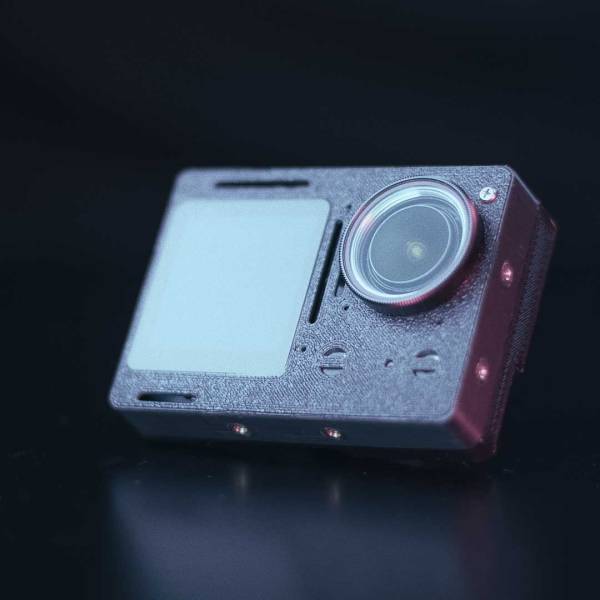
General Information
This manual shows you how to build a naked DJI Action 5 Pro camera with the FPVFrame.ch DIY Kit. This manual is still a work in progress. The modding of that camera is for advanced users only and you are risking breaking your camera. Please read all the steps carefully and take your time to increase you chance of sucess. Also make sure you have all the required tools before you start the build. Happy building and if you are in doubt don't hesitate to contact support.
Content of Shipment
- 1x BEC
- 1x FPC
- 1x 5v Fan
- 1x Front Case
- 1x Back Case
- 1x Alu ND Filter Mount
- 1x Alu Mounting Bracket
- 1x 3D Printed Slide-in TPU Mount
- 1x M1.6x6mm screw
- 4x M1.6x8mm screw
- 1x M1.6x12mm screw
- 1x M1.6x16mm screw
- 2x M2*5mm screw
- 3x M2x6mm screw
- 1x M1.6 nut
- 3x M2x4mm insert
- 1x M2x3mm insert
- 1x 3D Printed WiFi Mount
- 1x Ribbon Cable for BEC
Tools needed
- Soldering Iron
- Solder
- Solder mask
- PH0 Screwdriver
- M2 Screwdriver
- Cutter Knife
- Hobby Knife
- Pliers
- Heavy duty side cutters
- Tweezers
- HotAir Gun
- Plastic Spudge
- UV flashlight
- Kapton tape
- Thin double sided tape
- AWG 28 or 30 silicone wire in the colors red, black and white
Safety information
A lot of steps require cutting with knifes. Please be careful and wear eye protection. Some steps require soldering. Make sure to use a ventilation setup or solder in a well ventilated area. For gluing in the front display you have to use some 2k epoxy please regard the safety instructions of the glue you are using. Same for the solder mask required in one step.
Preparation
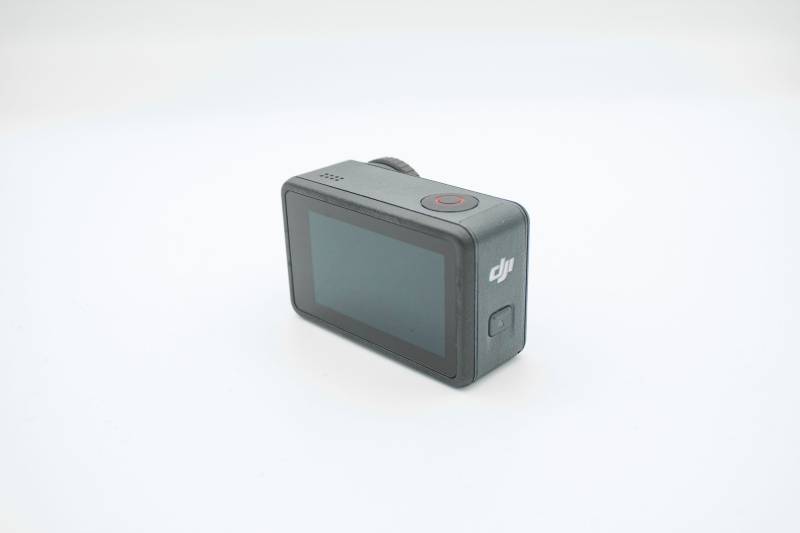
- Start by adding the battery to the camera and powering it on.
- Download the latest app onto your device and connect it to the camera.
- Activate your device and set date & time.
- Update your camera to the latest available firmware.
- Test your camera's functionality before proceeding with disassembly.
- Power off the camera and remove the battery from the camera.
Disassembly Steps
Step - Remove the Display
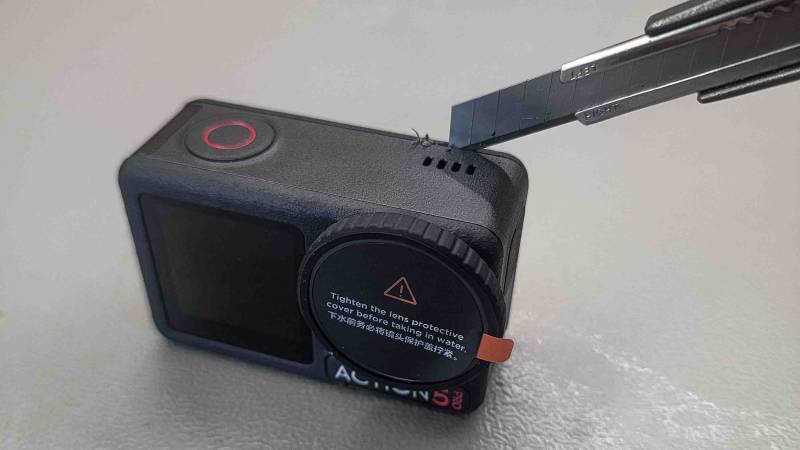
- Start by using a cutter knife and remove some material between the case and back display.
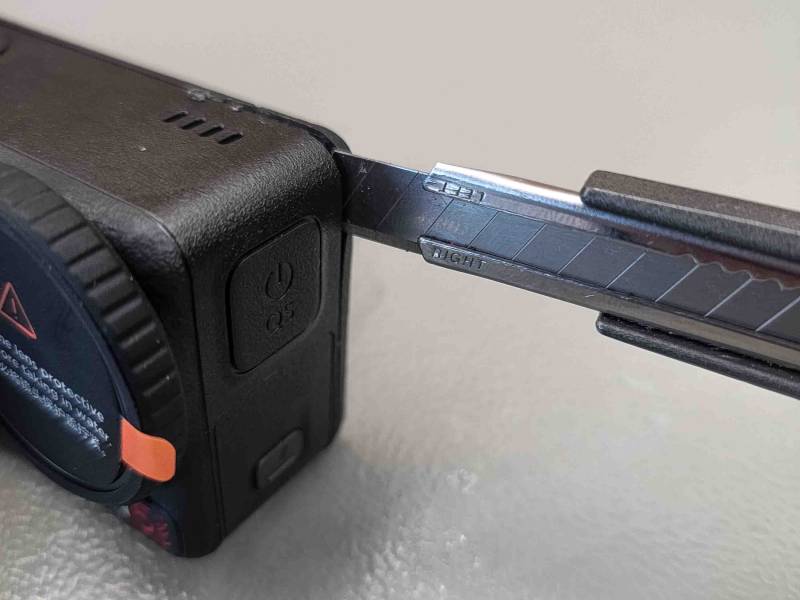
- Slide along the seam of the back display.
- Adding heat with a heat gun can make this step easier.
- Make sure to not cut to deep so you don't damage the back display ribbon cable.
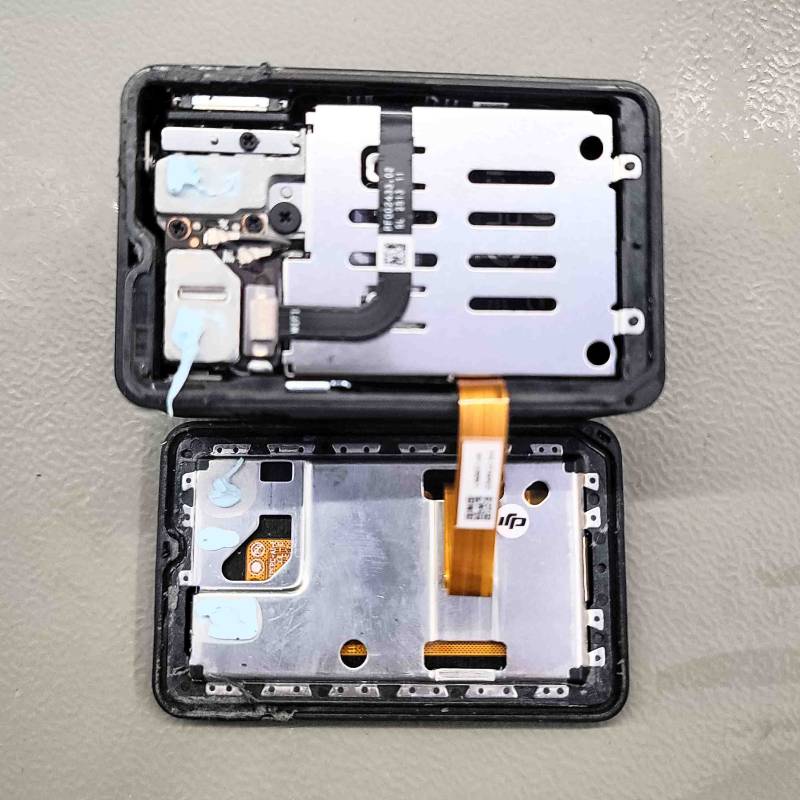
- Once you made a full rotation with the knife gently lift the display from the main body of the camera.
- The flat ribbon cable connecting the back display to the motherboard is still connected.
Step - Remove the Battery Bay and disconnect Wifi Ribbon
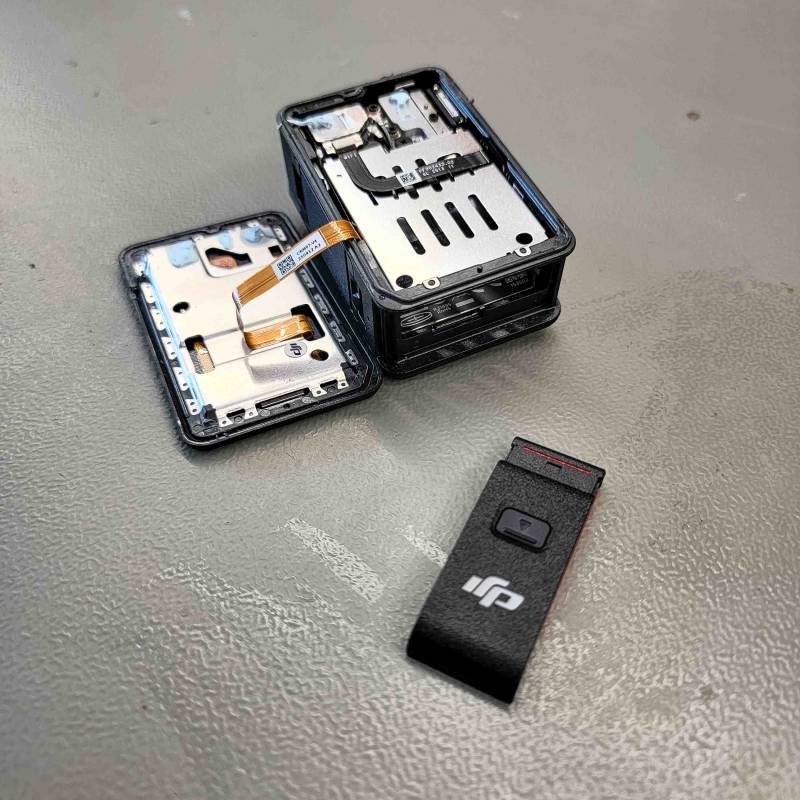
- Remove the battery latch by opening it and pulling at a angle.
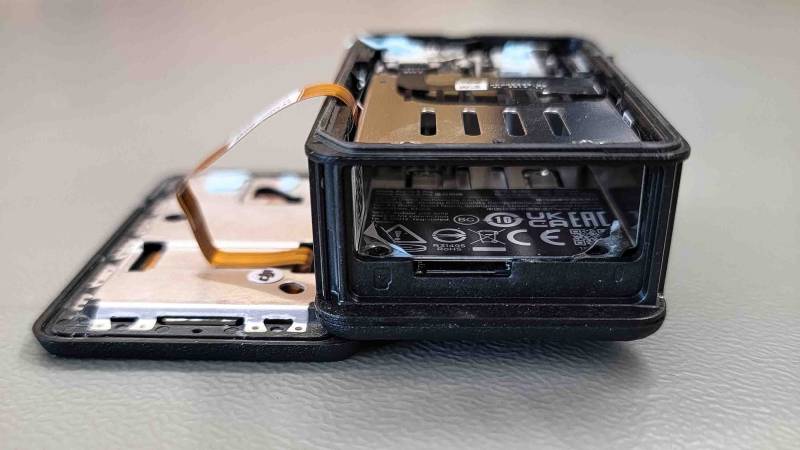
- Remove the tape hiding the screws in the battery bay. Alternatively, you can poke holes with a screwdriver to access the screws.
- Use a PH0 screwdriver to remove the three screws from the battery bay.
- Heat up the glue securing the WiFi module ribbon connector and remove it gently.
- Disconnect the WiFi module ribbon connector.
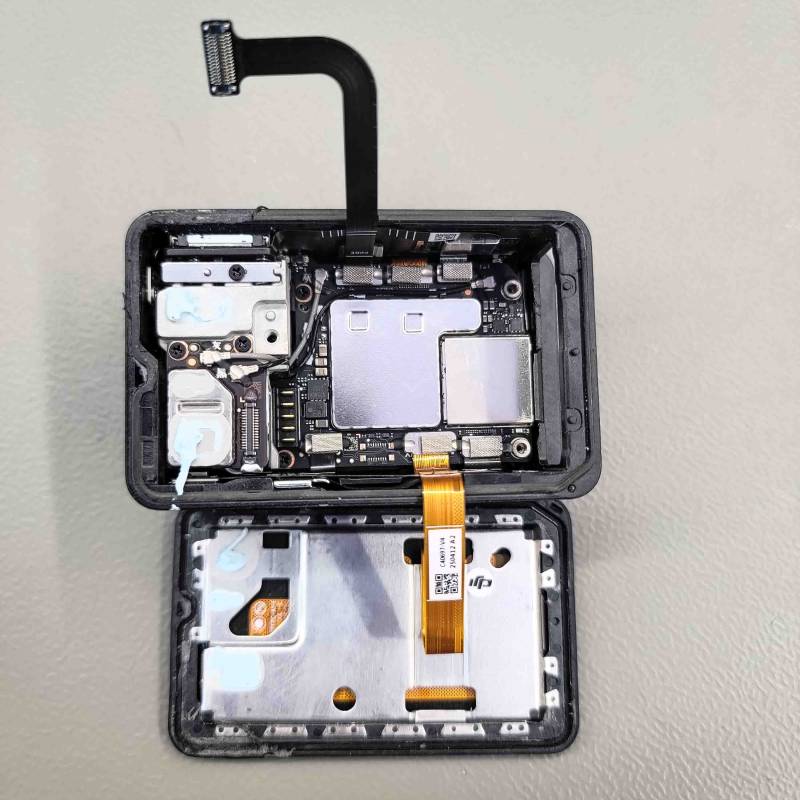
- Lift and remove the battery bay, putting one finger through the cutout for the battery will help.
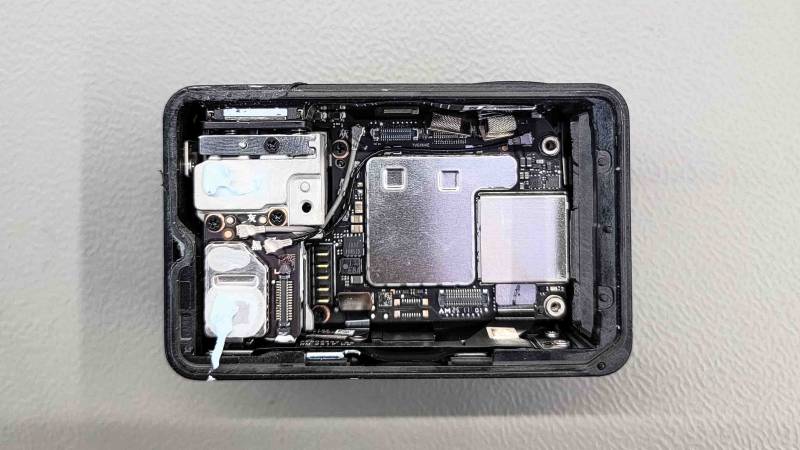
- The camera should now look like this
Step - Disconnect Ribbon Cables
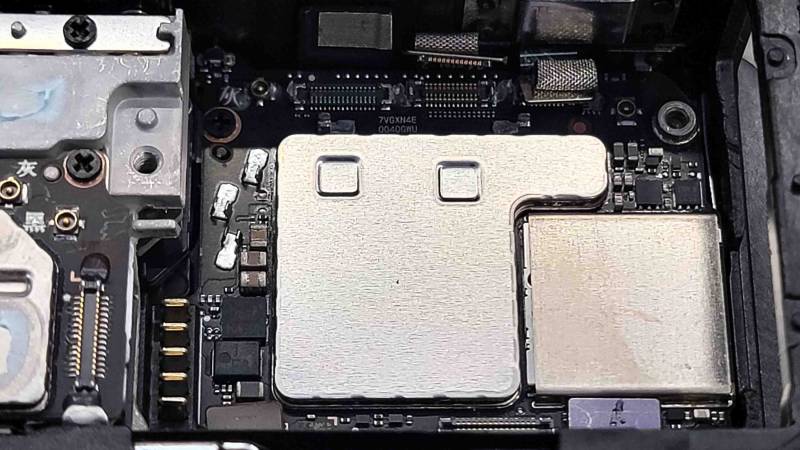
- Remove all flat ribbon cables from the motherboard. These connectors are secured with hot glue.
- Heat the glue with a hot air gun and remove it carefully with a plastic tool.
- Gently lift the connectors with a plastic tool to unplug them. It's best to start with the backdisplay. Repeat for all the ribbon connectors.
Step - Remove WiFi Module
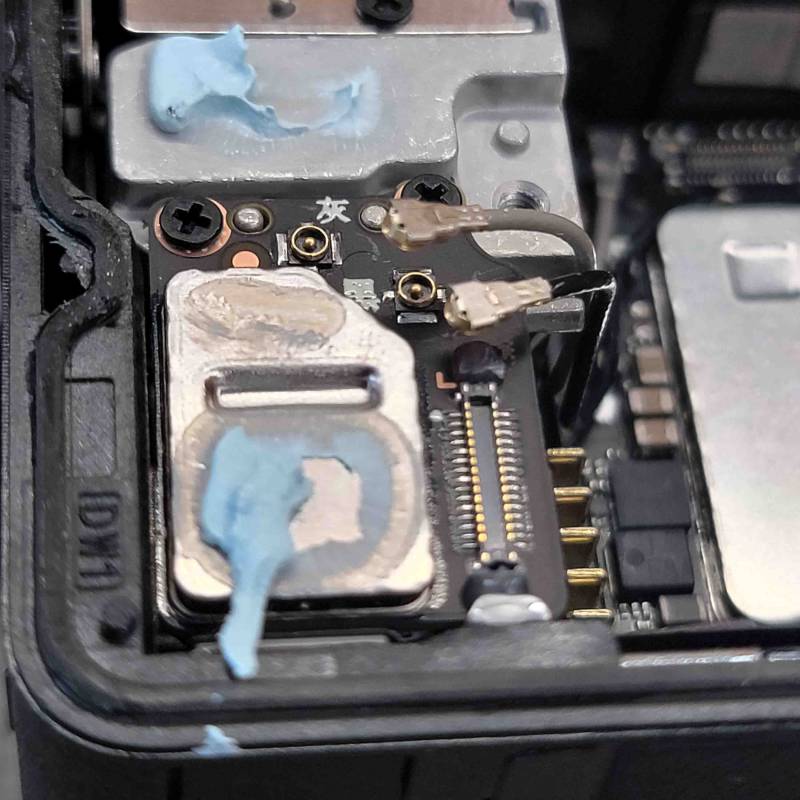
- Heat up and remove the glue at the antenna connectors from the WiFi module.
- Disconnect the antenna cables.
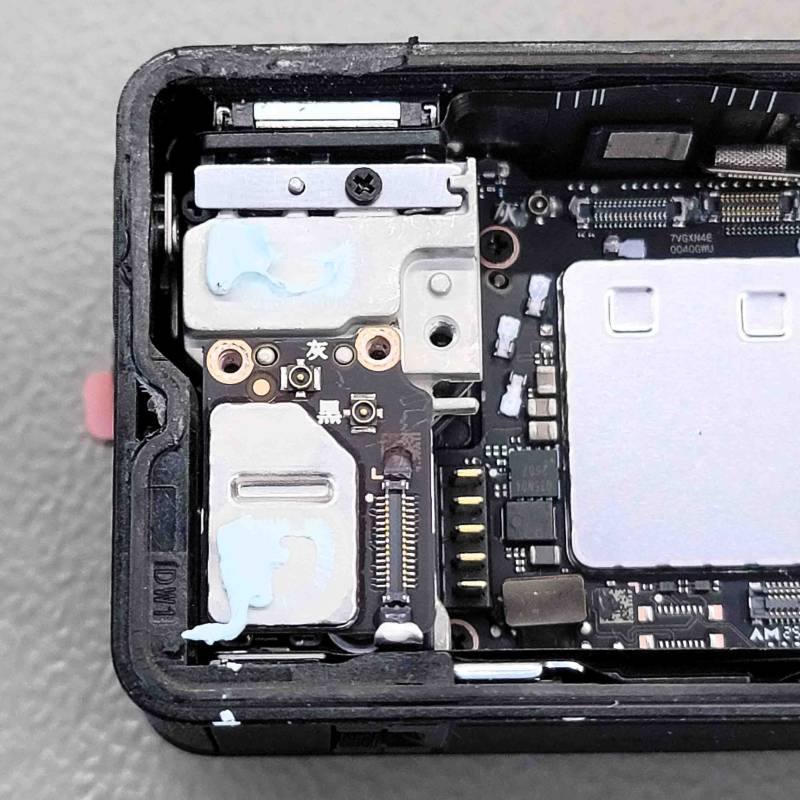
- Heat up and remove the glue at the antenna connectors from the mainboard.
- Disconnect and remove the antenna cables.
- Unscrew the two screws holding the WiFi module in place with a PH0 screwdriver
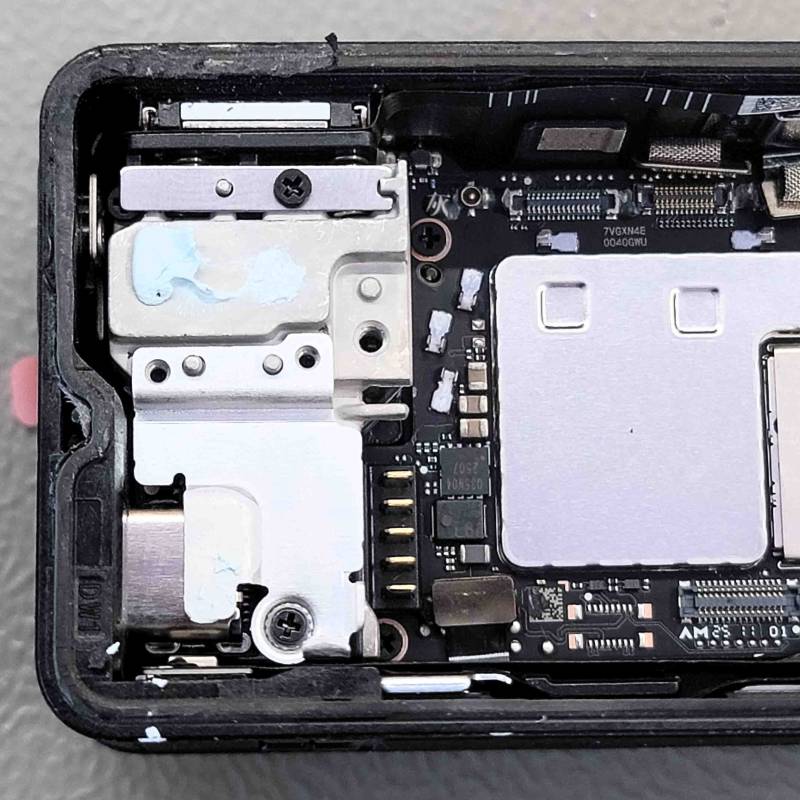
- Remove the WiFi module by lifting it up starting with the upper side first.
Step - Lens assembly and USB
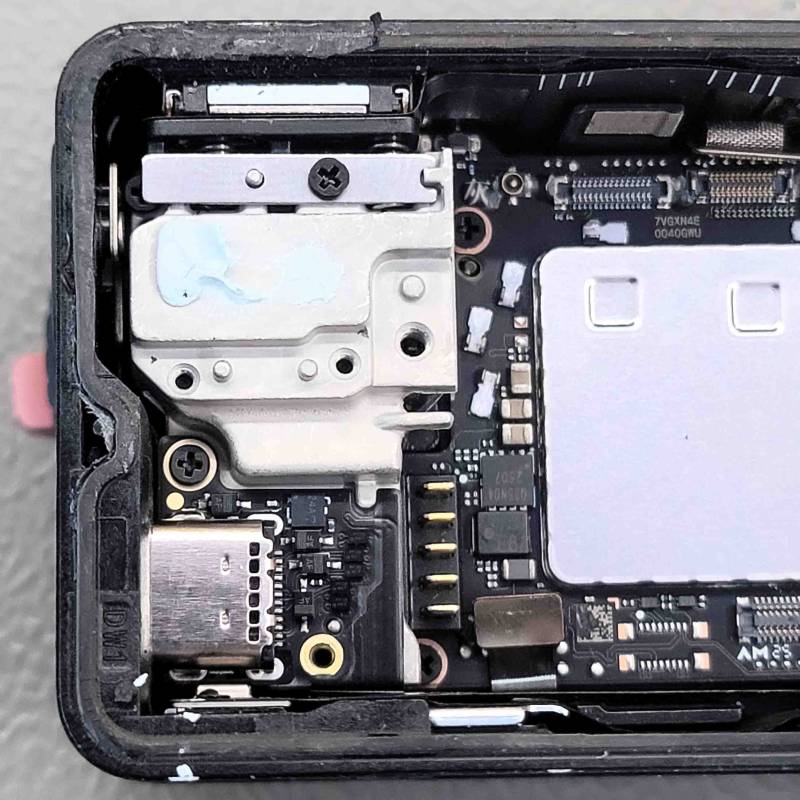
- Remove the silver bracket sitting ontop of the USB C PCB.
- It's secured with a single screw, remove this screw using a PH0 screwdriver.
- Then lift up the bracket by pulling it straight up.
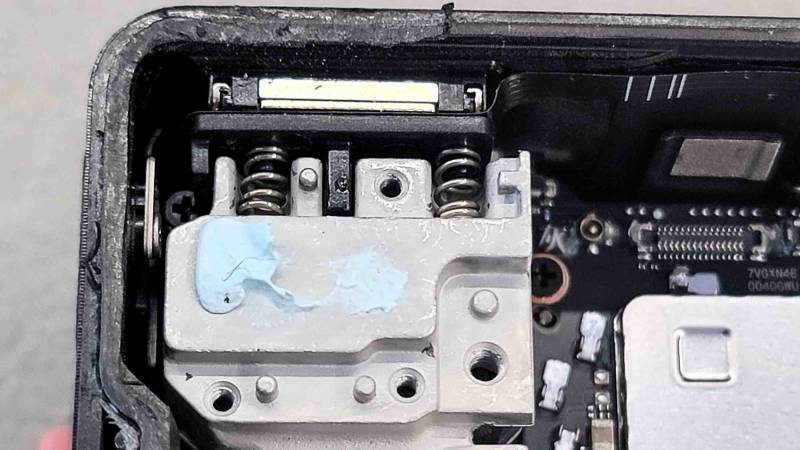
- Use a PH0 screwdriver to remove screw holding the silver bracket ontop of the lens and remove it by prying it upwards with some tweezers.
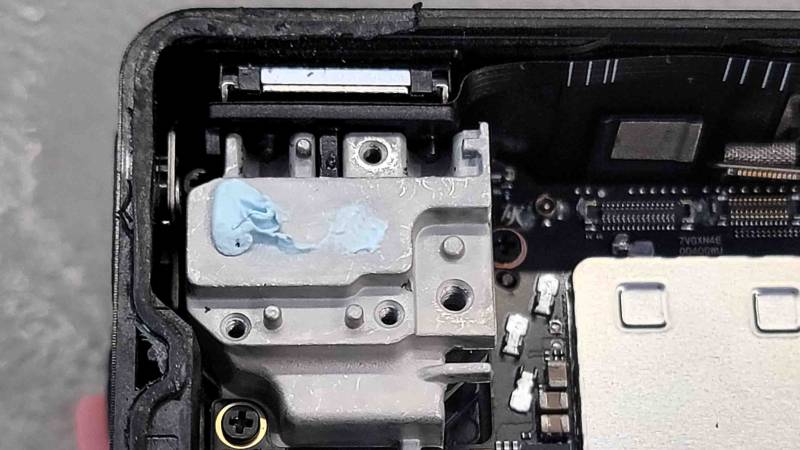
- Remove the two silver springs by grabbing them with some tweezers and prying them in a up and back motion.
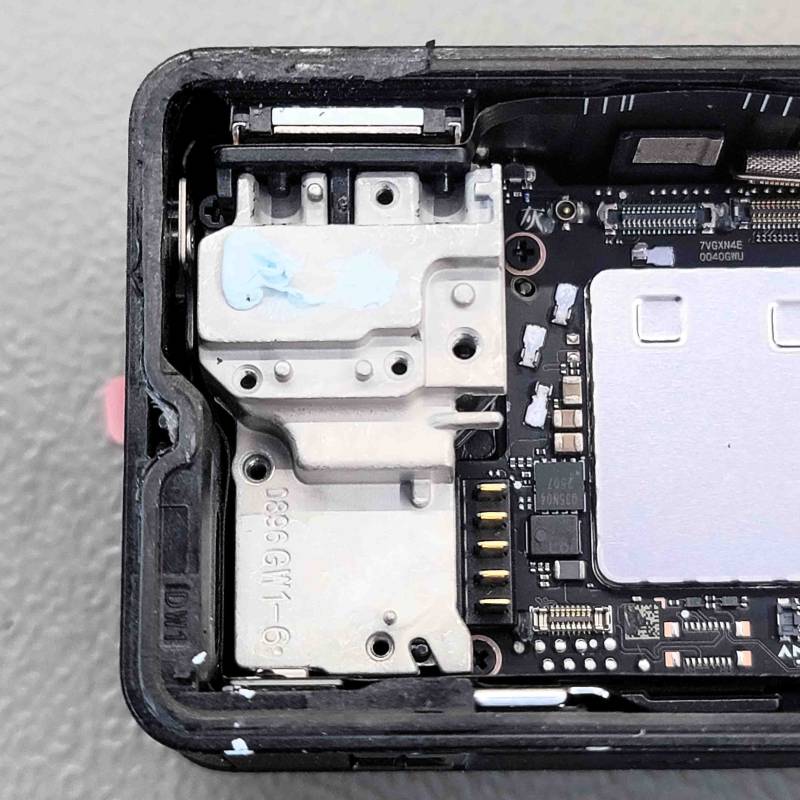
- Use a PH0 screwdriver to remove the screw holding the USB C PCB in place and remove it by gently lifting it up and backwards.
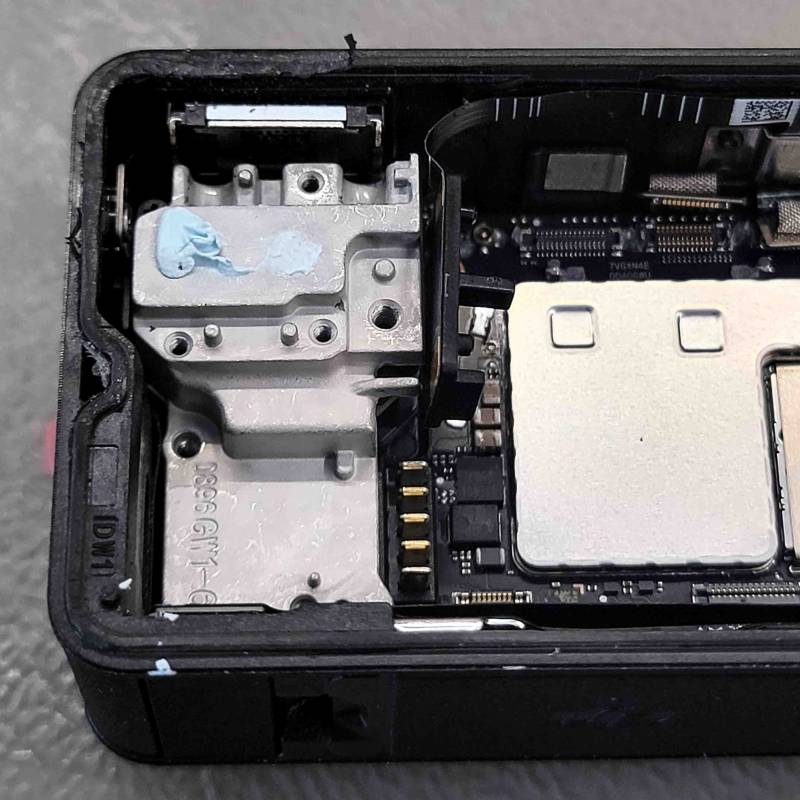
- Lift up the black plastic bracket ontop of the lens and fold it to the side as shown.
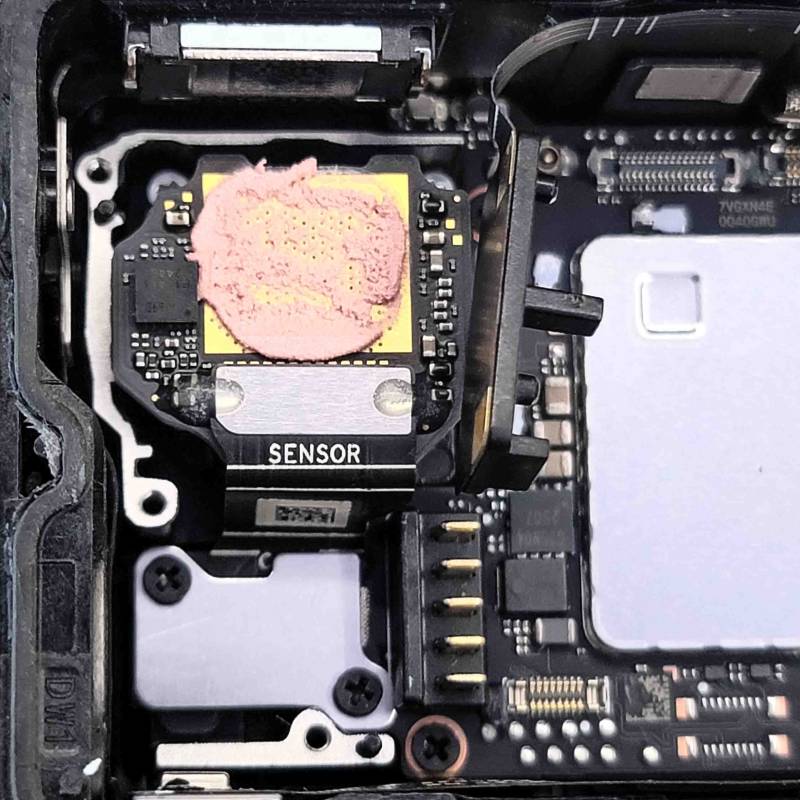
- Use a PH0 screwdriver to remove the last screw sitting at the top left corner of the lens bracket.
- Remove the lens bracket by lifting it straight up.
Step - Ribbon speaker cable and Lens
- Remove the ribbon cable that you bent away in the previous step from the camera housing.
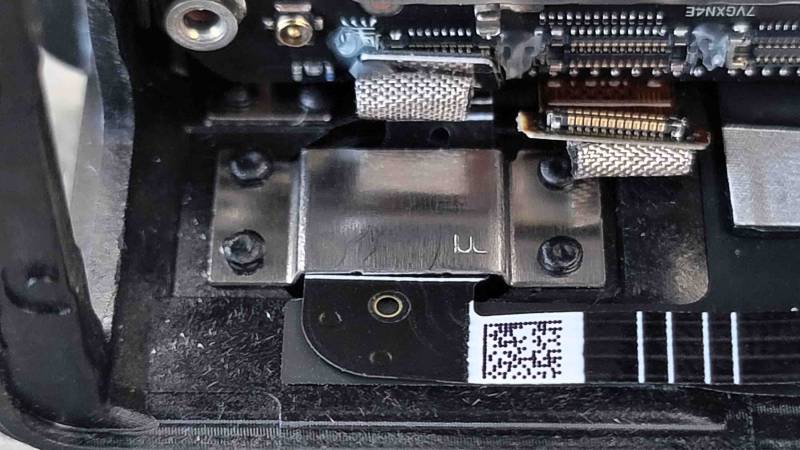
- You need to pry the aluminium plate up that secures the ribbon cable.
- Break off the molten plastic first to make this job easier.
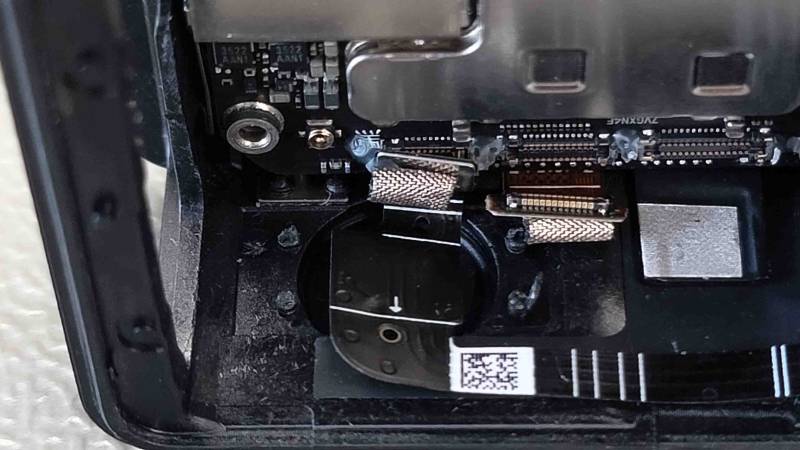
- Use a flat tool to pry up the aluminium plate.
- Disconnect and remove the ribbon cable.
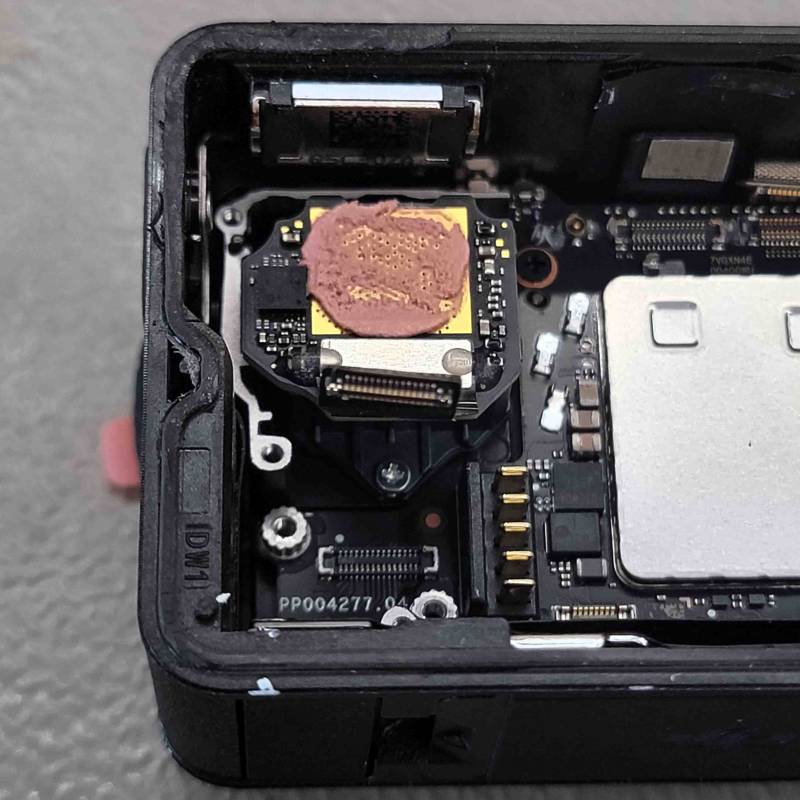
- Use a PH0 screwdriver to remove the two screws securing the silver lens ribbon cable bracket.
- Remove the lens ribbon cable bracket by lifting it up
- Carefully unplug the lens ribbon cable connector and lift it up.
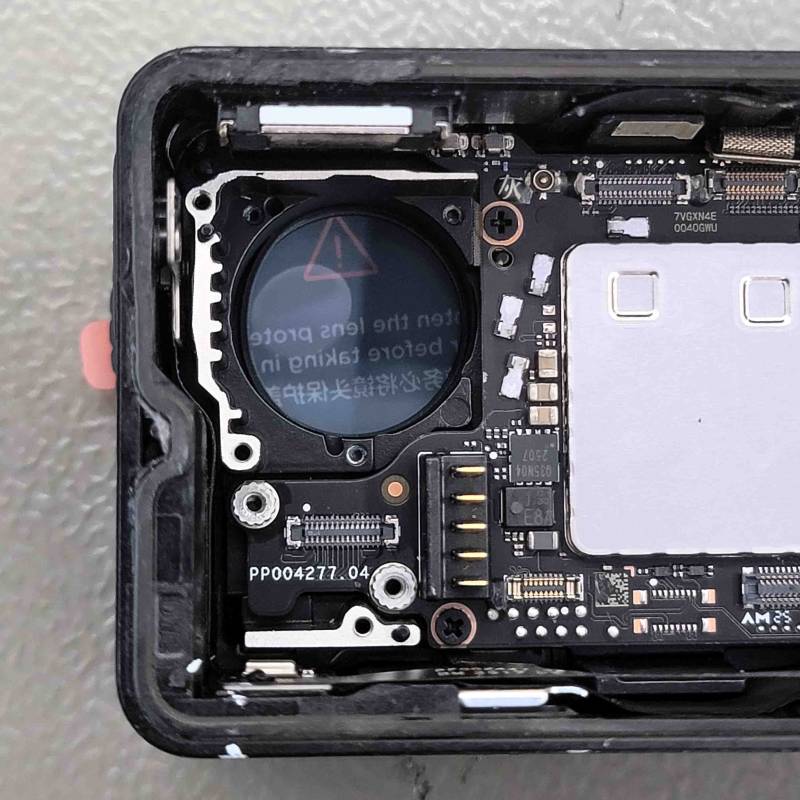
- Use a PH0 screwdriver to unscrew all three screws holding the lens into place.
- One screw is hidden under the lens ribbon cable, lift it up carefully to gain access to the screw.
- Remove the lens by pulling it straight up and place it onto a microfiber cloth into a safe spot.
Step - Disassemble Mainboard
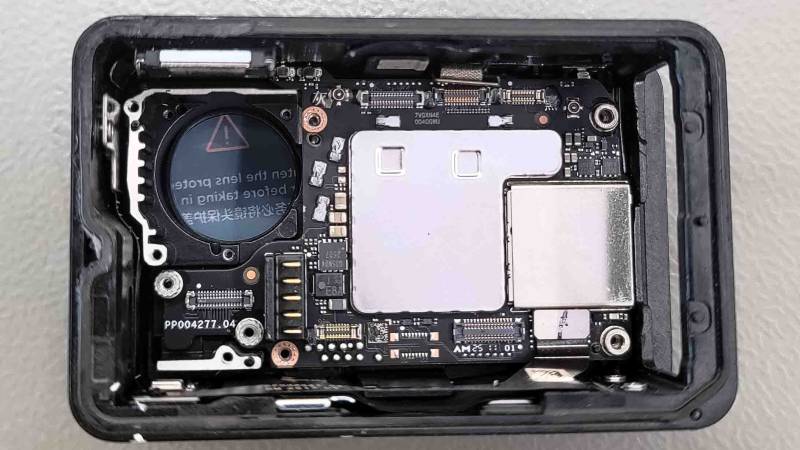
- Use a PH0 screwdriver to remove the two screws holding the mainboard.
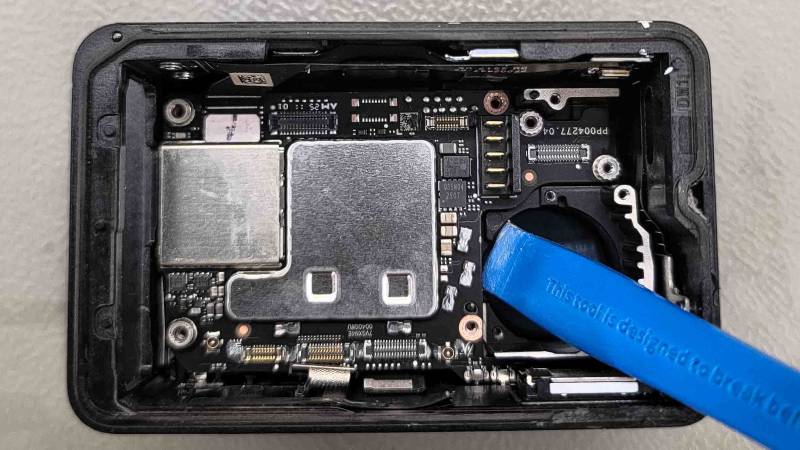
- Pry out the mainboard with a plastic tool at the shown location.
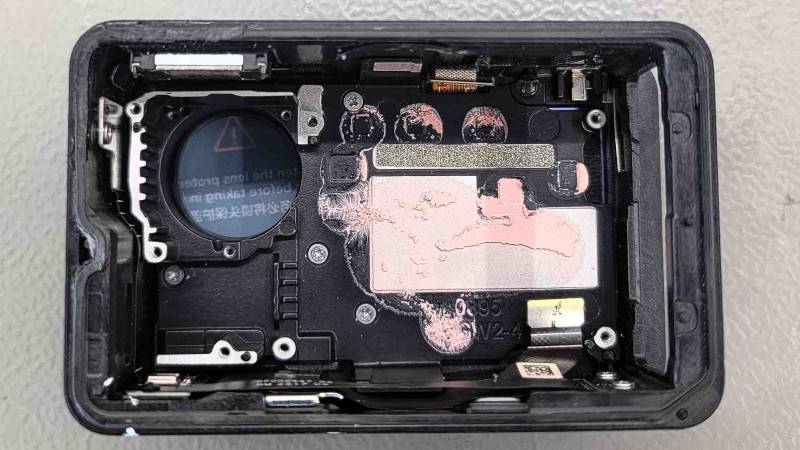
- Once the mainboard is loose, lift it up straight to remove it.
- Make sure to not damage any ribbon cable connectors during this process.
Step - Remove the Mainboard Holder
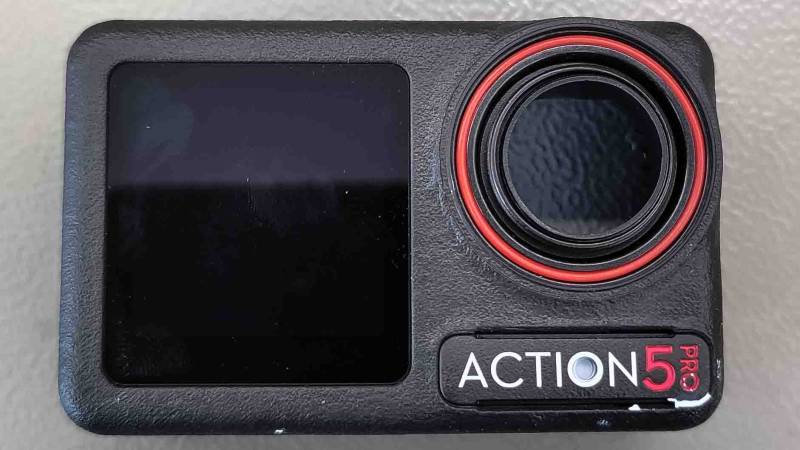
- Unscrew the clear lens protector on the front side by turning it counter clockwise.
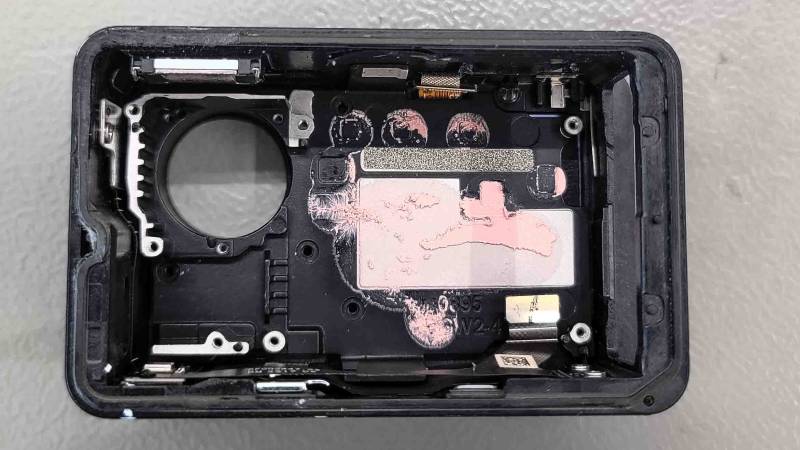
- Use a PH0 screwdriver to remove the four screws holding the mainboard holder.
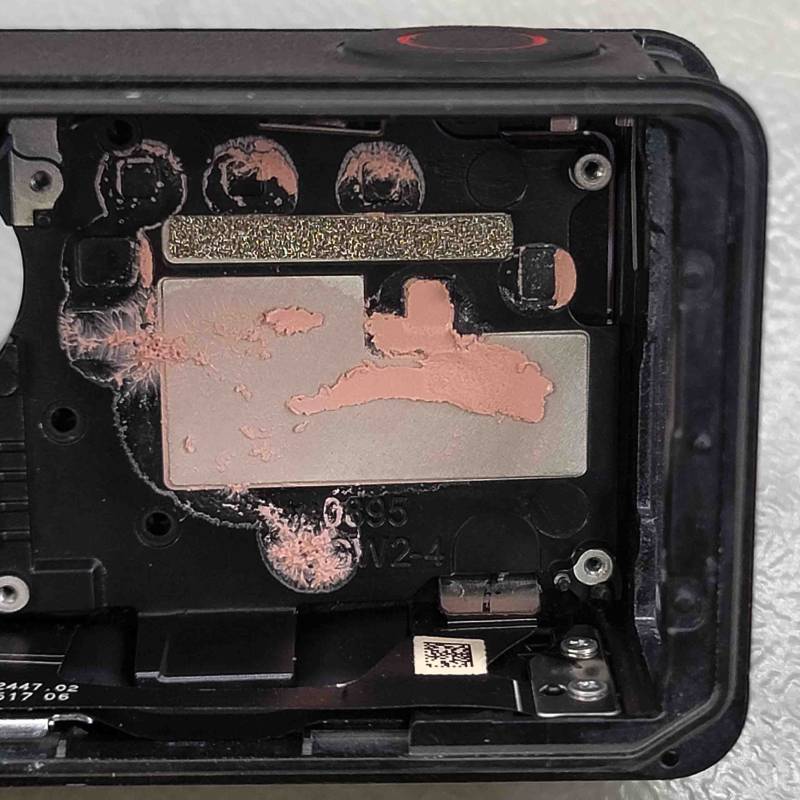
- Tuck in the ribbon cable connector from the sensors and button into the gap from the mainboard holder.
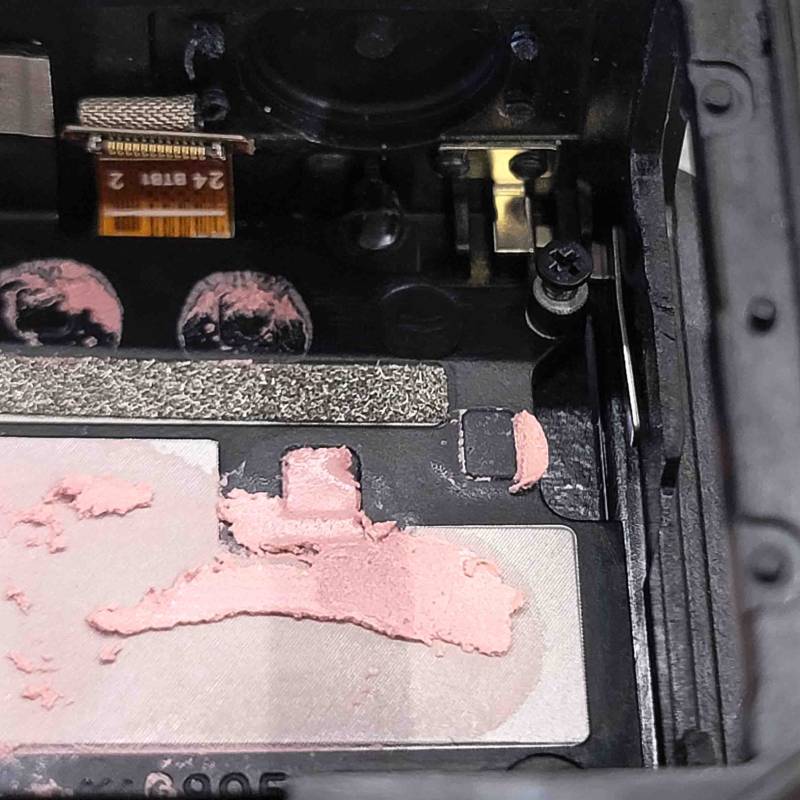
- Screw in the spare screw from the lens cover to the top right corner of the mainboard holder. Make sure to not screw it in to deep and damaging the front display.
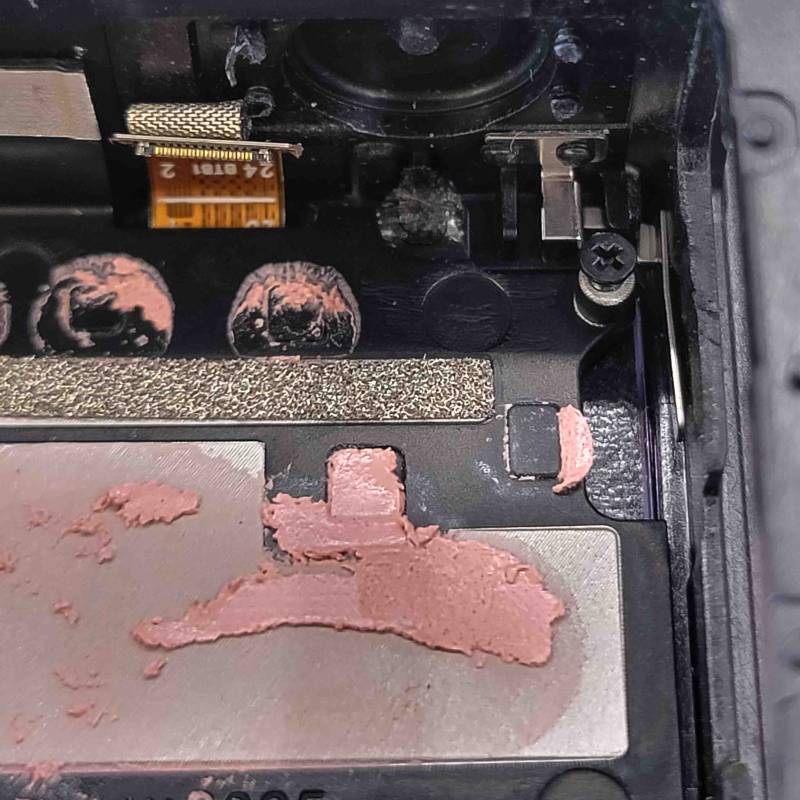
- Break/scrape away the molten plastic on the top right side.
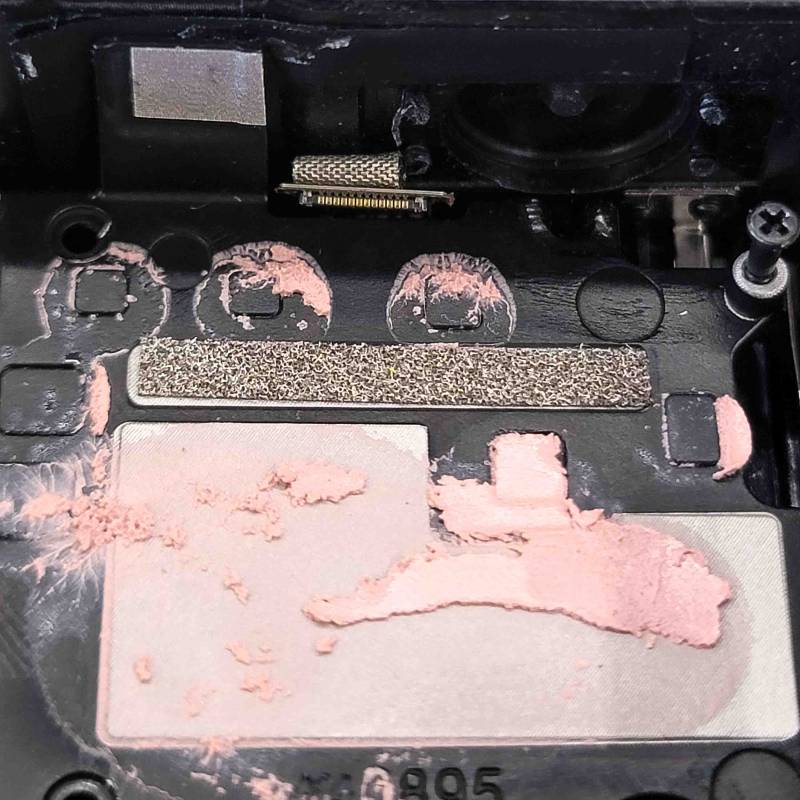
- Pry out the mainboard holder using pliers on the screw and pushing in from the lens side with a finger.
- Once the mainboard holder is around the height of the middle of the case, pay attention to not damage the front display connector shown in the picture.
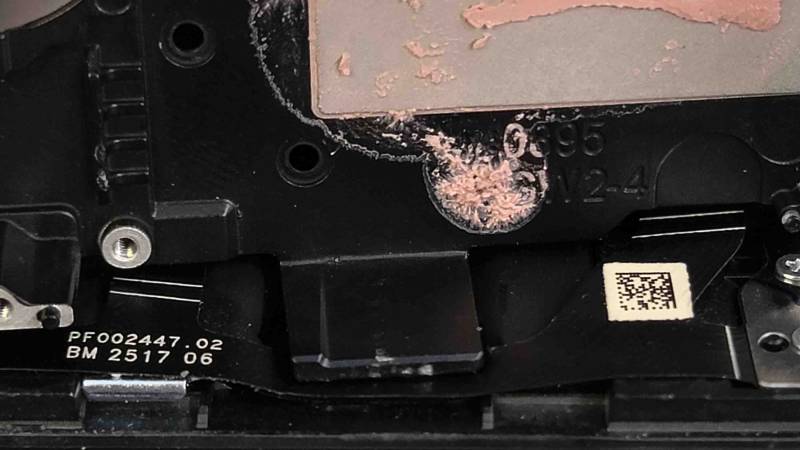
- Make sure the ribbon cable from the sensors and button goes behind the nose of the mainboard holder so it doesn't get damaged.
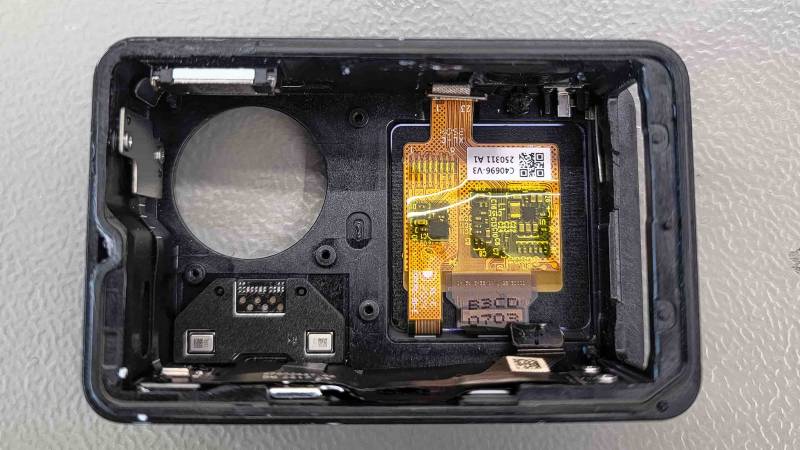
- Your camera should now look like this
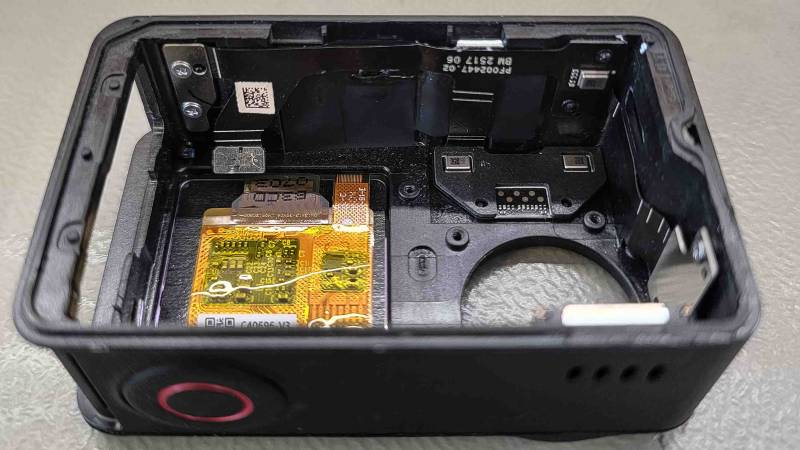
- Remove all four screws holding the silver pieces of the sensor and button ribbon cable.
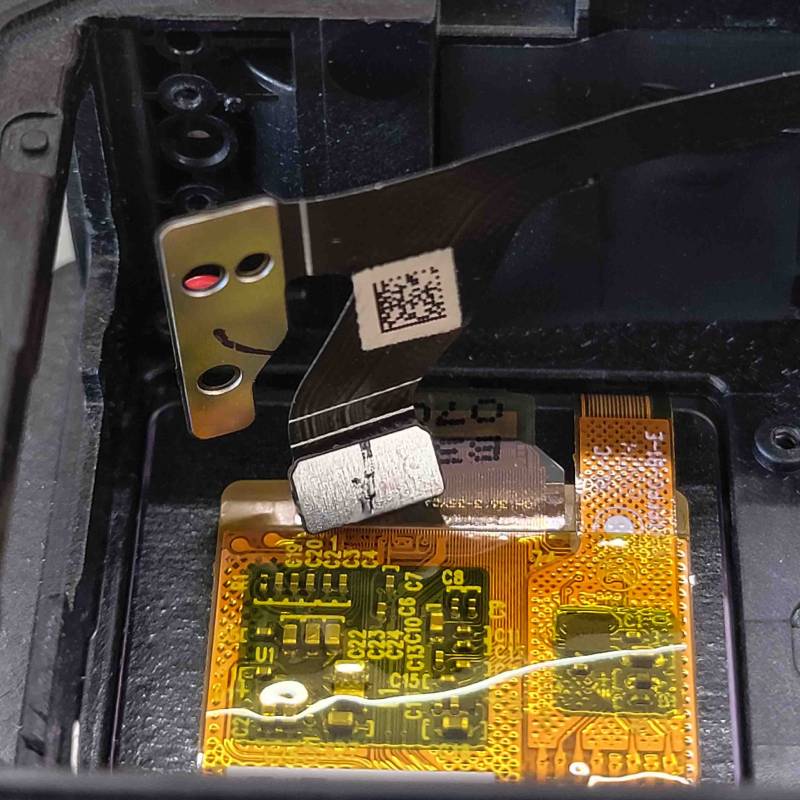
- Heat up the cable gently and start to carefully remove it.
- Start from the left side, then jump to the right side.
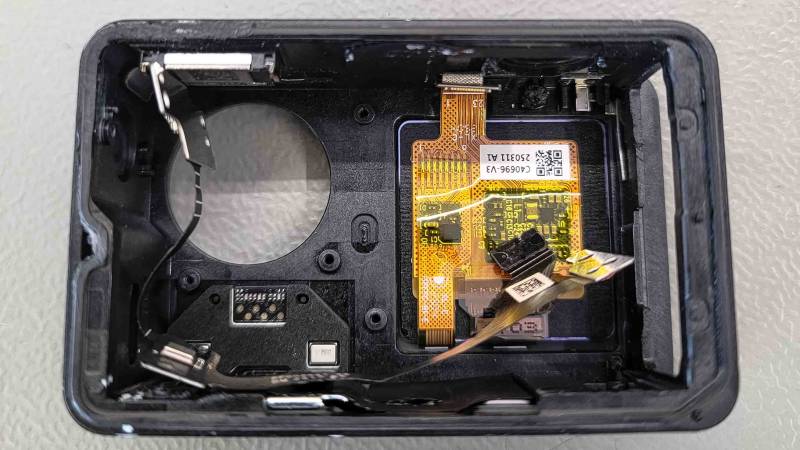
- After the left and right side are free, you need to remove the sensor part of the ribbon cable.
- Heat this part up gently and remove it carefully with some plastic tools.
Step - Front Display
WARNING: This is the most crucial step of these whole instructions. Compared to a GoPro or Action 4 the front display of the Action 5 Pro is very brittle and breaks easily. There are multiple methods to remove such a front screen. However we did not have luck with any of that. Using much heat results in a non reversible heat damaged display. Using solvents to break up the glue will result in visible spots on the display. Using much pressure to pry the display out will result in micro cracks and a broken screen. Also the electronics are not protected on the backside so by pressing it out you will risk damaging the electronics. Dremeling the display out using a rotary tool will leave lots of plastic on the front screen that is hard to remove without cracking the display. The approach we took takes a lot of time and work, is also not 100% bulletproof but we had the best experiences doing it like this. If you have found a better method please let us know. Also don't rush with this process. It takes a good hour to get the display out safely. For safety its recommended to wear safety googles for the risk of tools breaking and also use some cutproof gloves. You can easily slip on the rubber/plastic and cut yourself. So always be mindful of your finger / hand position.
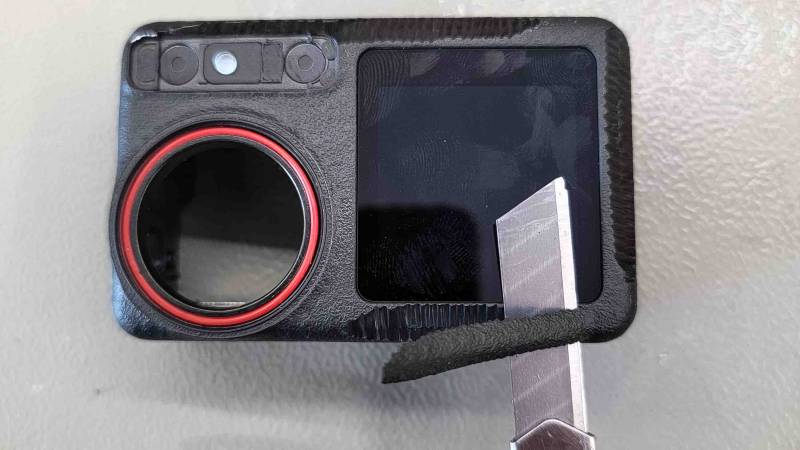
- Use a cutter knife at a angle to remove unnecessary rubber/plastic around the display. Here you have absolutely no electronics so you can go deep. Just make sure you don't scratch the display.
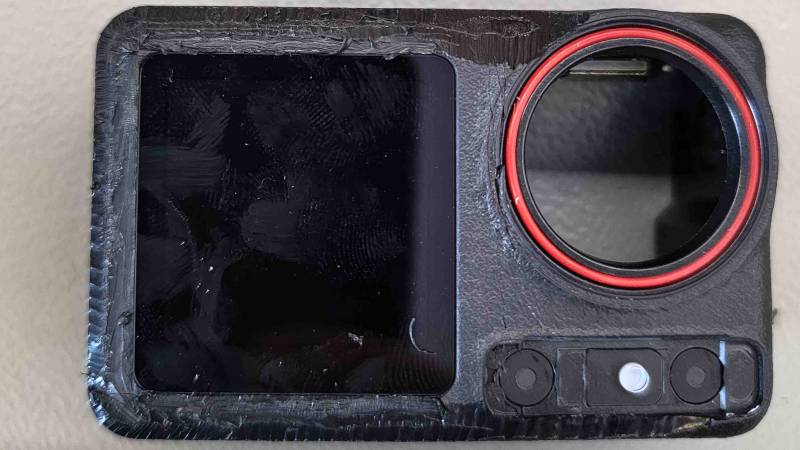
- After one pass with the cutter knife it should look like this.
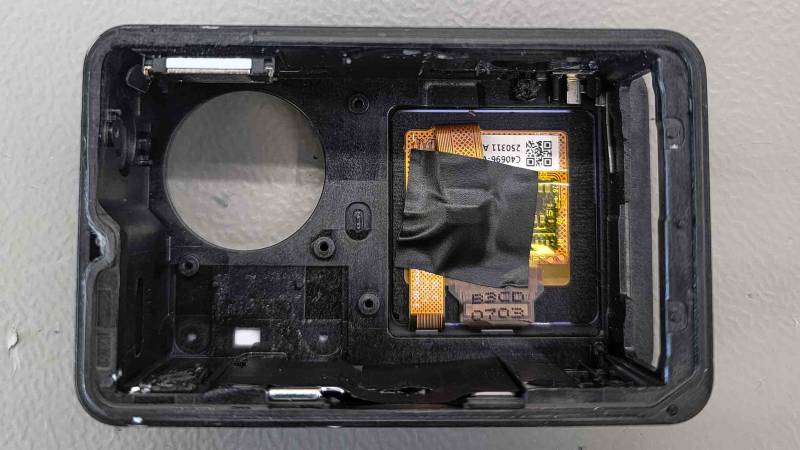
- Use some electrical tape to tape the front display ribbon connector to the displays back side. This will protect the ribbon cable a bit.
- Make sure to not use a very sticky tape, else you will lift up the LCD from the touchsensor while removing it.
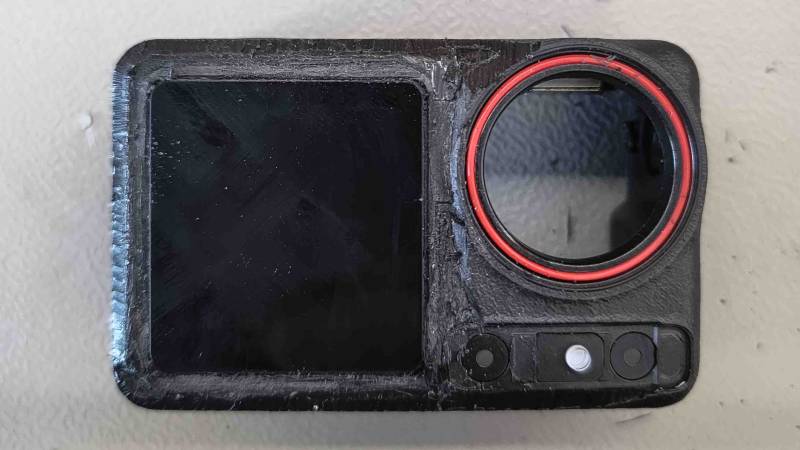
- Use a sharp hobby knife to start carving a groove around the front display.
- Now go deeper step by step removing the rubber and plastic around the screen.
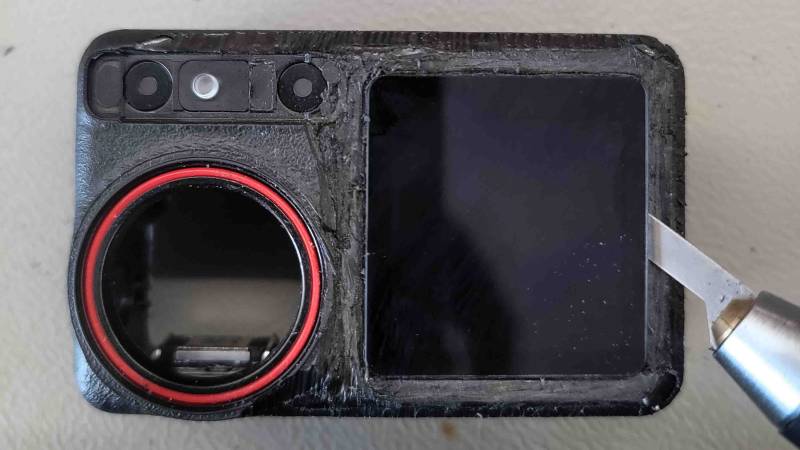
- Once you are deep enough, go in at a angle towards the middle of the display.
- Be careful at the bottom side, the cable sits very close to the outer edge and when you cut into this its game over so we focus at the left, upper and right side.
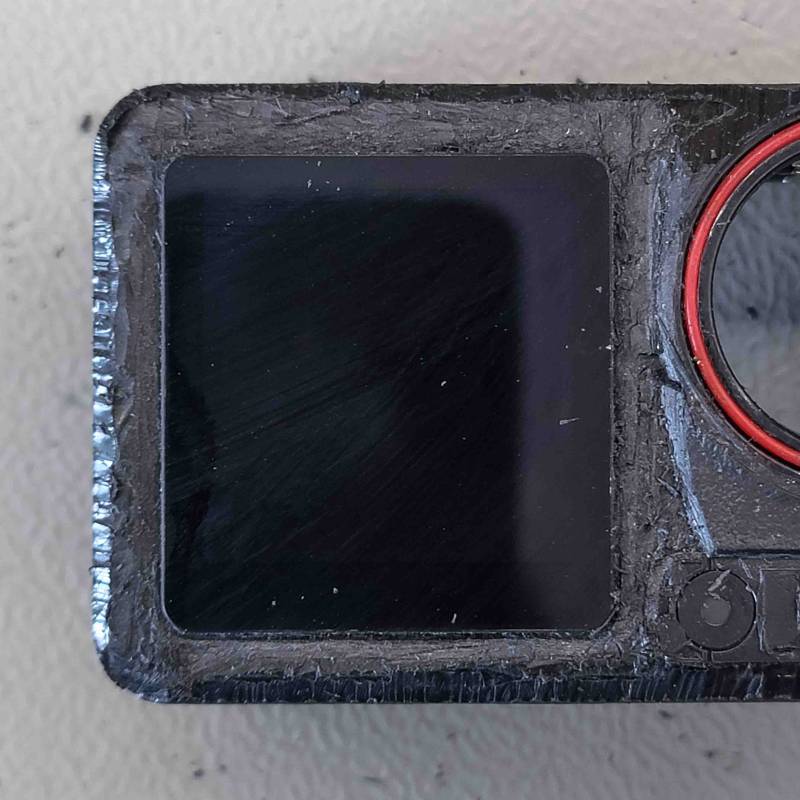
- Plastic removed 1
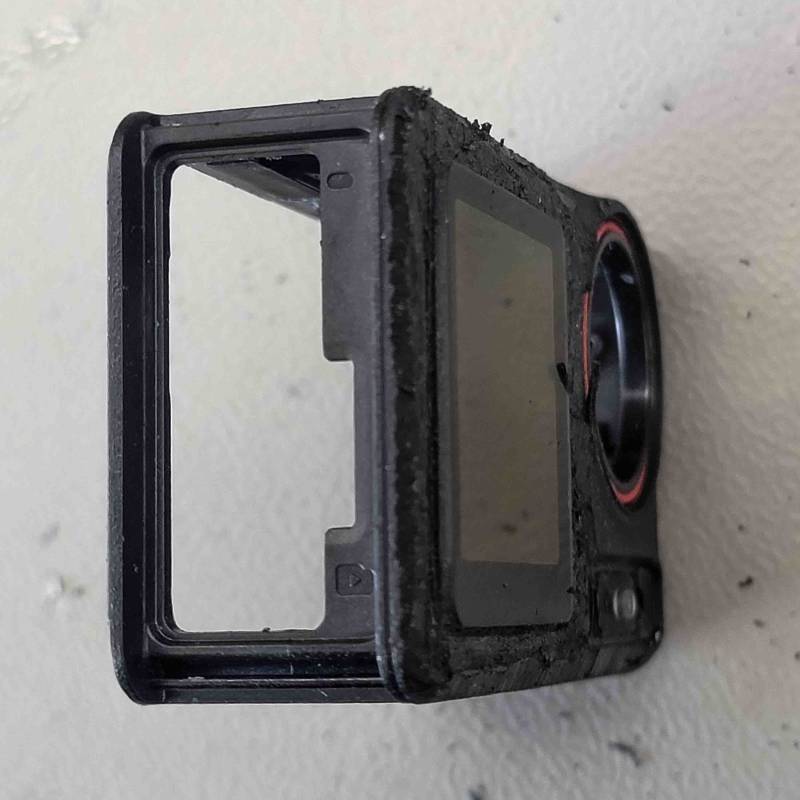
- Plastic removed 2
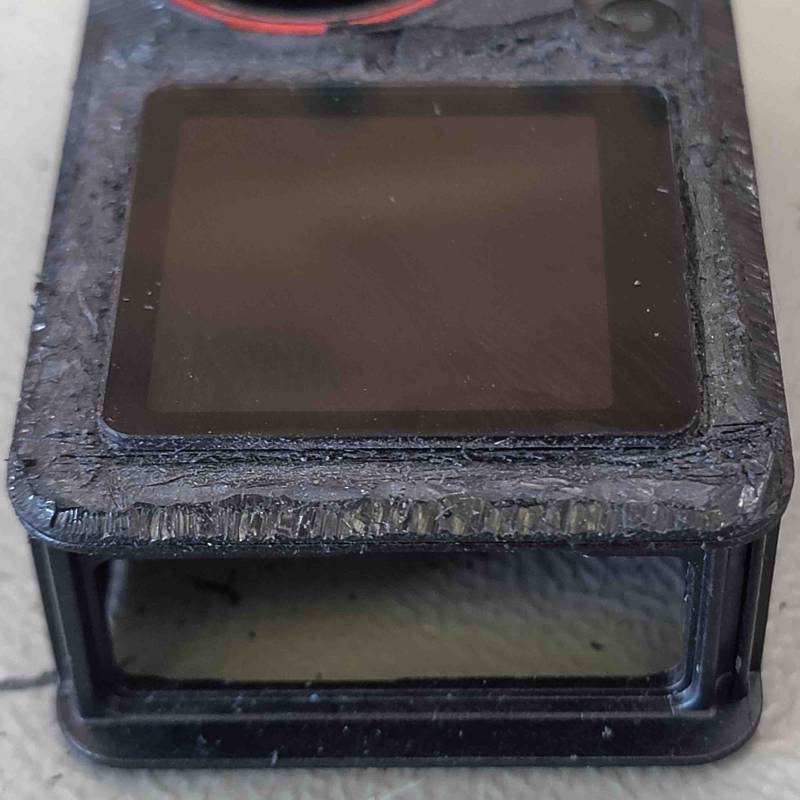
- Plastic removed 3
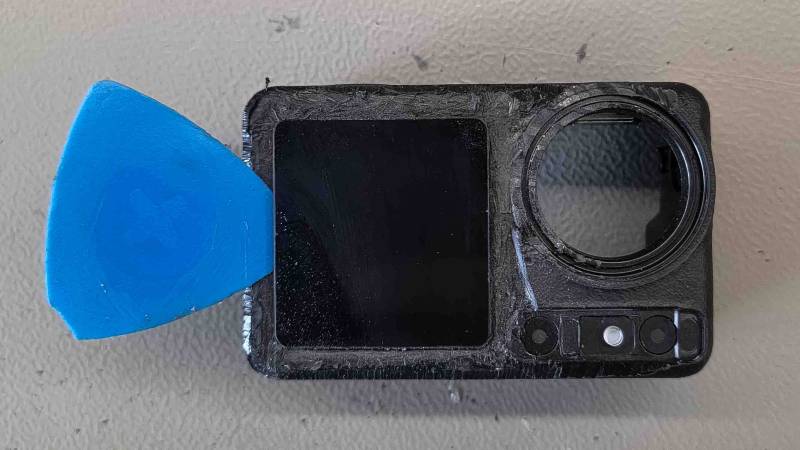
- Once you are deep enough to reach under the front display you can try to get under it with a plastic tool.
- Make sure to not add any pressure to the display. Carve more out if the tool doesn't slide under properly.
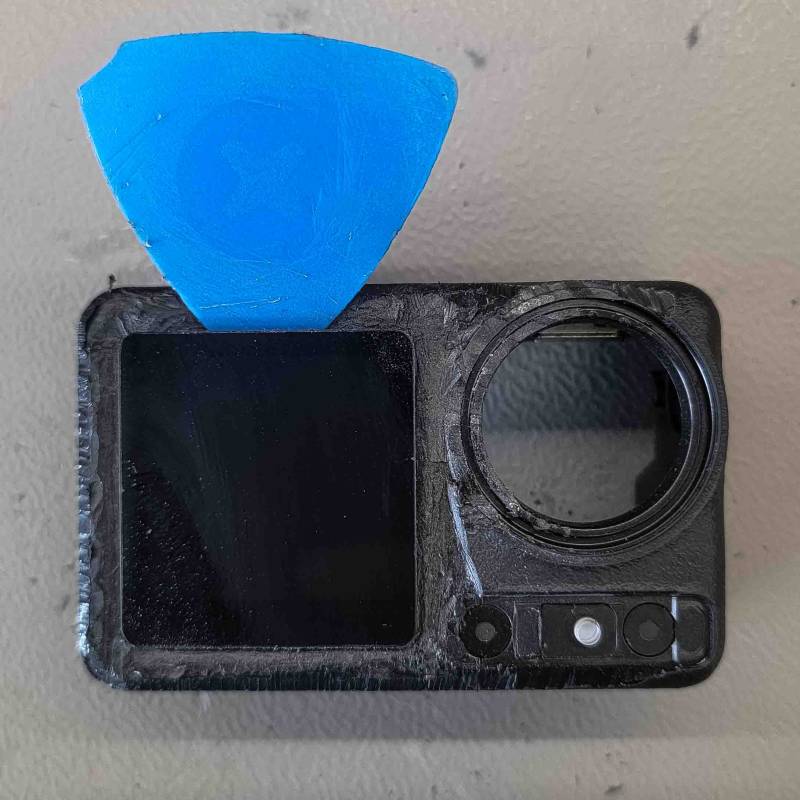
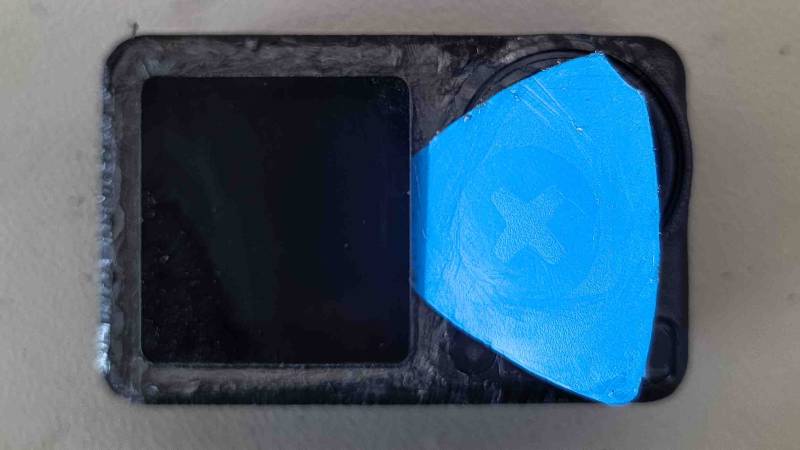
- Remove material until you can go from the left over the top to the right side with the plastic tool.
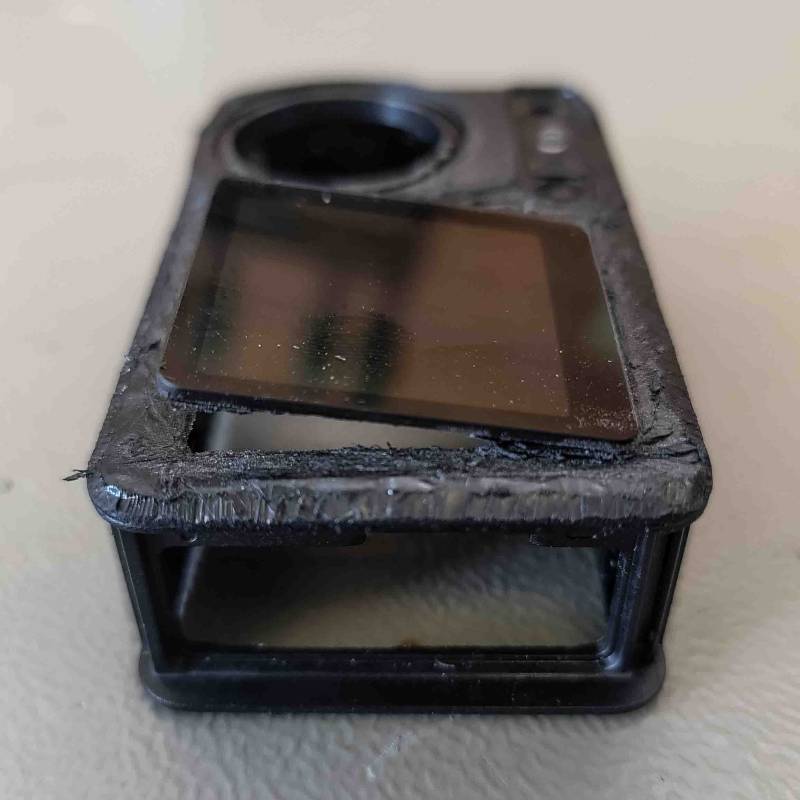
- Once the three sides are completely free use a little bit of heat on the bottom side of the display.
- Now very carefully pry out the display on its bottom edge.
- Make sure to not break the display during this process. If you feel to much force, carve out more at the bottom edge and or use a bit more heat.
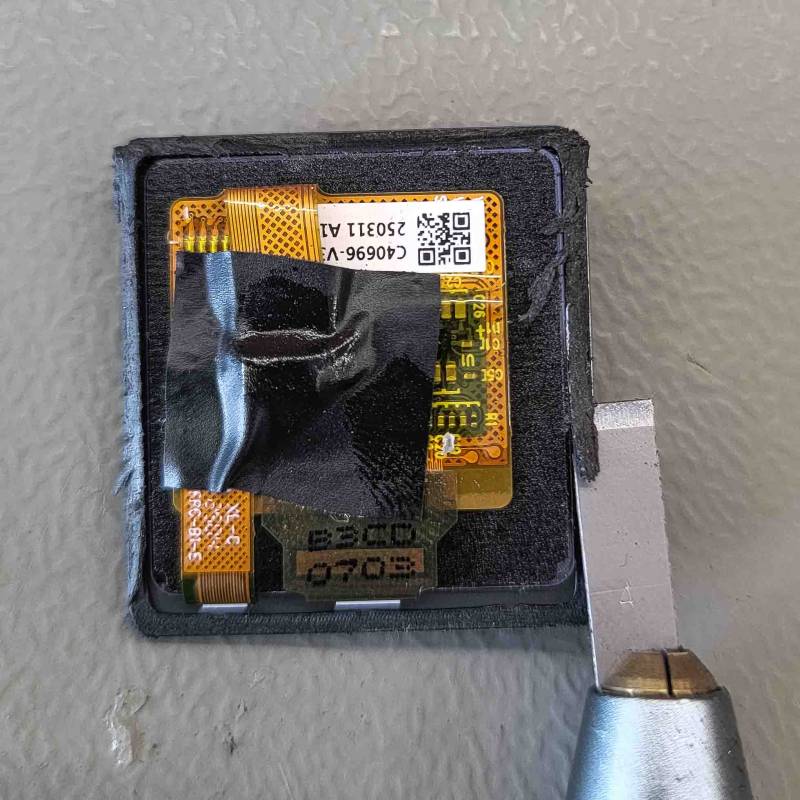
- Once you sucessfully removed the front display, clean up the front display edges from any plastic and silicone residue.
- Make sure to not break the display during this process.
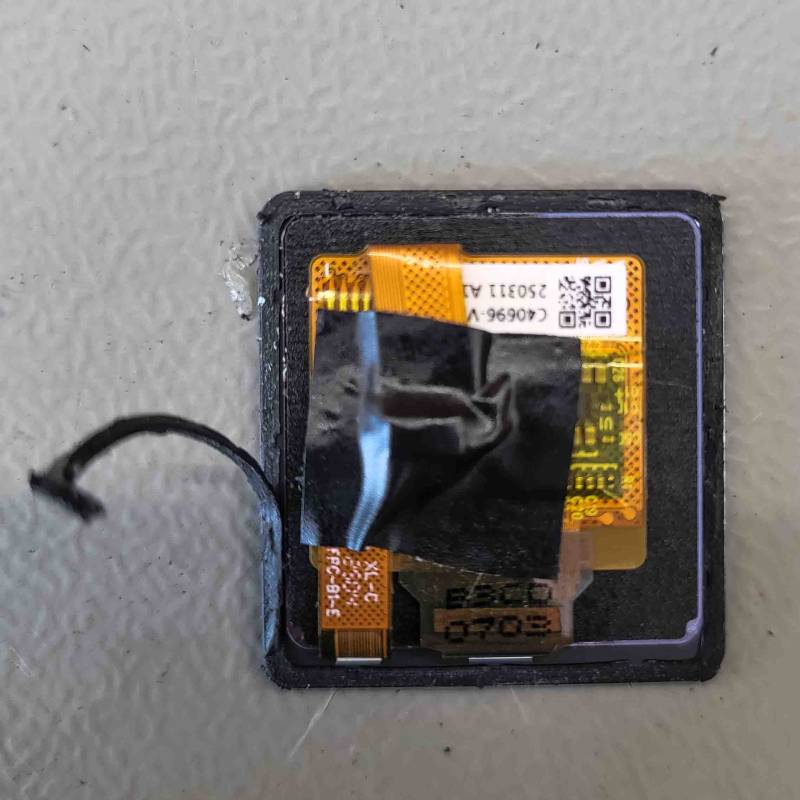
- Work your way around the whole bezel of the display.
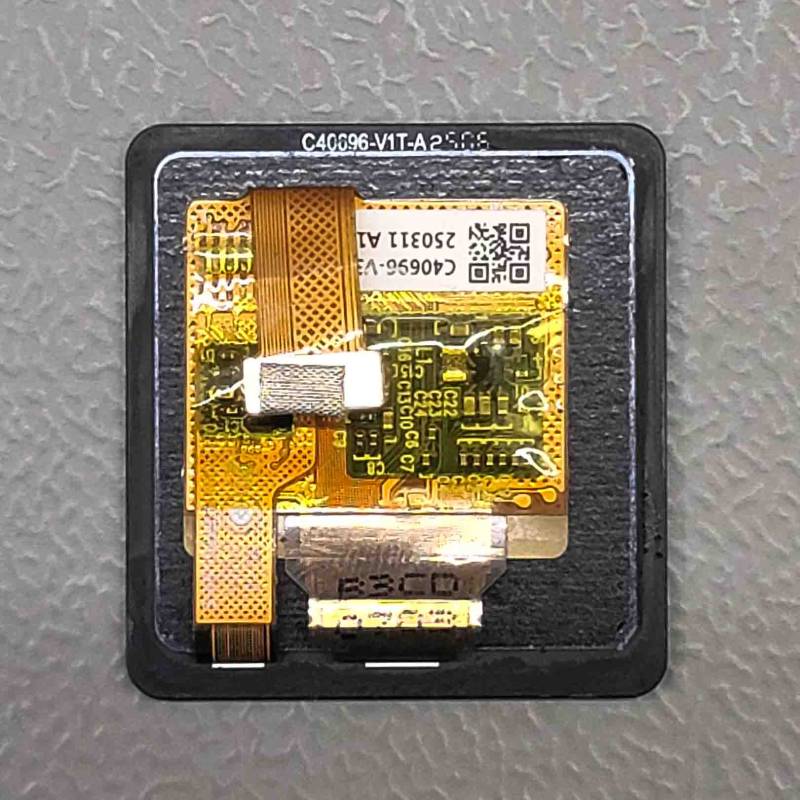
- The cleaned up display should look like this.
Step - Mainboard Bracket Preparation
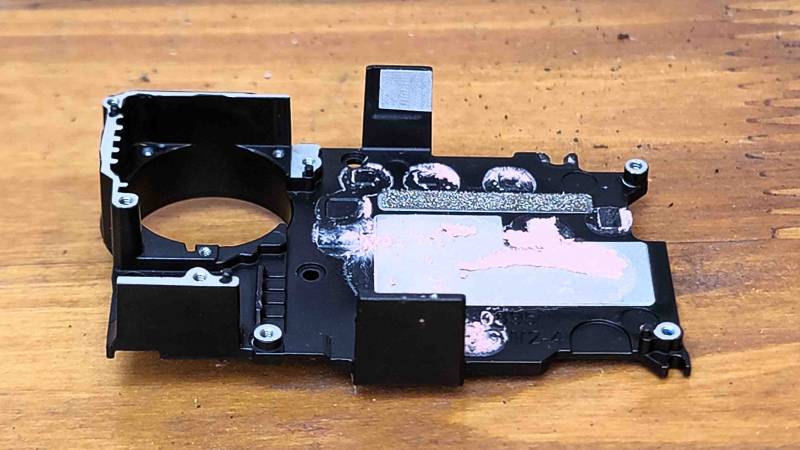
- The stock mainboard bracket looks like this.
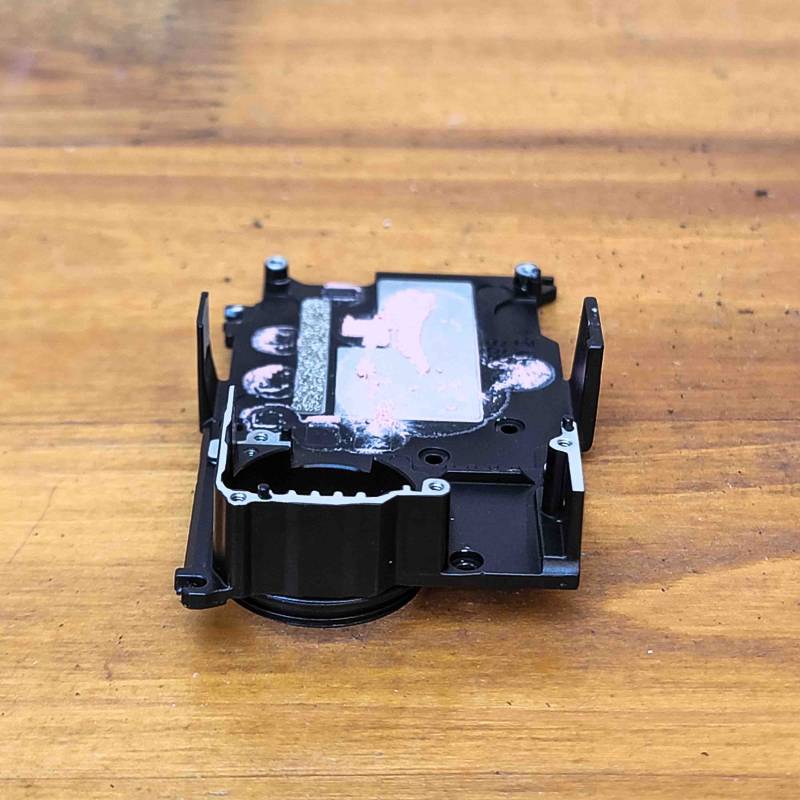
- The stock mainboard bracket looks like this.
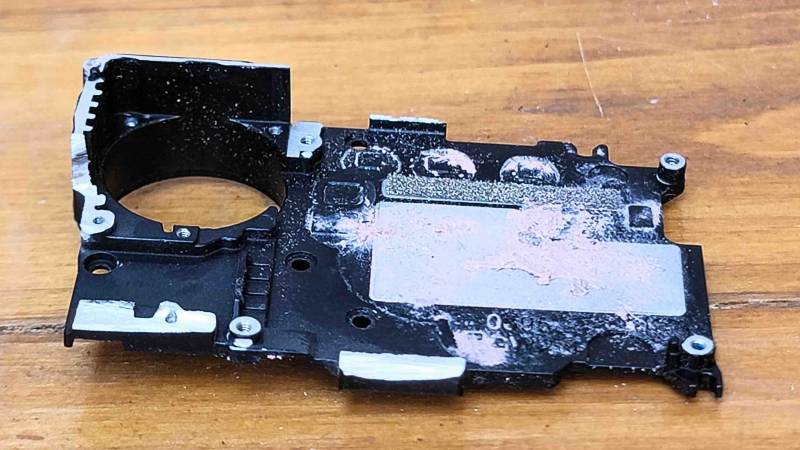
- Use a rotary tool to cut off the three noses from the bracket.
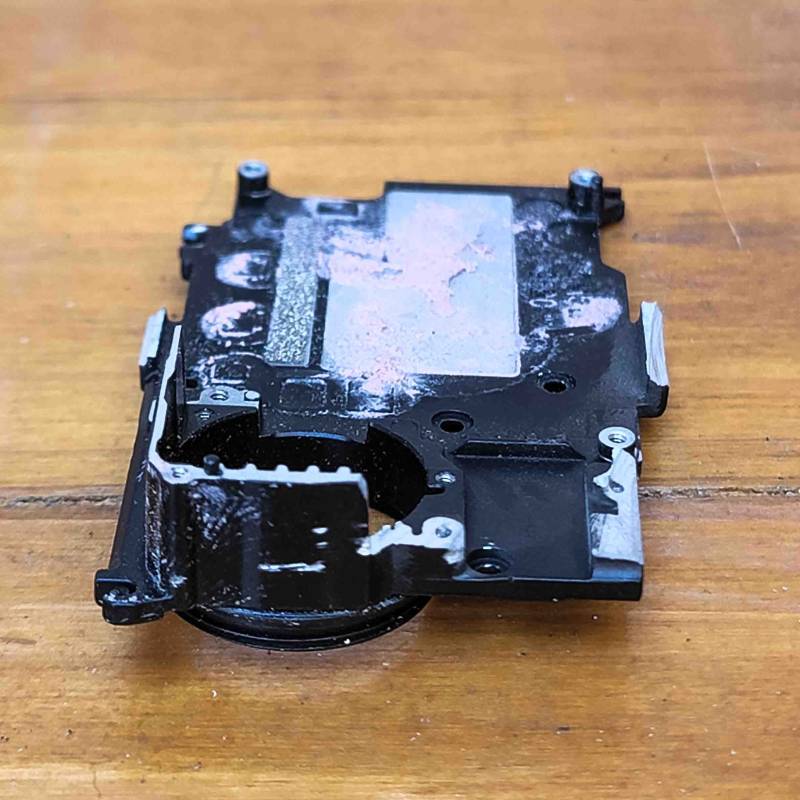
- Create a cutout at the lens section.
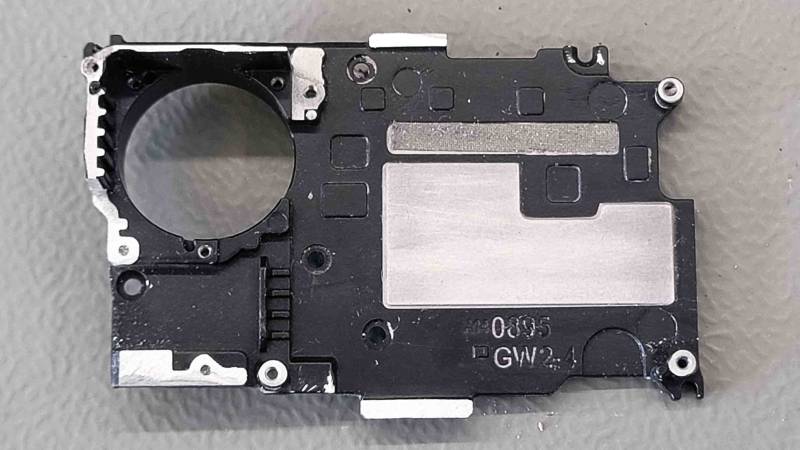
- File all cutted sections smooth
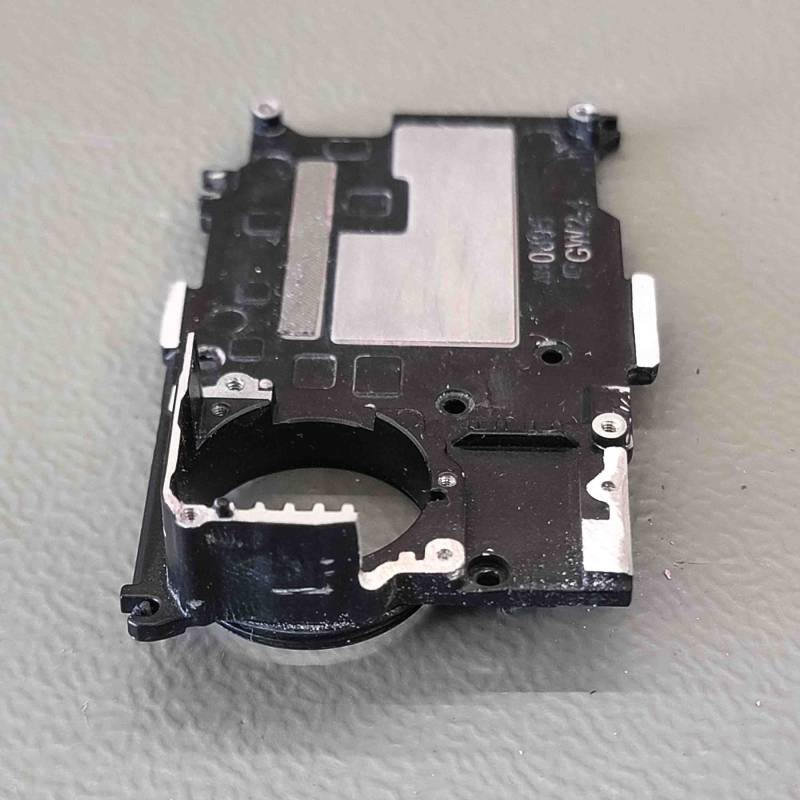
- Clean up the mainboard bracket from all thermal paste and metal shavings.
Step - Mainboard Preparation
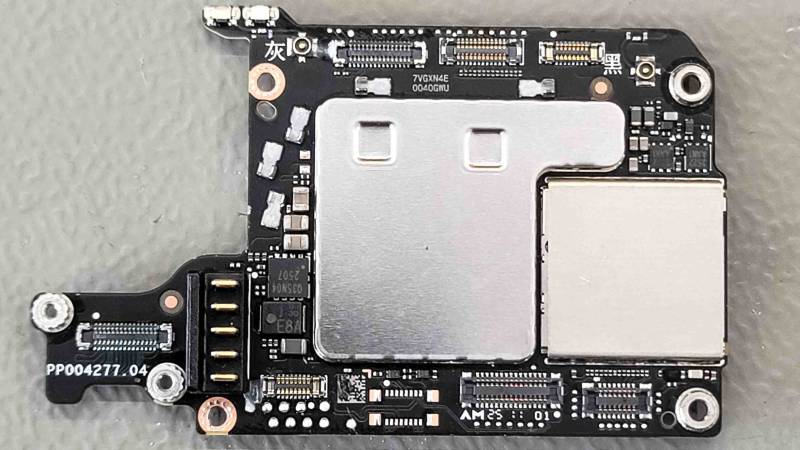
- Clean up all leftover glue next to the ribbon connectors, use heat and some plastic tweezers for this making sure to not damage any components on the mainboard.
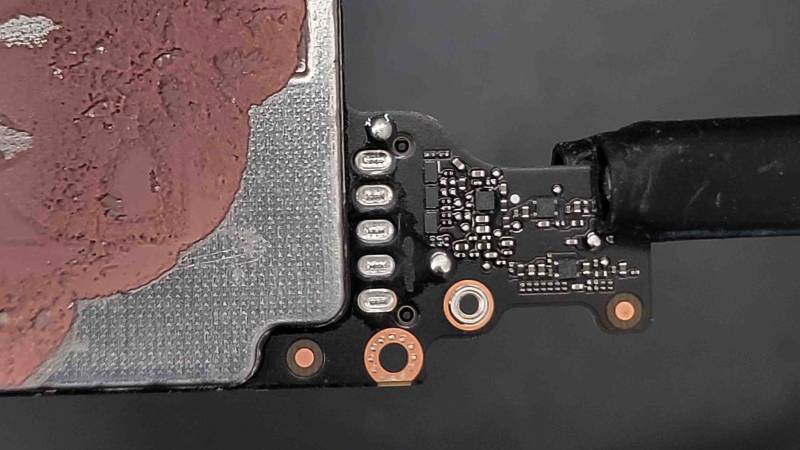
- Carefully clamp the mainboard onto a holder.
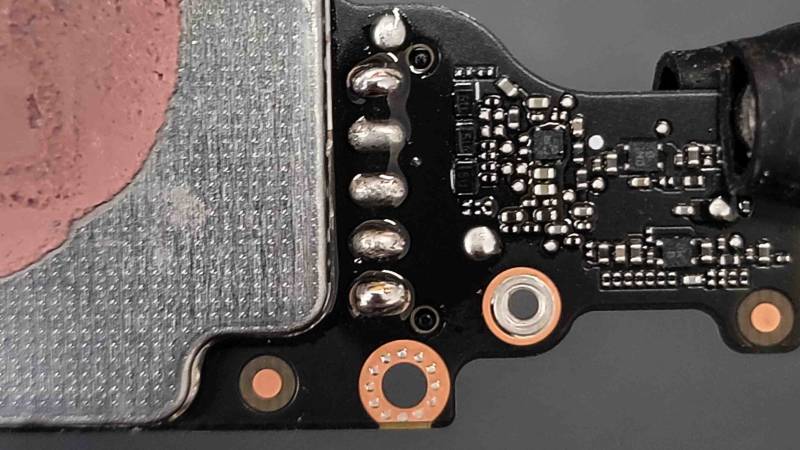
- Add solder to the battery connector pads.
- Heat up the pads and remove the connector.
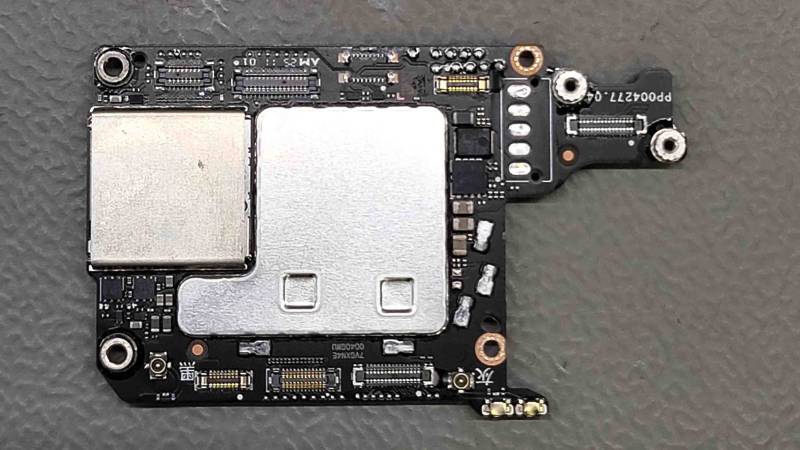
- Clean up the pads.
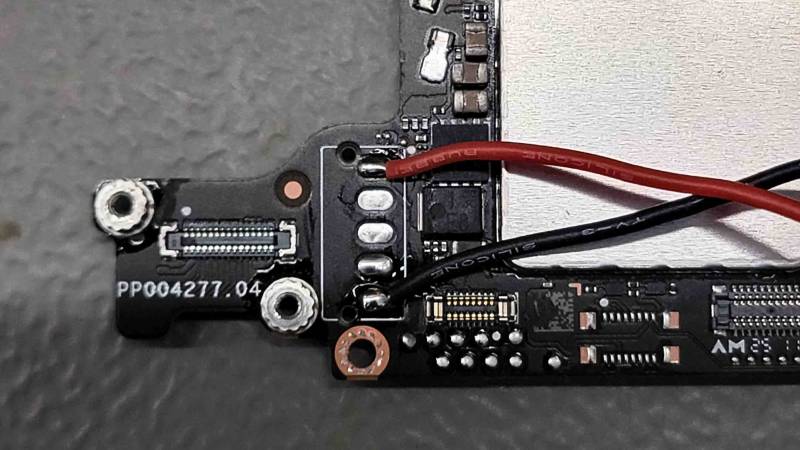
- Solder a black wire to the - solder pad of the mainboard and a red wire to the + solder pad of the mainboard.
Step - Sensor and Button Ribbon Preperation
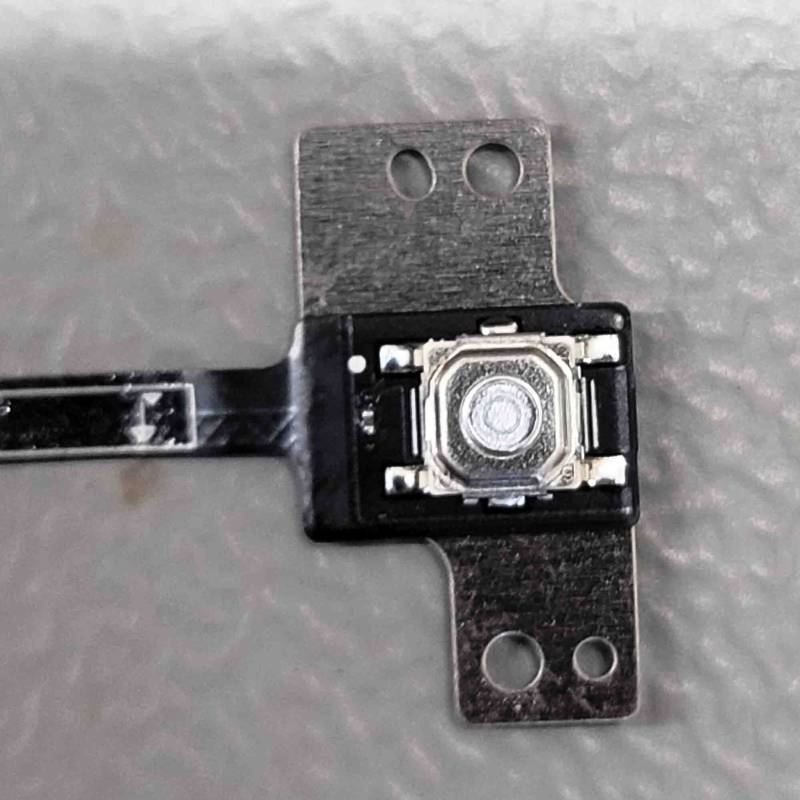
- Now we prepare the button part of the ribbon PCB.
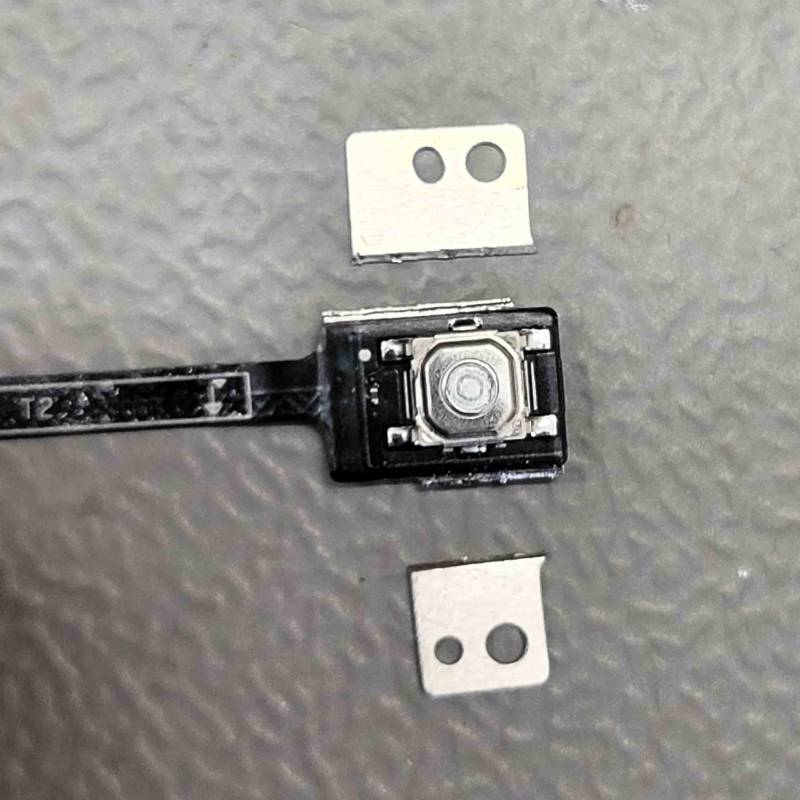
- Cut the noses from the button using some heavy duty clippers. Make sure to not damage the ribbon cable.
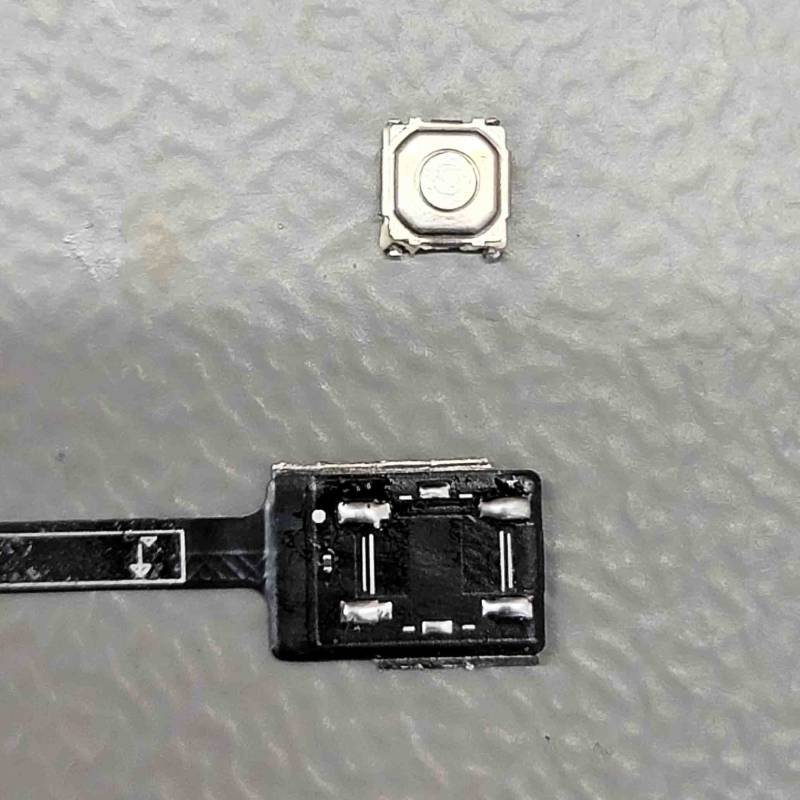
- Desolder the button and clean up the solder pads.
- You will need a lot of heat to remove the button.
- Make sure to not desolder the other components on the PCB.
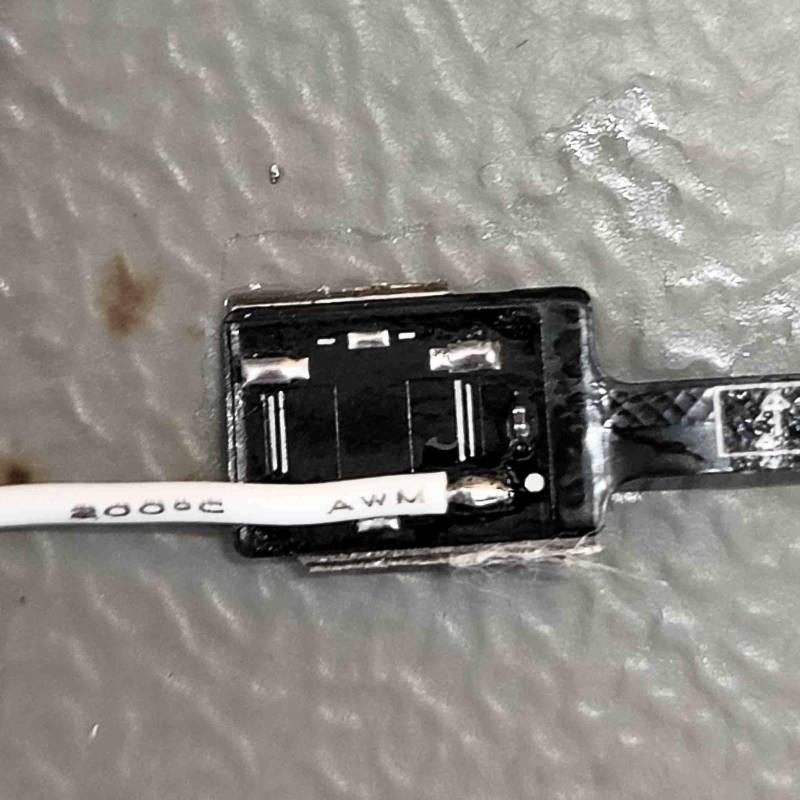
- Solder a white wire to the correct pad of the button.
- Make sure the orientation of the cable and pad is like shown on the picture.
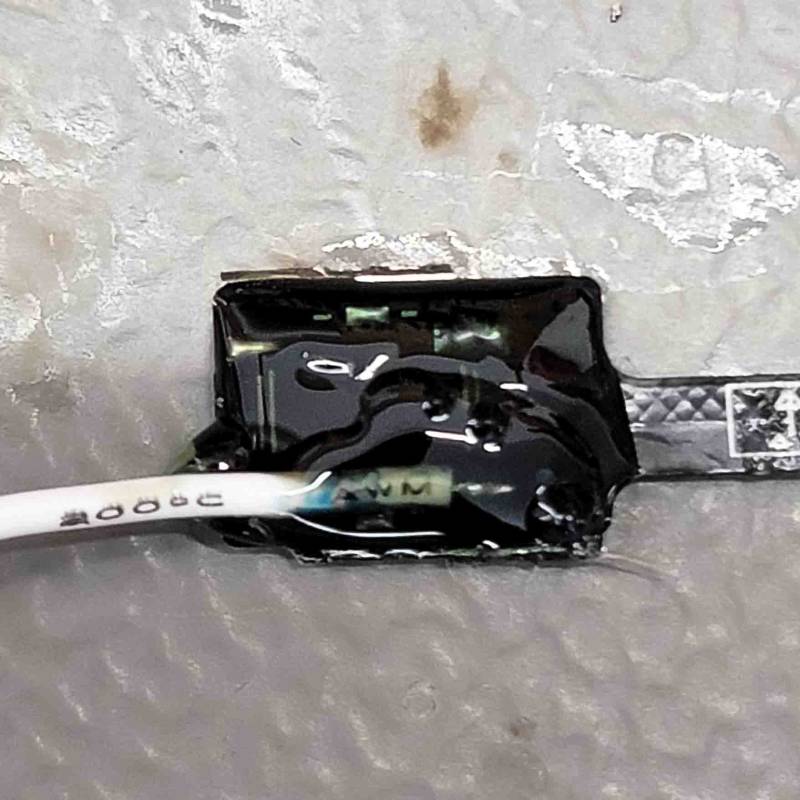
- Use some UV mask to protect the cable and solderpads and cure with a UV flashlight.
Step - Wifi Module Preperation
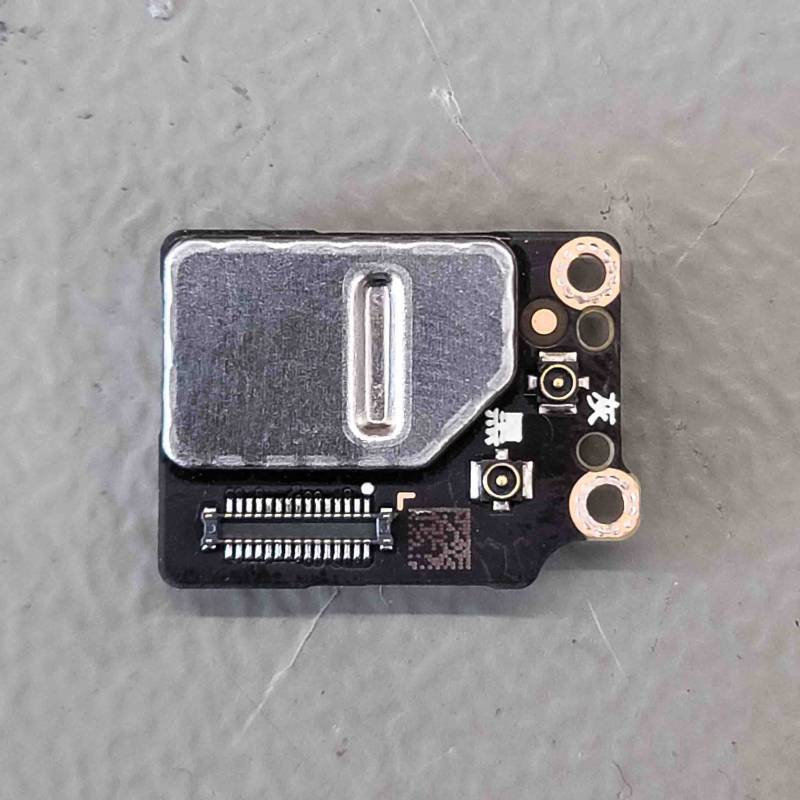
- Clean up all the glue next to the ribbon connector by using heat and some plastic tweezers.
- Clean up all the thermal paste leftover on the WiFi module.

- Break off the right edge of the WiFi module PCB using some side cutters.
Step - Back Display Preperation
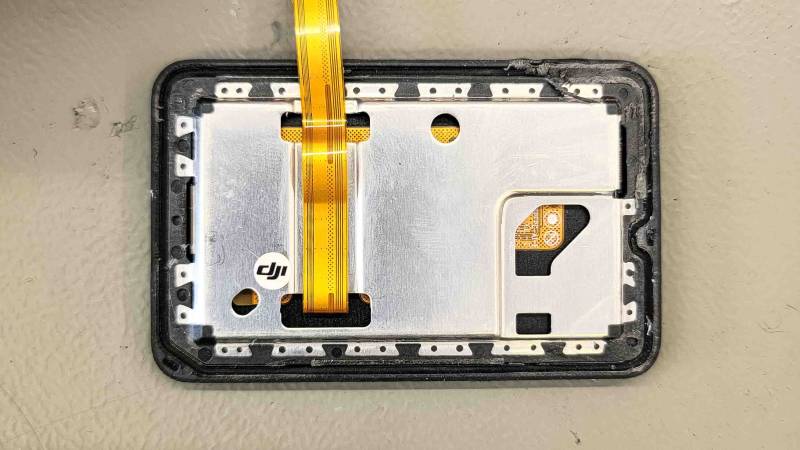
- Now we remove the needed parts from the back display.
- Clean up all the thermal paste leftover on the back display.
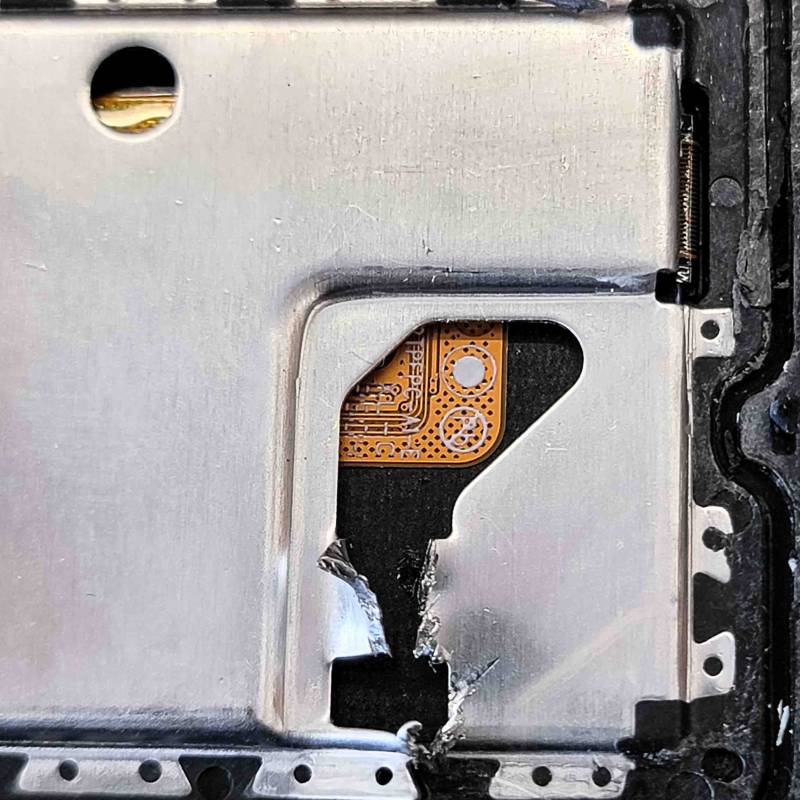
- Start by cutting a groove at the bottom right corner.
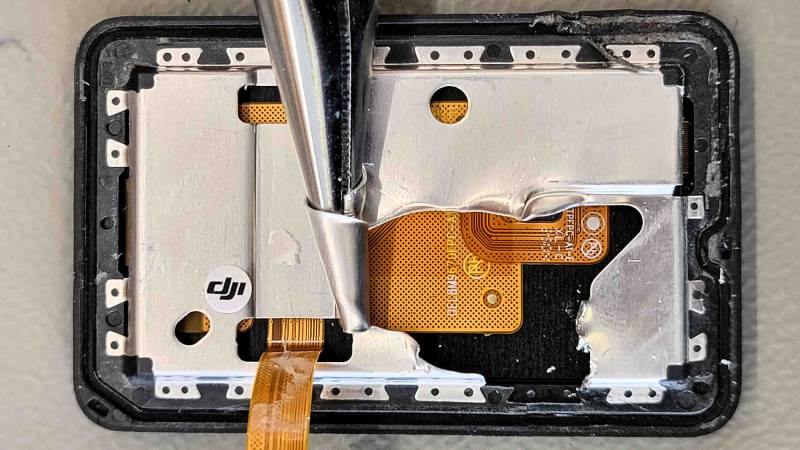
- Pry open the shielding from the display and remove it.
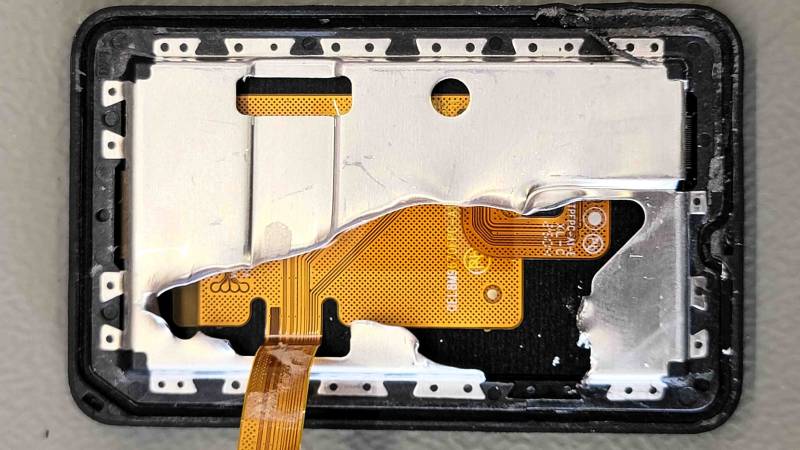
- Do this piece for piece with some pliers.
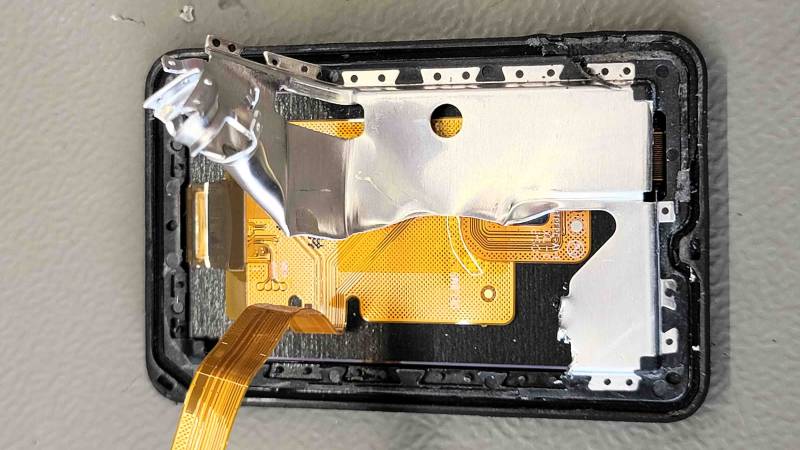
- Once you have a whole section removed it gets easier.
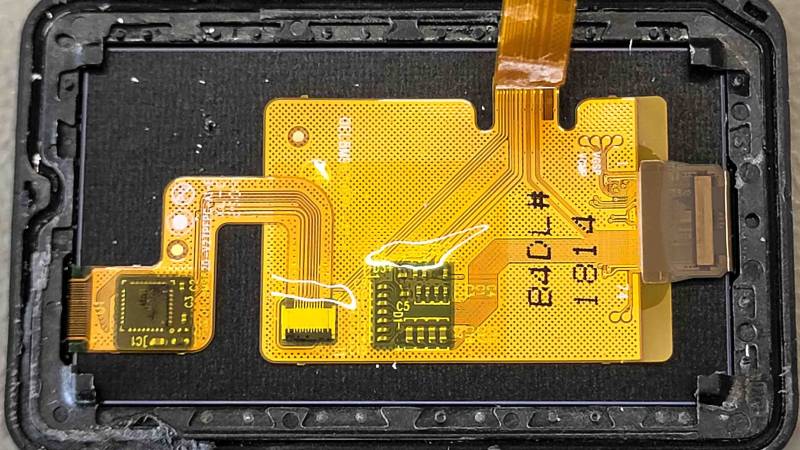
- Now you can see the ribbon PCB on the back of the back display.
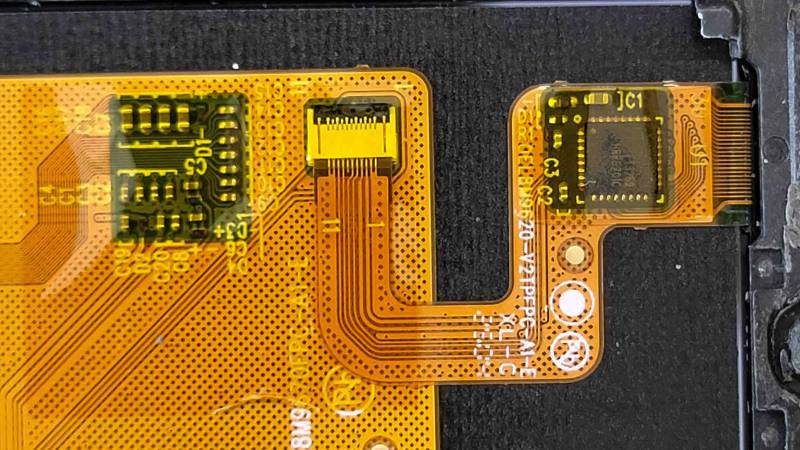
- We focus on this part now.
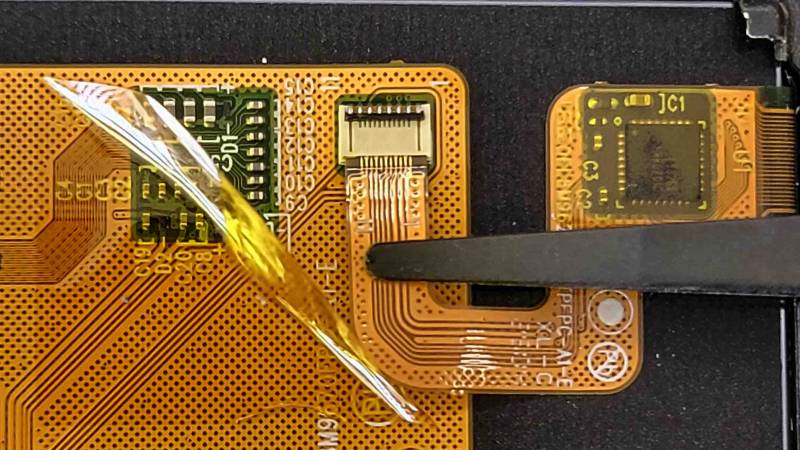
- Temporary remove the tape above the ribbon plug on the ribbon pcb.
- Disconnect the ribbon cable by opening the lash on the ribbon connector and pulling back on the ribbon cable.
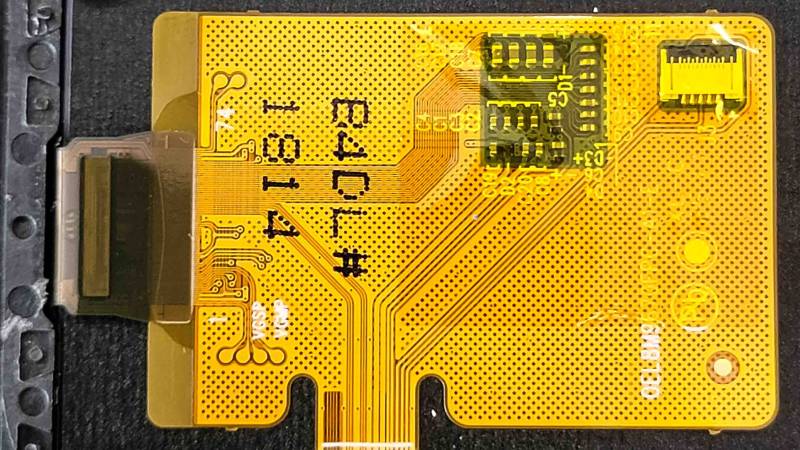
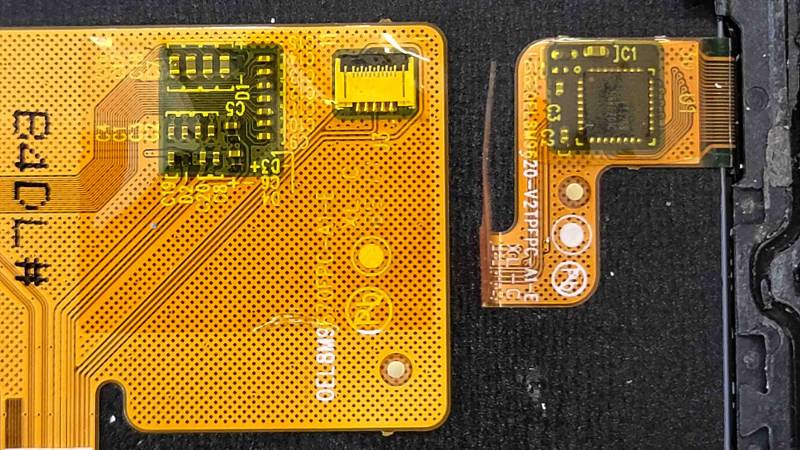
- Place the tape back onto the ribbon PCB.
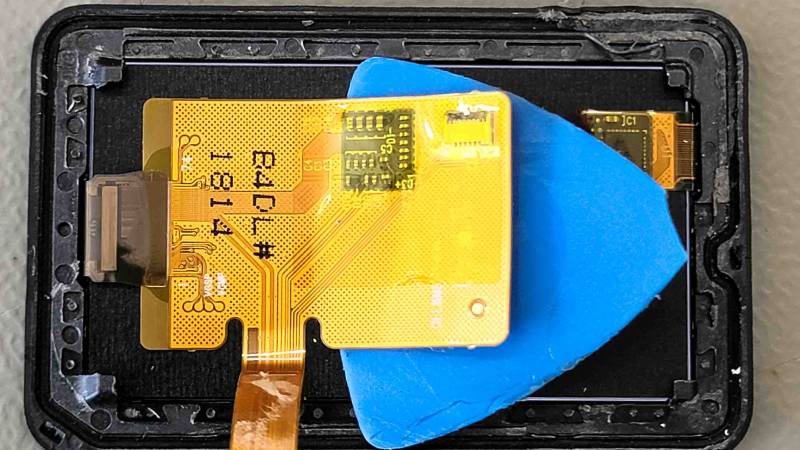
- Heat up the ribbon PCB and remove it from the display using some plastic tools.
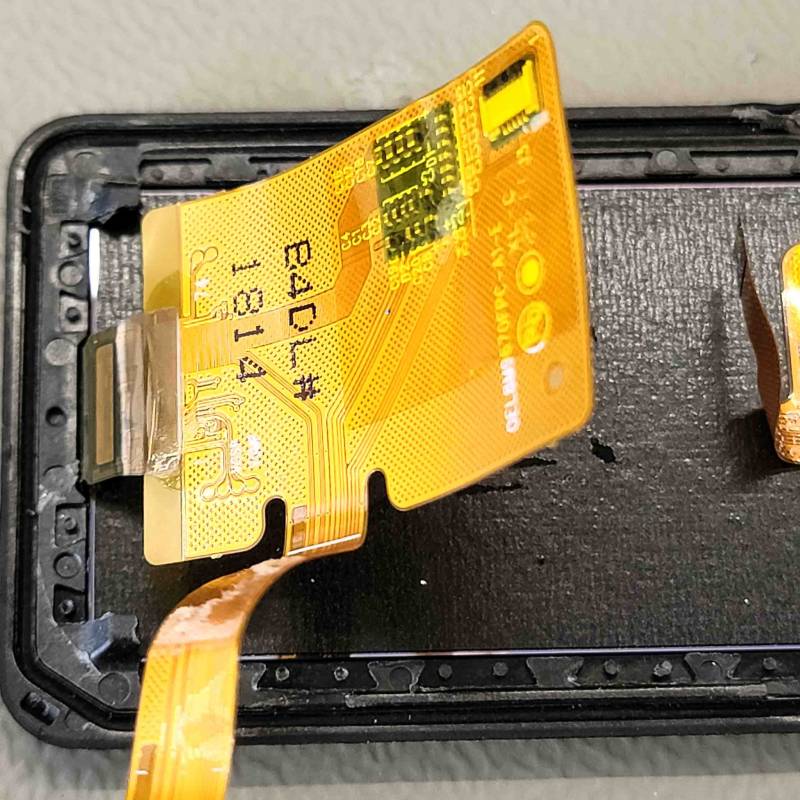
- Lift up the ribbon PCB so its only connected on the left side.
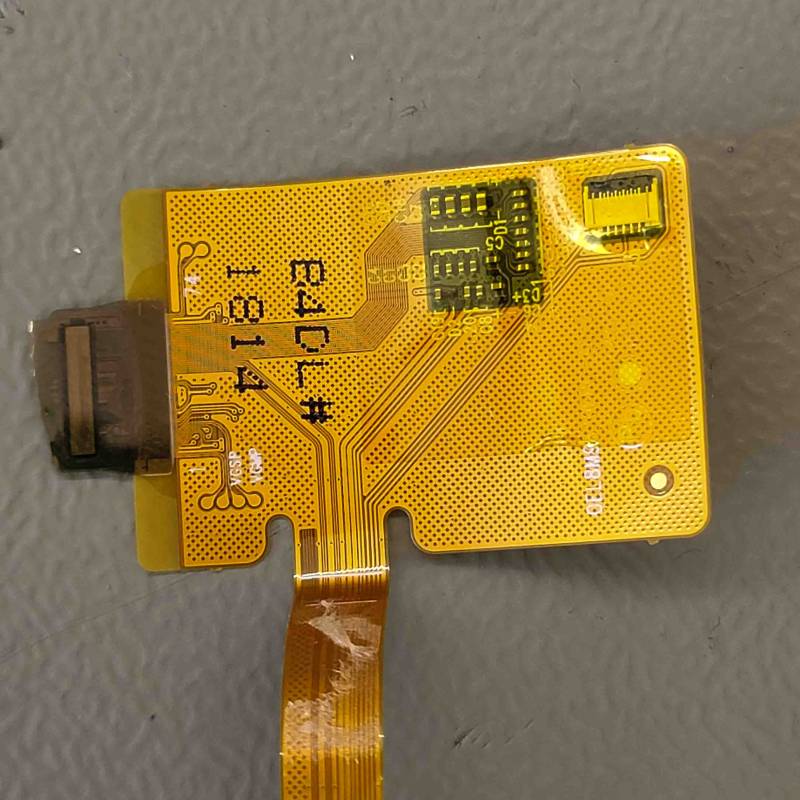
- Cut off the display flush making sure to leave on the black chip on the ribbon PCB side.
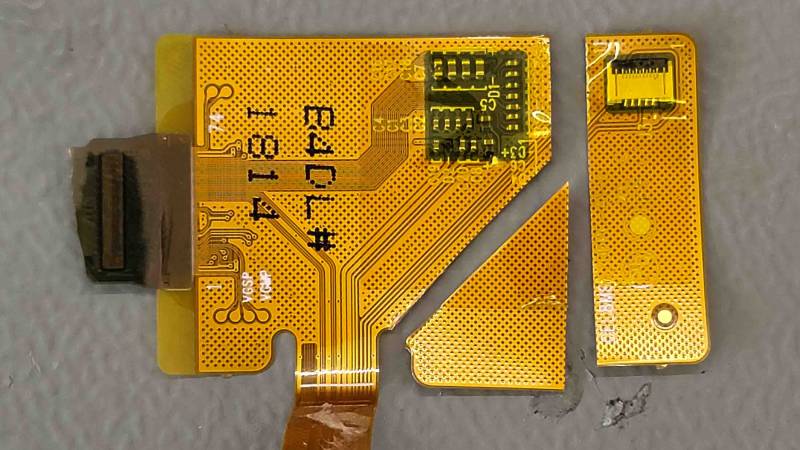
- Cut the ribbon PCB like shown in the picture
TODO Cut Sensor off from Sensor Ribbon Cable
Assembly Steps
Step - Install Thread Inserts

- Press the thread inserts into the outer side of the naked case using a clean soldering iron set to 220°C.
- Use 3x M2*4mm and 1x M2*3mm thread inserts, placing the 3mm insert where the wall thickness is the lowest.
Step - Install Front Display
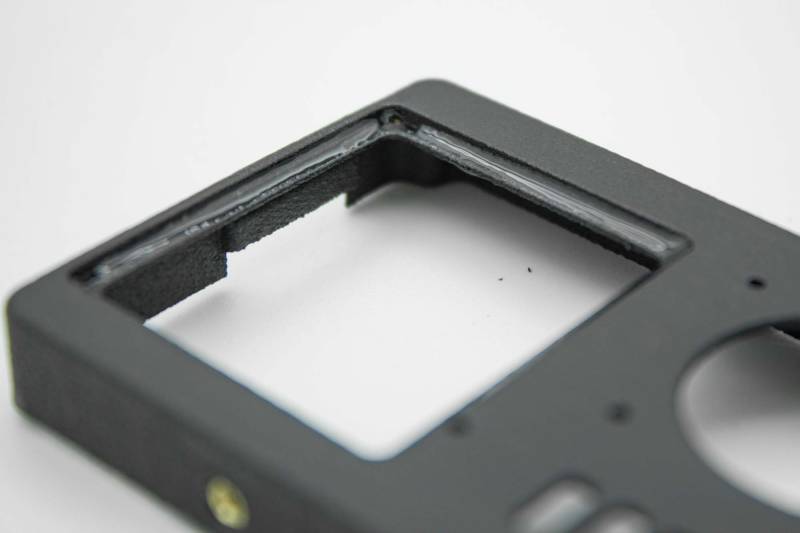
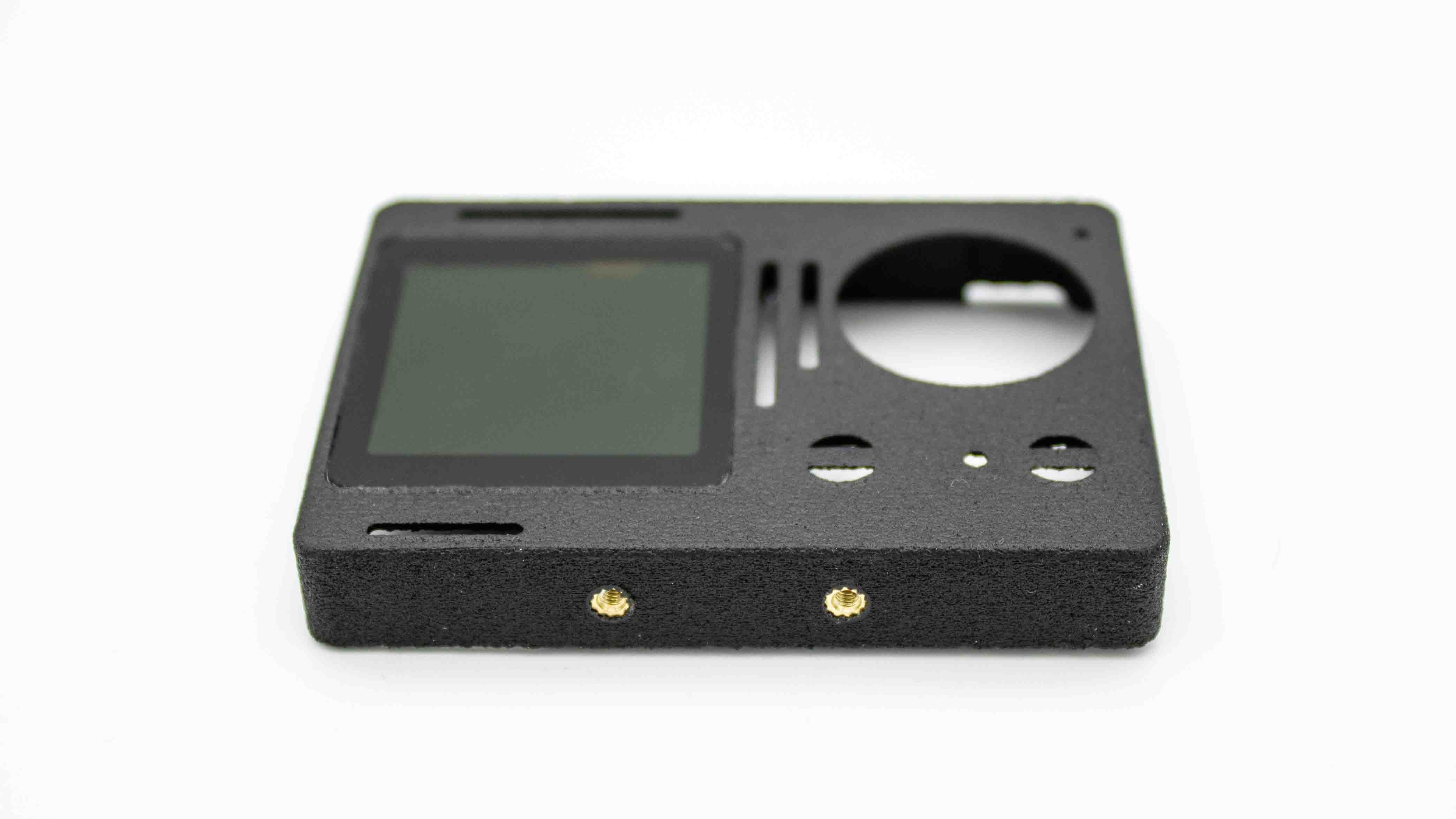
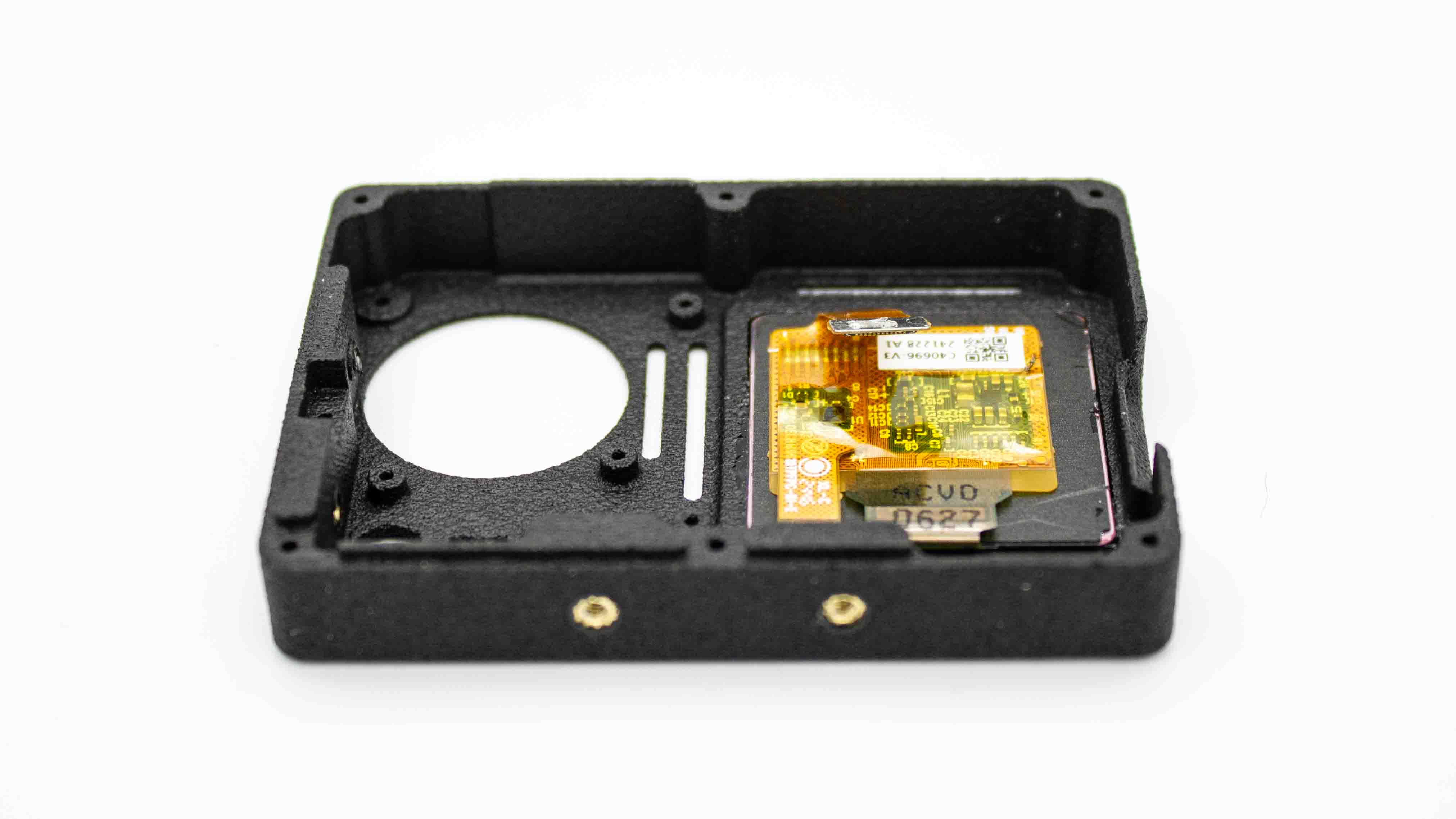
- Scruff up the surface of the Frontcover a little bit for better adhesion.
- Glue the front display in place with 2K epoxy.
- Make sure to get the orientation right.
- Wait for the epoxy to cure.
Step - Attach Sensor and Button Ribbon Cable

- Put the Sensors to the cutout on the front side of the case using the double sided tape thats already on the sensor.
- If the original double sided tape doesn't stick anymore replace it with some new thin double sided tape.
Step - Attach ND Filter Adapter
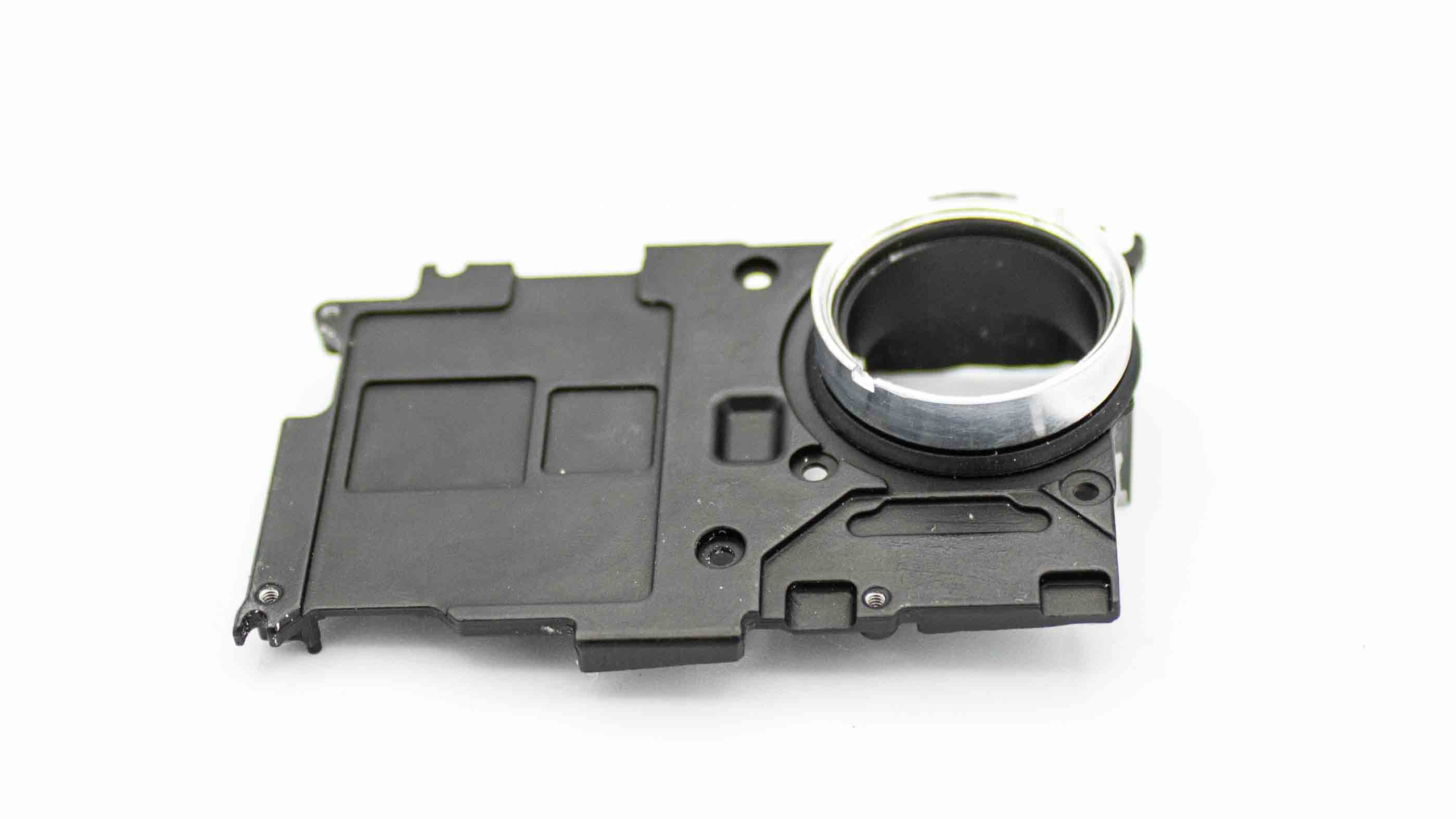
- Screw the aluminum ND filter adapter to the motherboard holder.
Step - Assemble Main Components


- Place the motherboard holder into the naked action 5 front case and secure it with the four silver screws.
- Screw an M1.6*6 screw through the top right hole and secure it with an M1.6 nut inside for additional strength.
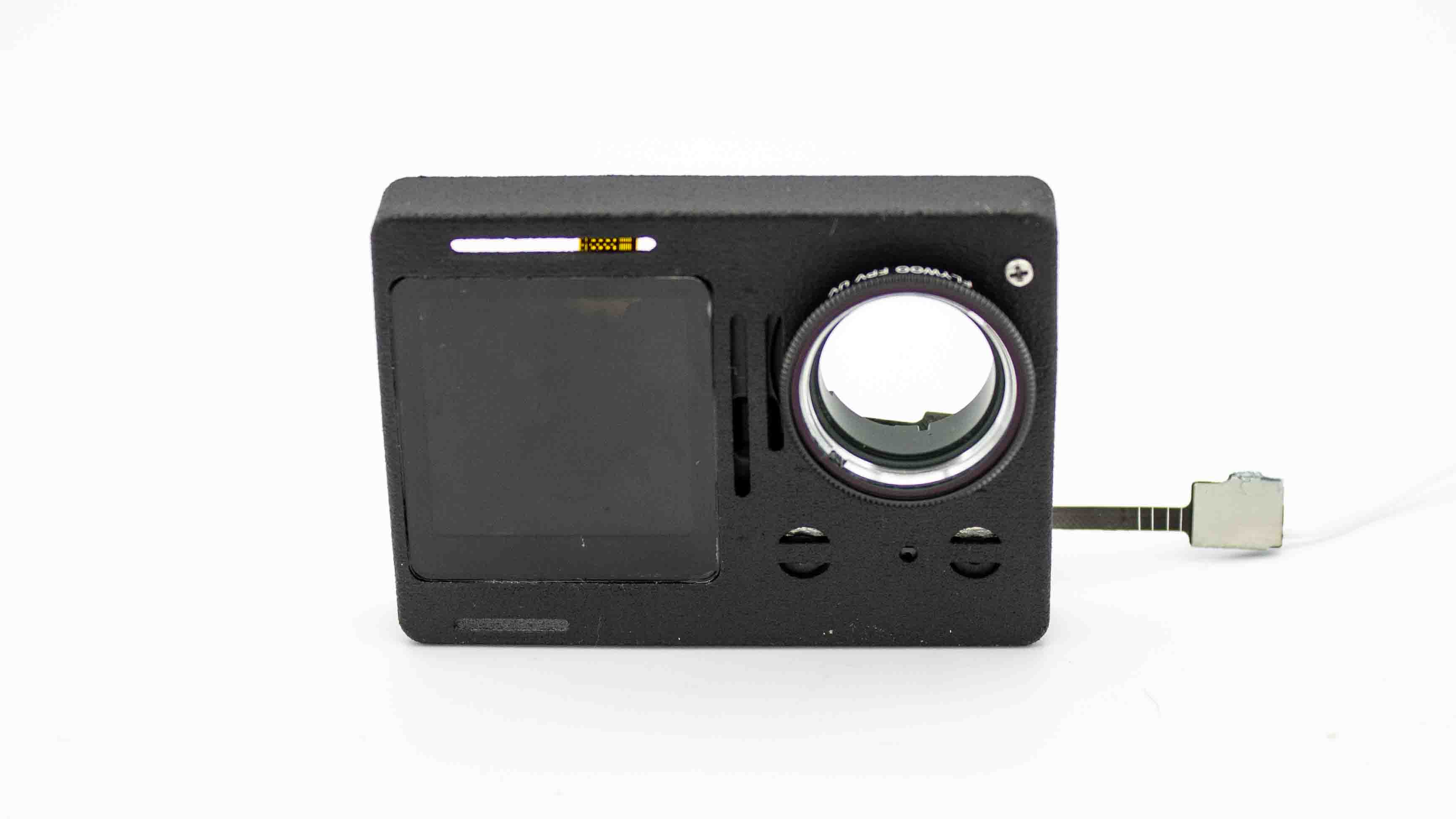
- Attach an ND filter to protect the lens during installation.

- Install the mainboard with the two screws.
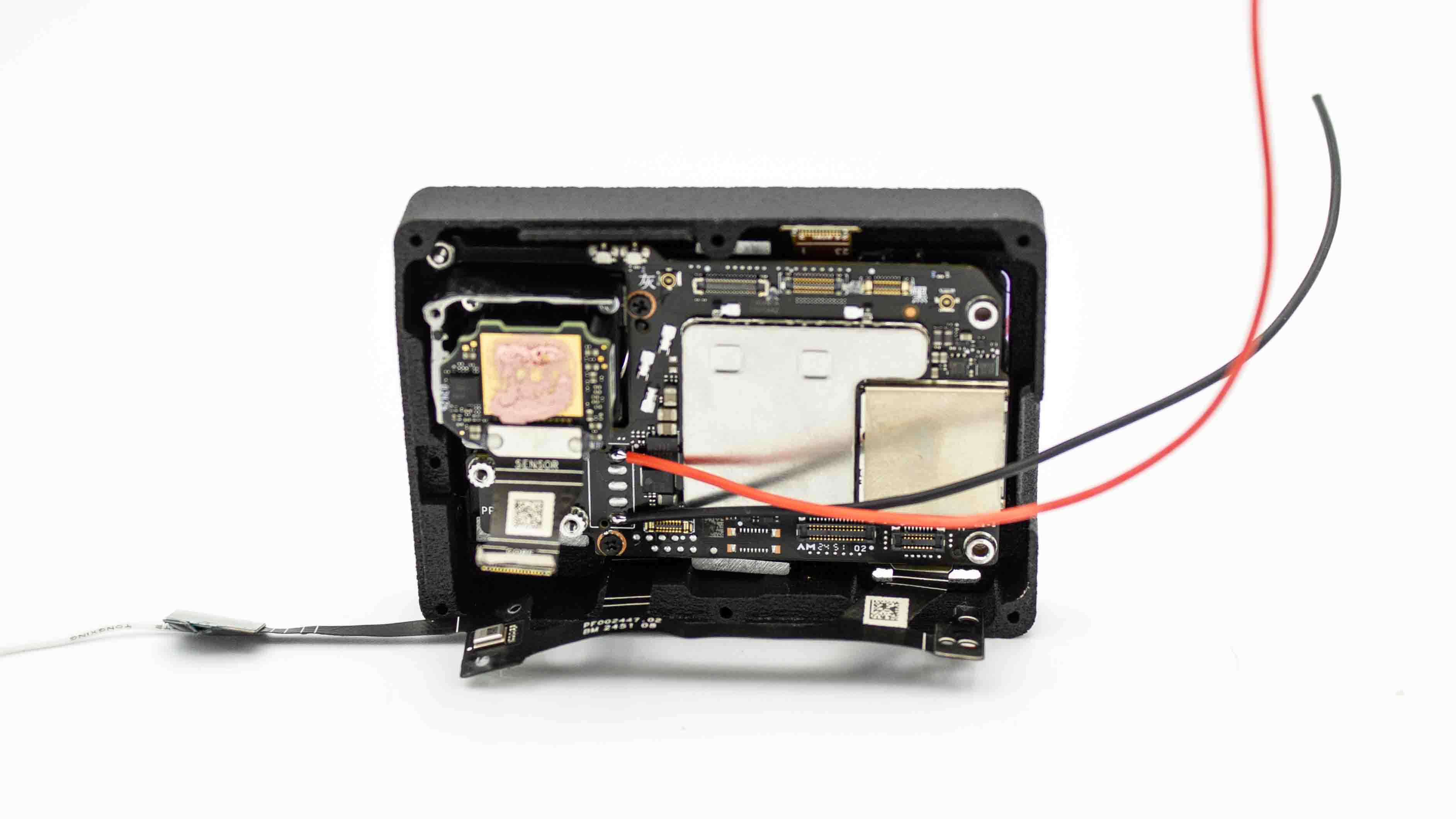
- Install the lens and secure it with three lens screws.
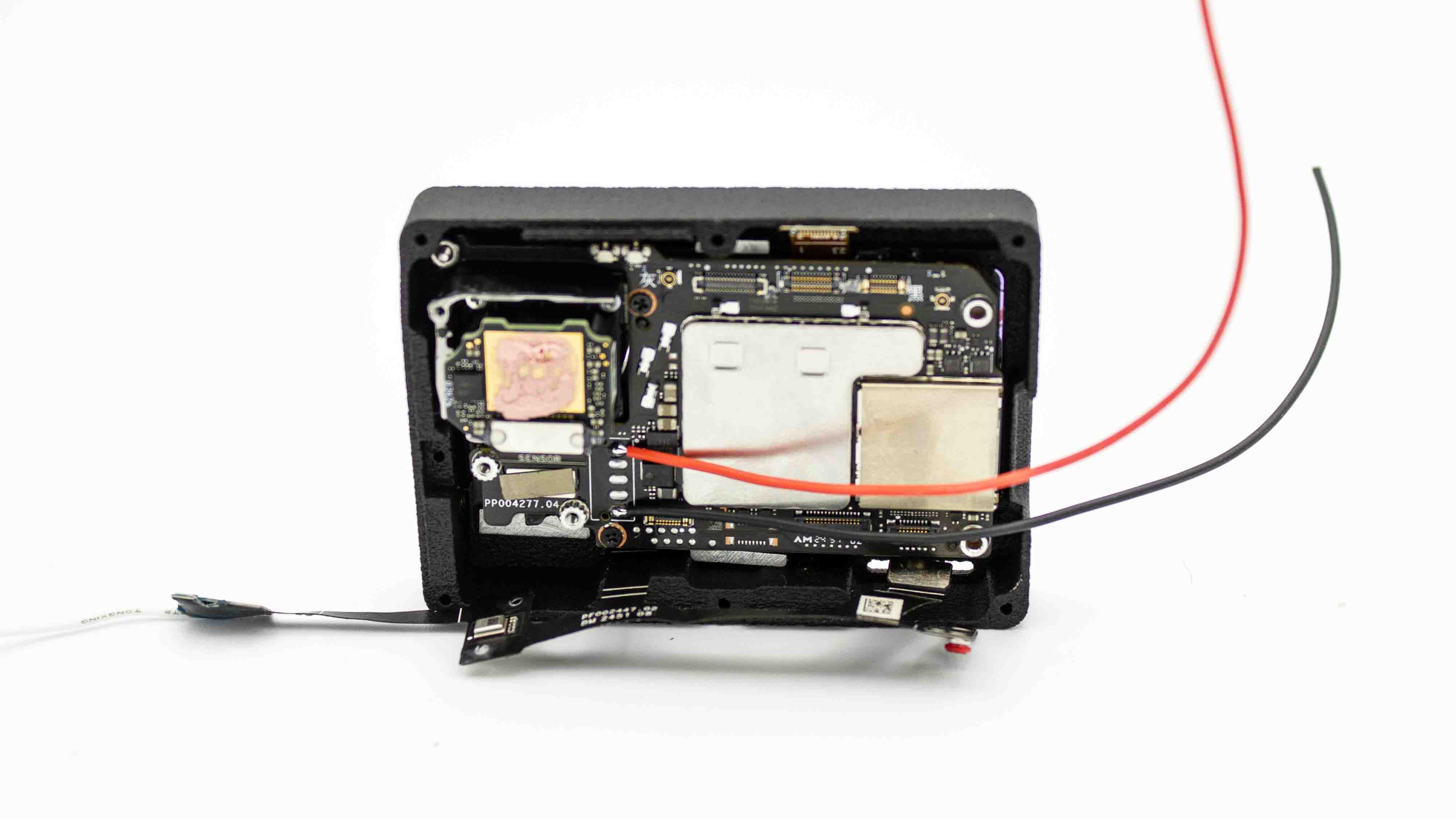
- Plug in the lens ribbon cable to the mainboard. Ensure correct alignment before applying force.

- Add the silver lens ribbon bracket and secure it with two screws.

- Attach the WiFi module holder and secure it with a screw. Use a spare long M1.6 screw from the disassembly.
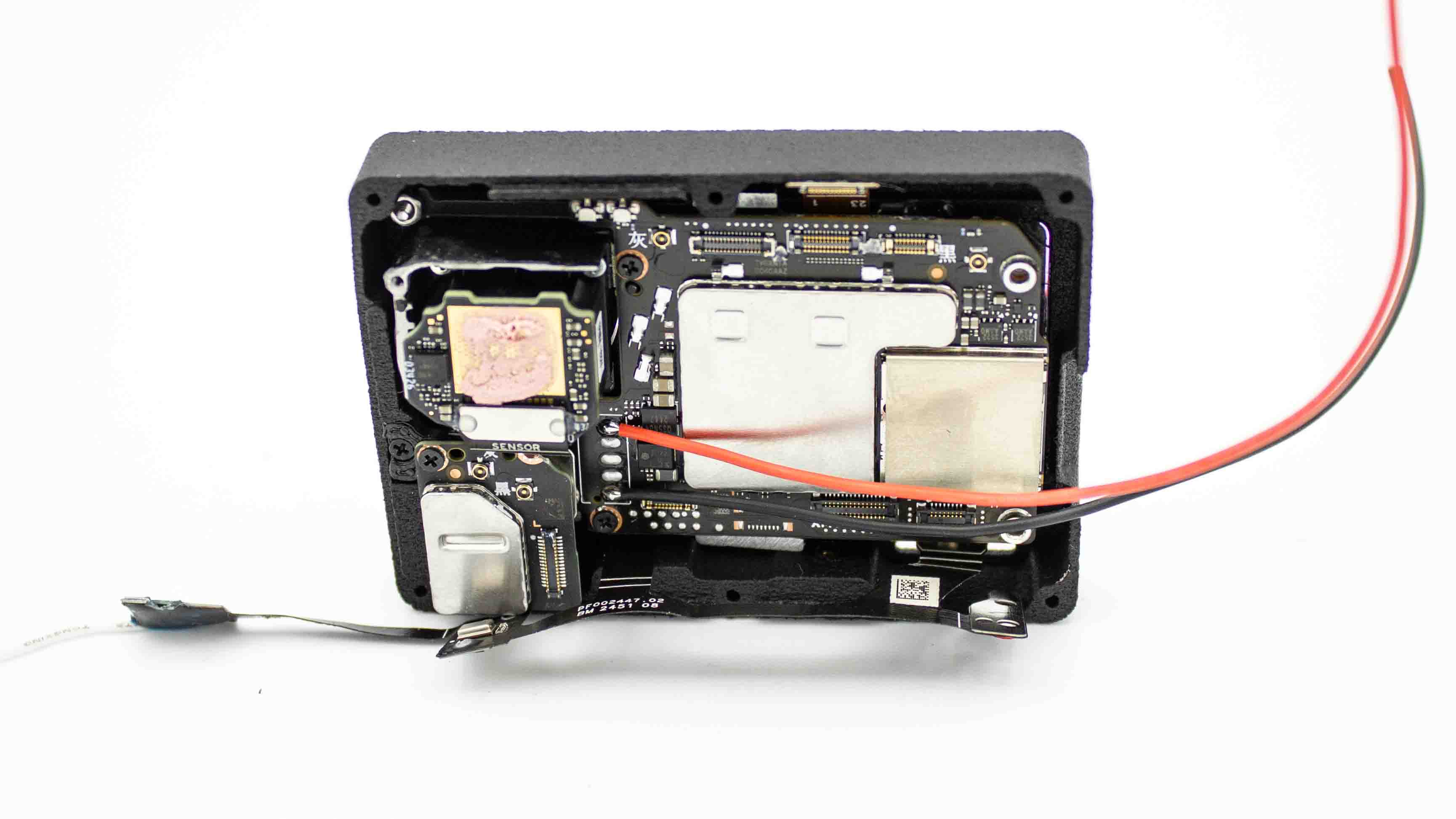
- Add the WiFi module on top of it and secure it with a spare short M1.6 screw from the disassembly.
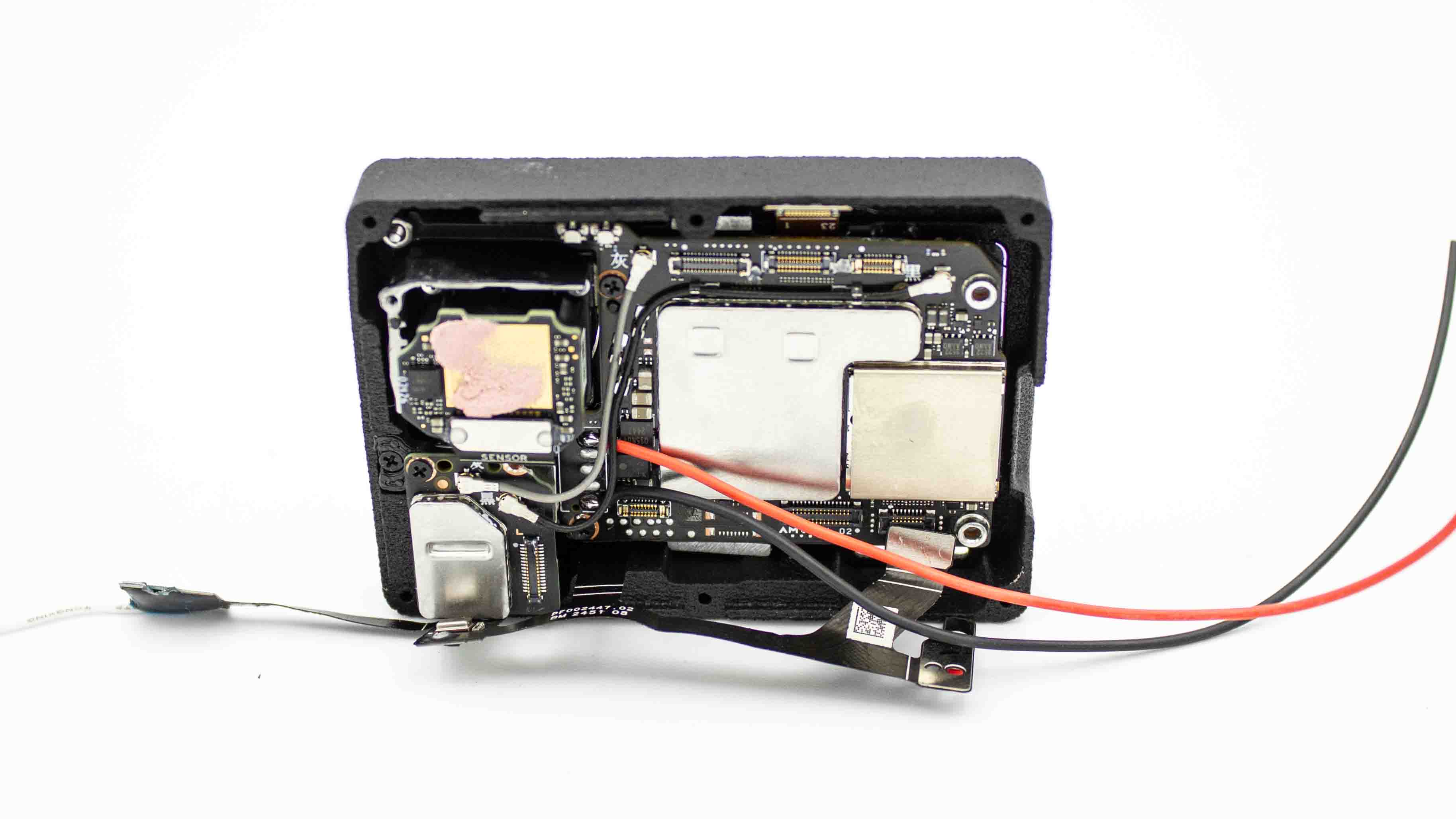
- Add the WiFi module antenna cables and connect them on both sides.

- Fold the sensor and button ribbon cable to a package, secure it with tape.


- Add the WiFi ribbon cable and connect it on both sides. Ensure correct alignment before applying force.
- Make sure the ribbon cable package is placed under the WiFi ribbon cable.

- Plug in the front display ribbon cable to the mainboard. Ensure correct alignment before applying force.
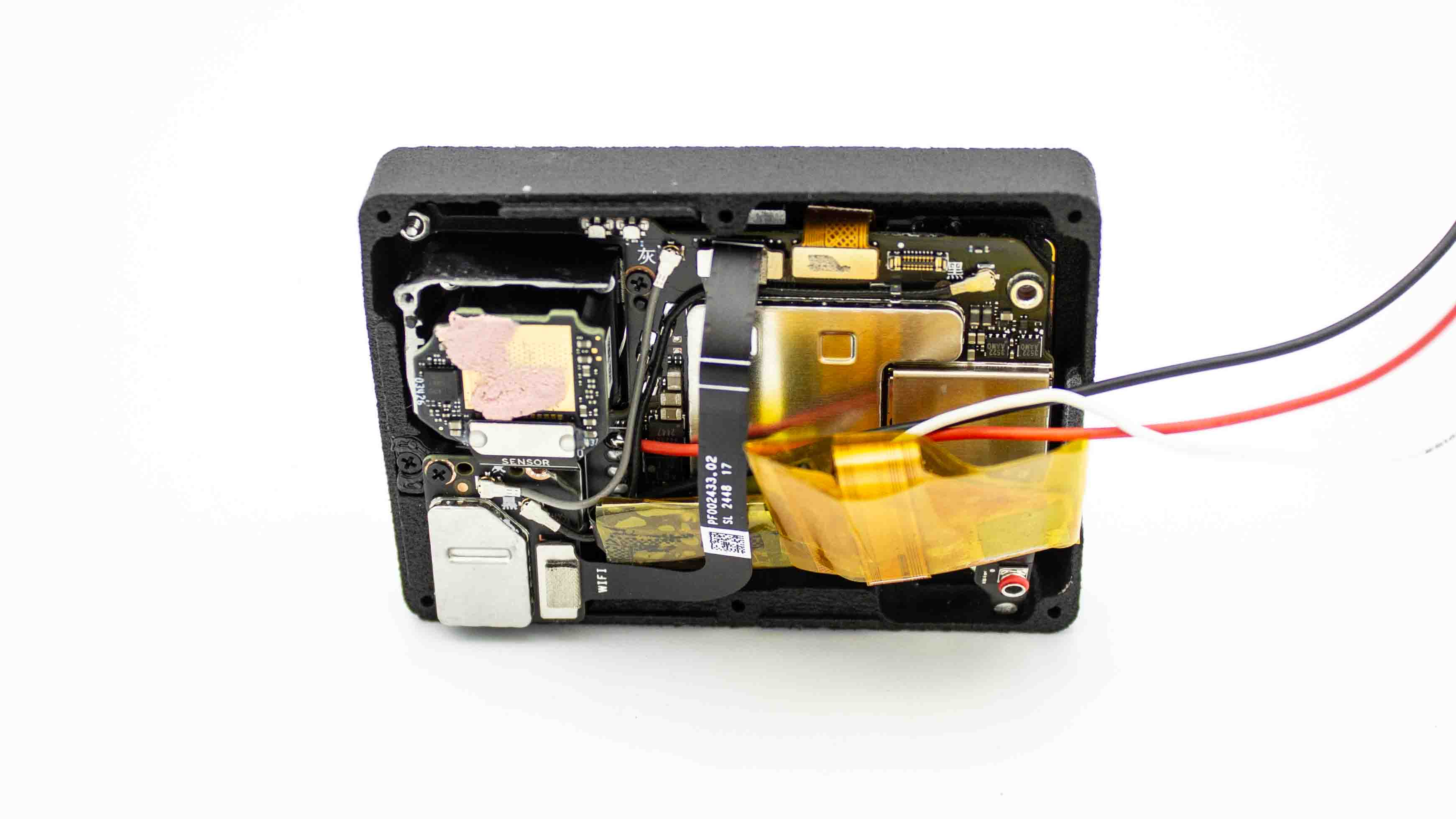
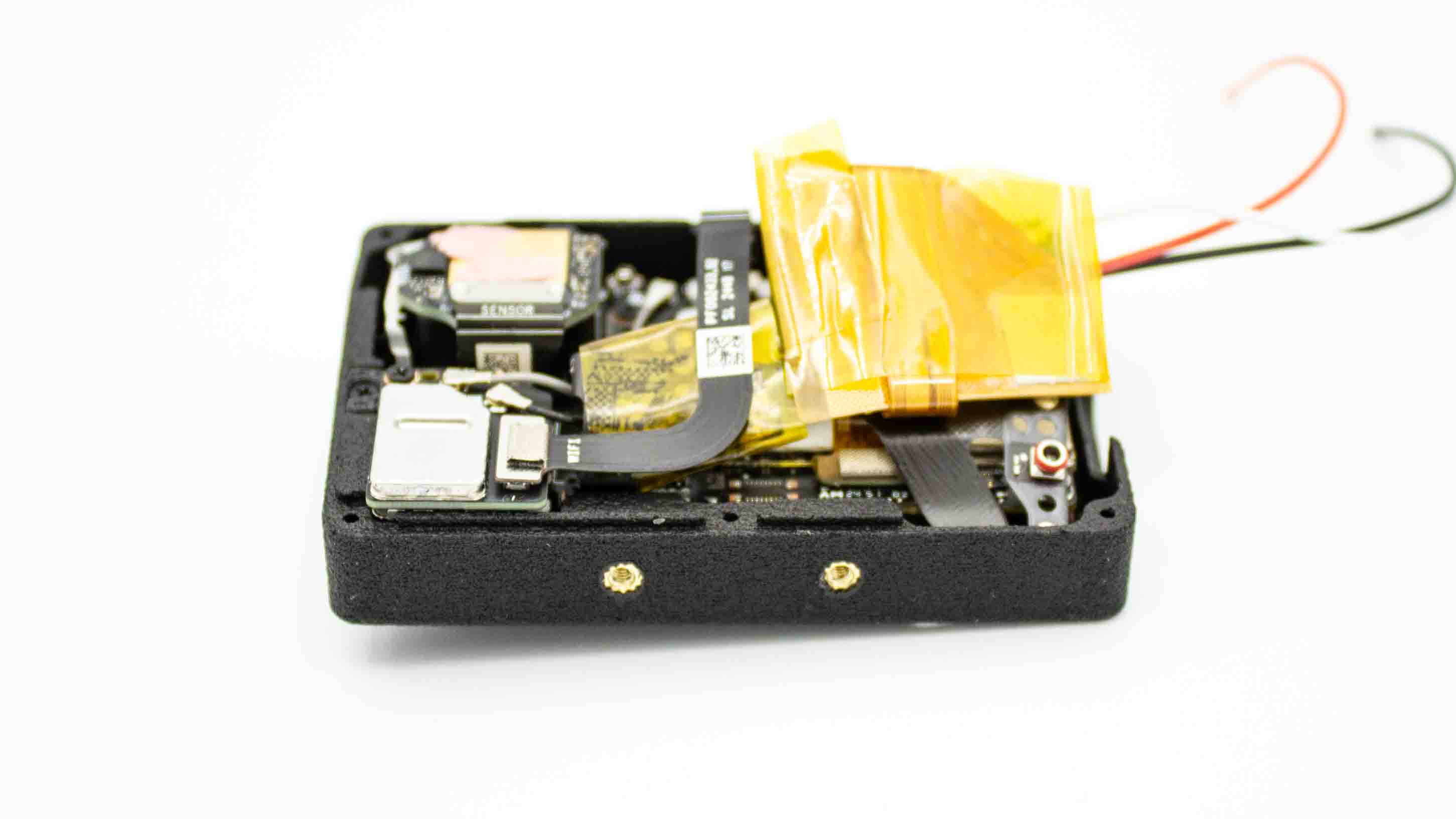
- ATTENTION: THE BACK DISPLAY CABLE IS CONNECTED THE WRONG WAY IN ALL FOLLOWING PICUTRES. MAKE SURE TO CONNECT IT THE RIGHT WAY (manual will be updated ASAP)
- Add the back display cable and tape it together to a compact package sitting ontop of the mainboard.
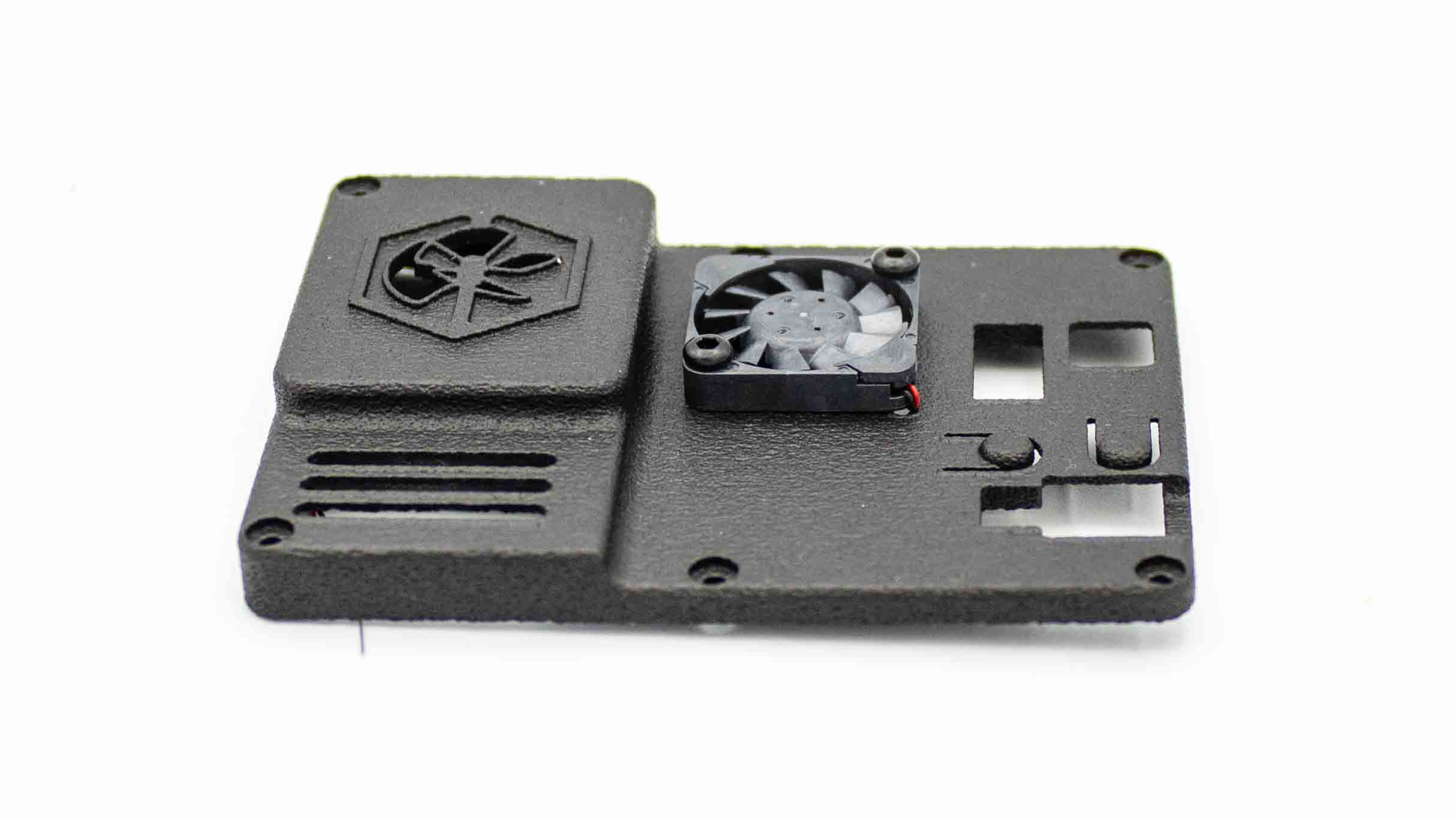

- Attach the cooling fan to the back case with M2*5 screws using an M2 hex tool.
- Make sure to get the fan direction right.
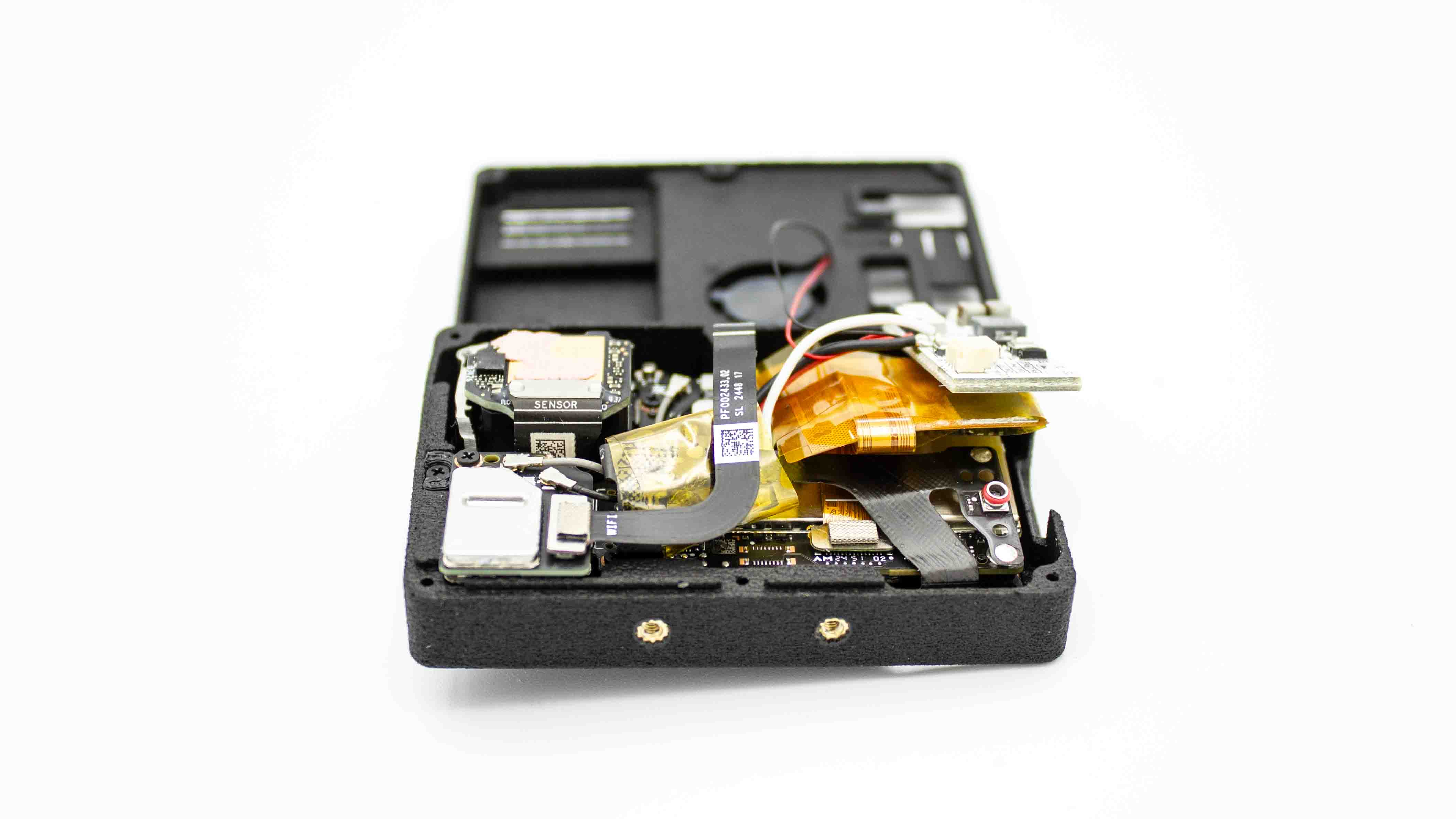
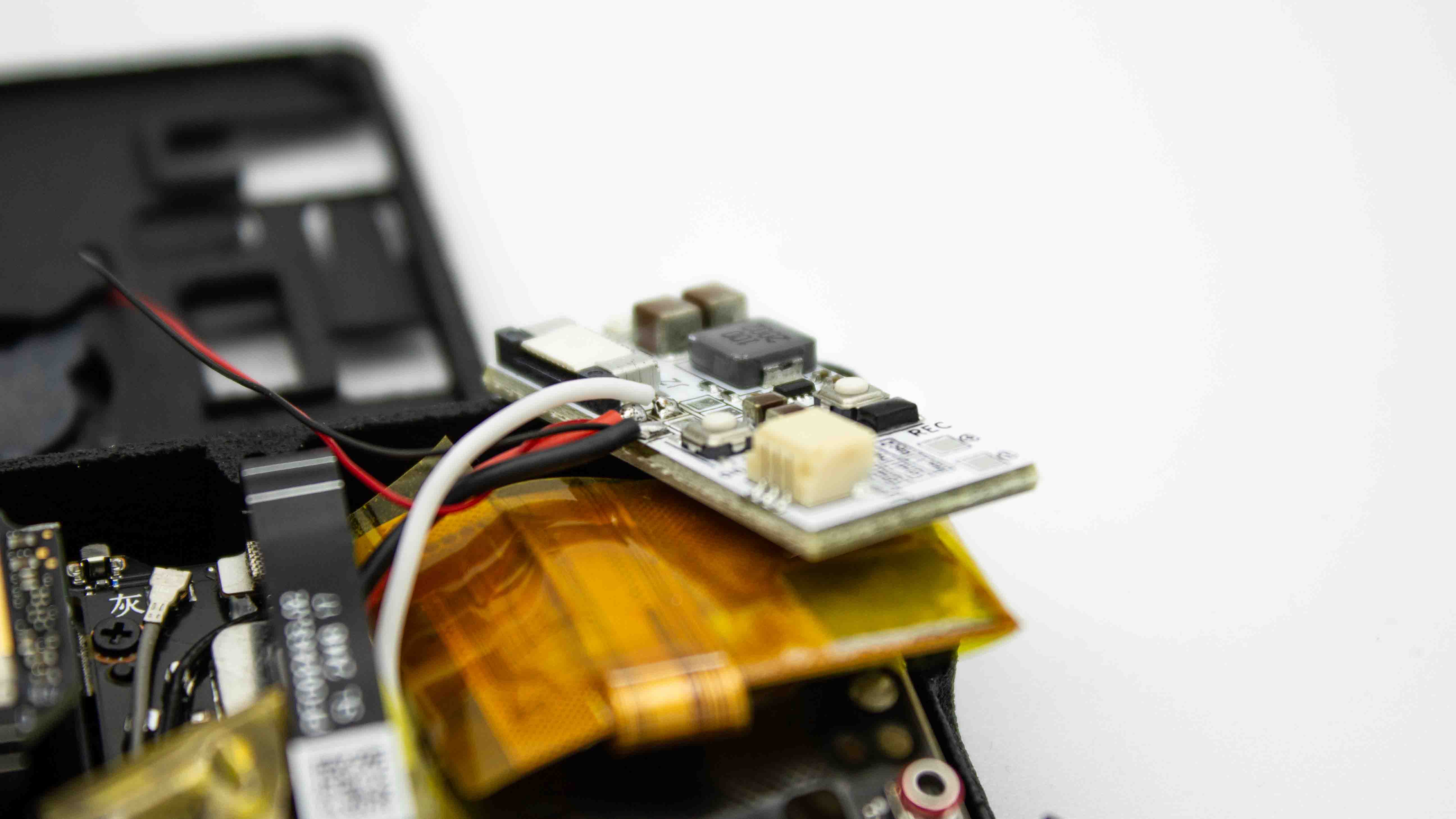
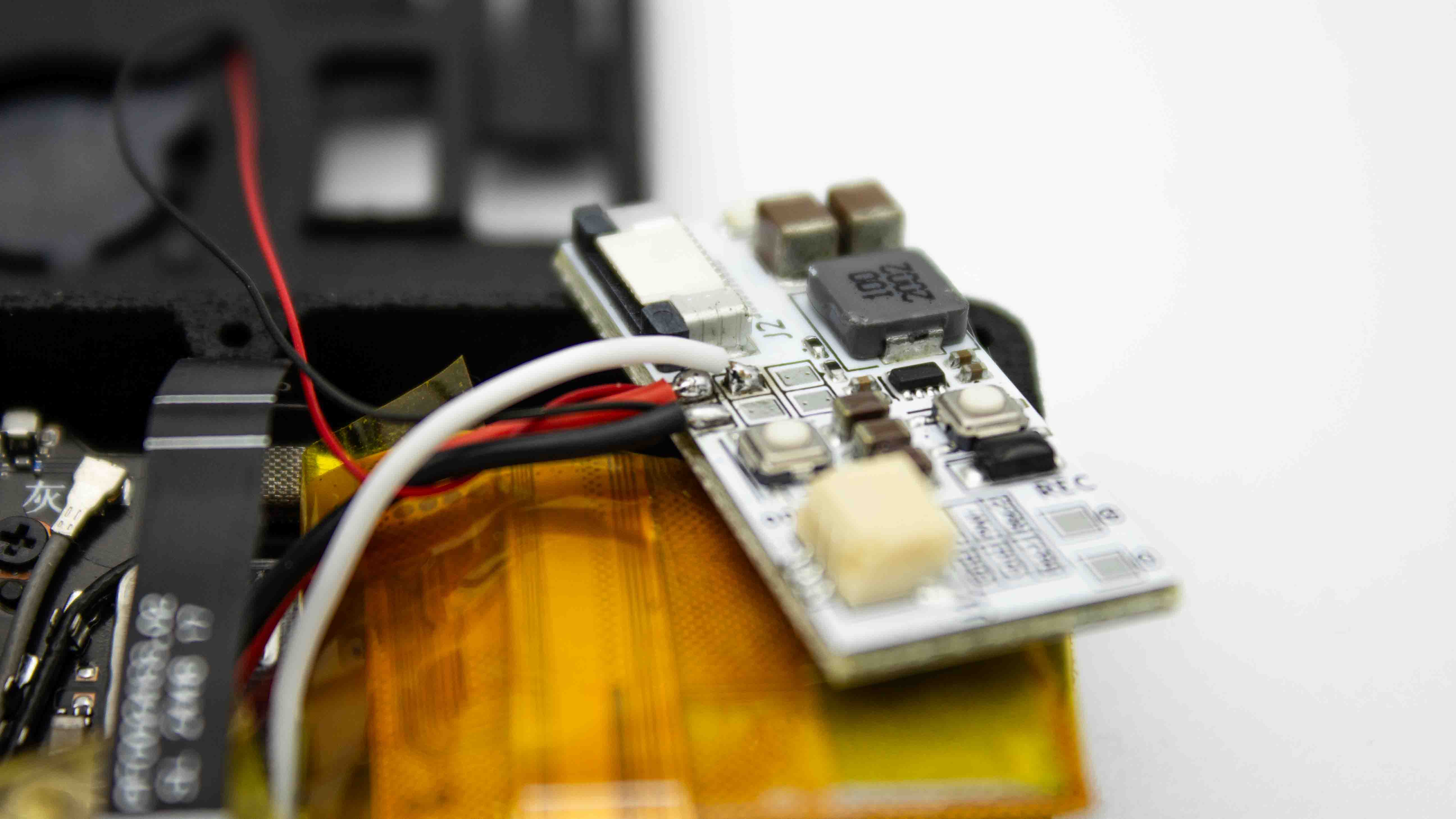
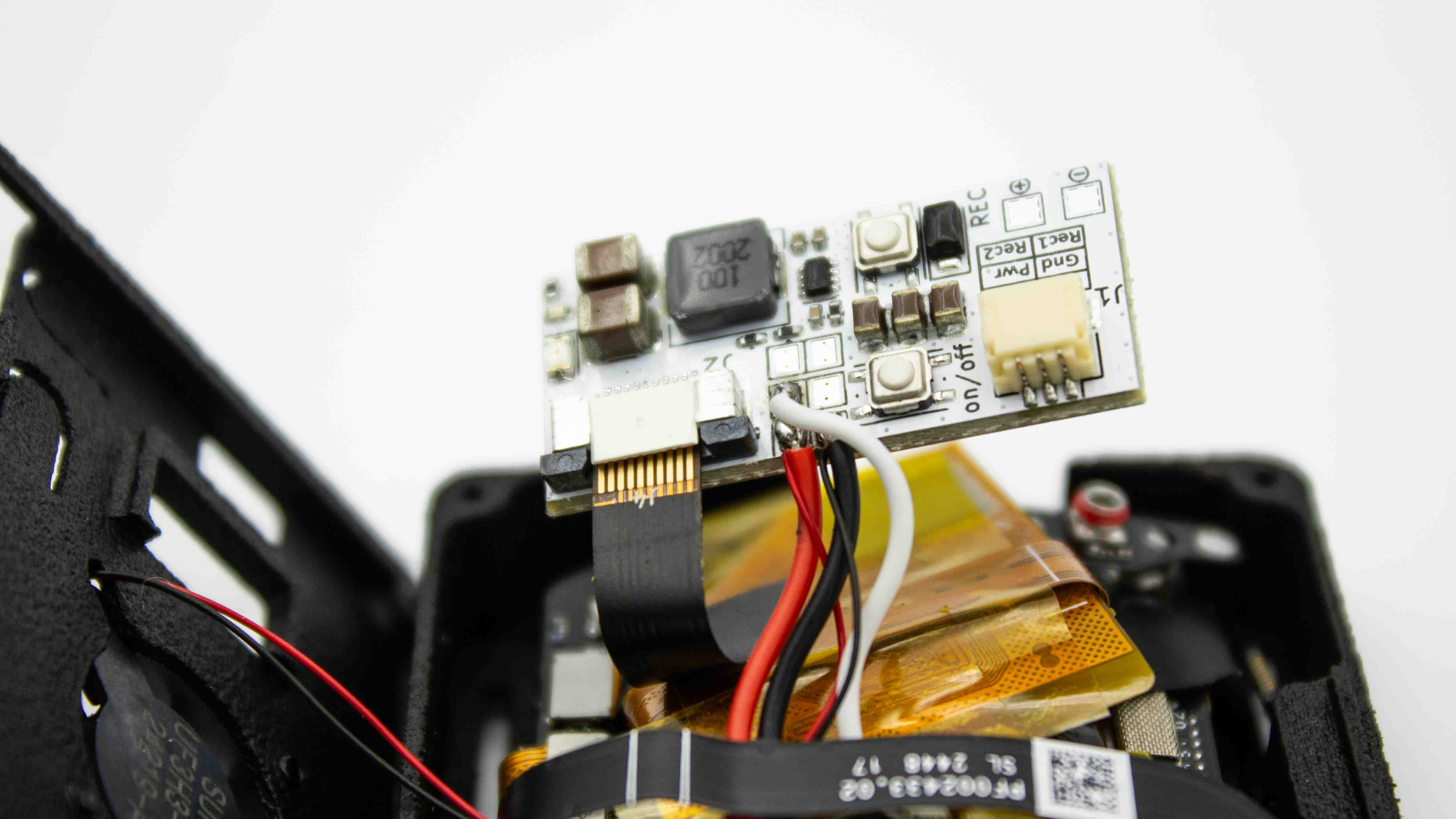
- Shorten the fan power cables.
- Shorten the mainboard power cables.
- Shorten the button cable.
- Pretinn the 5v, GND and PWR pads.
- Solder both red cables to the 5v pad.
- Solder both black cables to the GND pad.
- Solder the white button cable to the PWR pad.
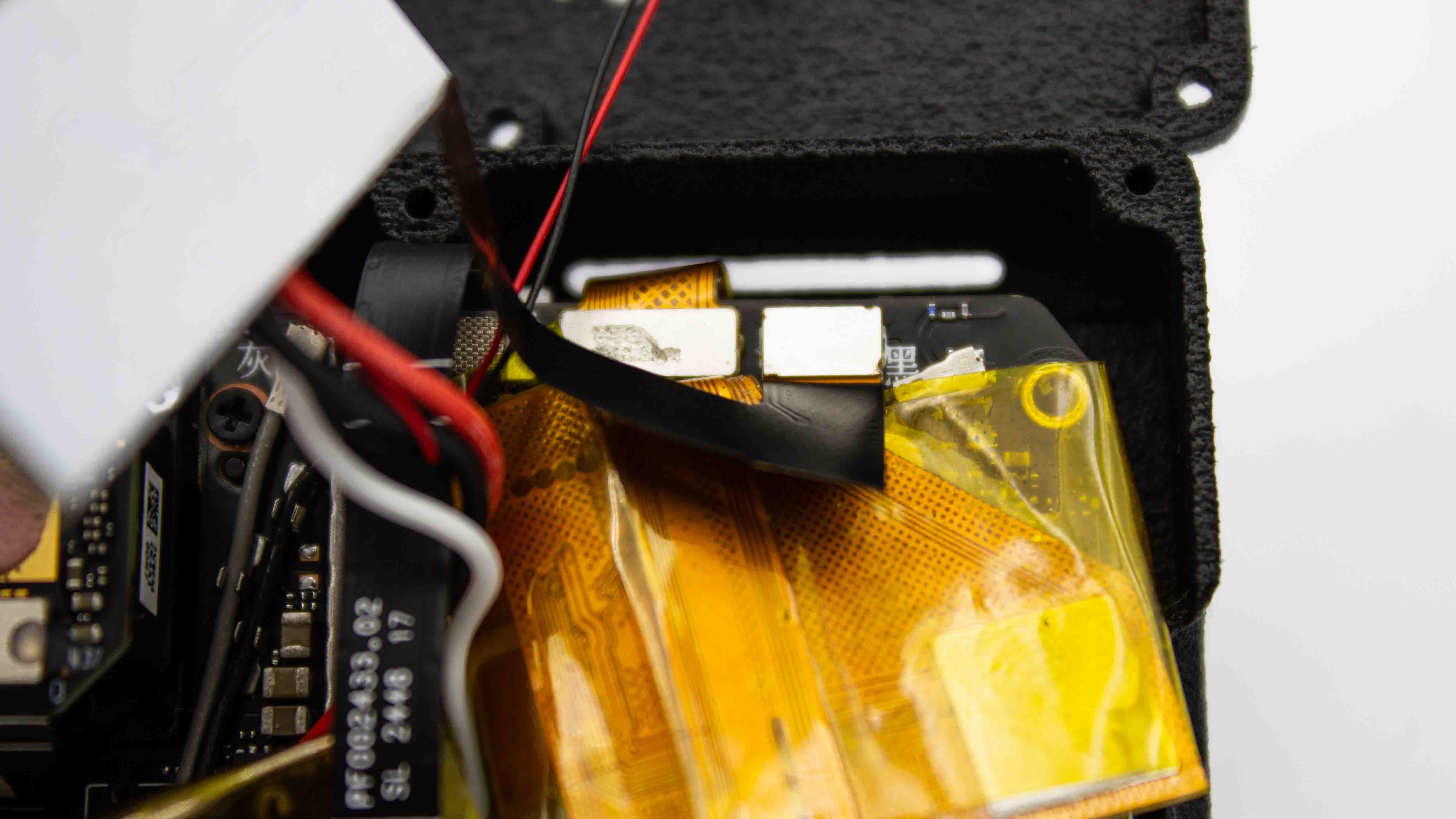
- Plug in the BEC ribbon cable to the mainboard. Ensure correct alignment before applying force.
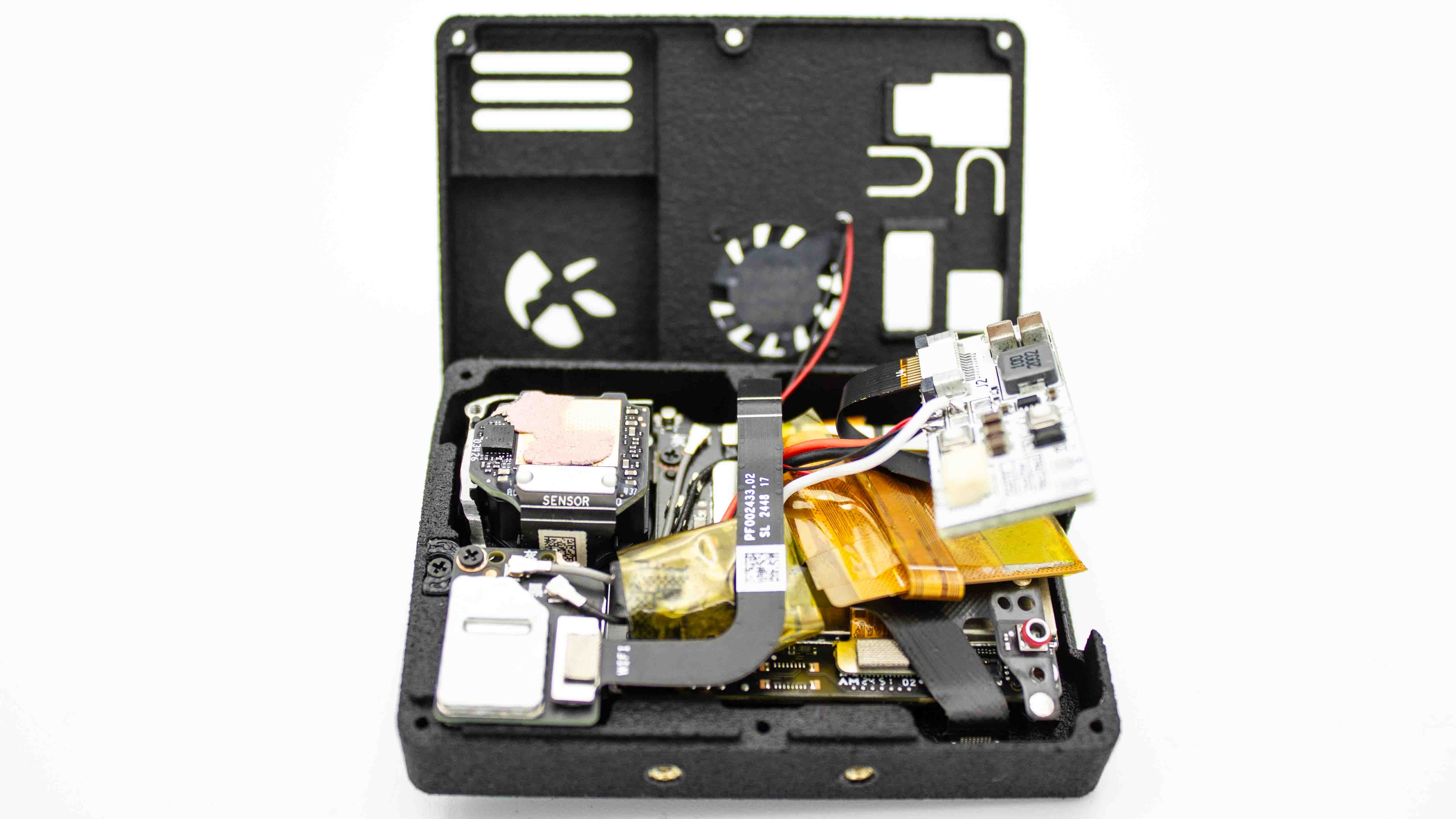
- Connect BEC ribbon cable to the BEC. Ensure correct alignment before applying force.
- You will need to open the black bracket, slide in the ribbon cable and then close the bracket again.

- Power up the camera using a smoke stopper and the correct voltage to test your camera.
Final assembly
- Place the BEC into the back case and screw the front and back cases together using 4x M1.6*8, 1x M1.6*12, and 1x M1.6*16 screws with a PH0 screwdriver. The longest 16mm screw goes in the top left corner, the 12mm screw in the bottom left, and the 8mm screws in the remaining holes.