
This is an old revision of the document!
Table of Contents
Introduction
In this Manual we will walk you through the build process of the FlowX Mini V2. There is a frame only manual, and a complete Drone Manual.
FlowX Mini V2 Frame Build Manual
Welcome to the FlowX Mini V2 Frame Build Manual. This guide will walk you through the complete assembly process step by step.
Step 1 – Mount Arms on Bottom Plate
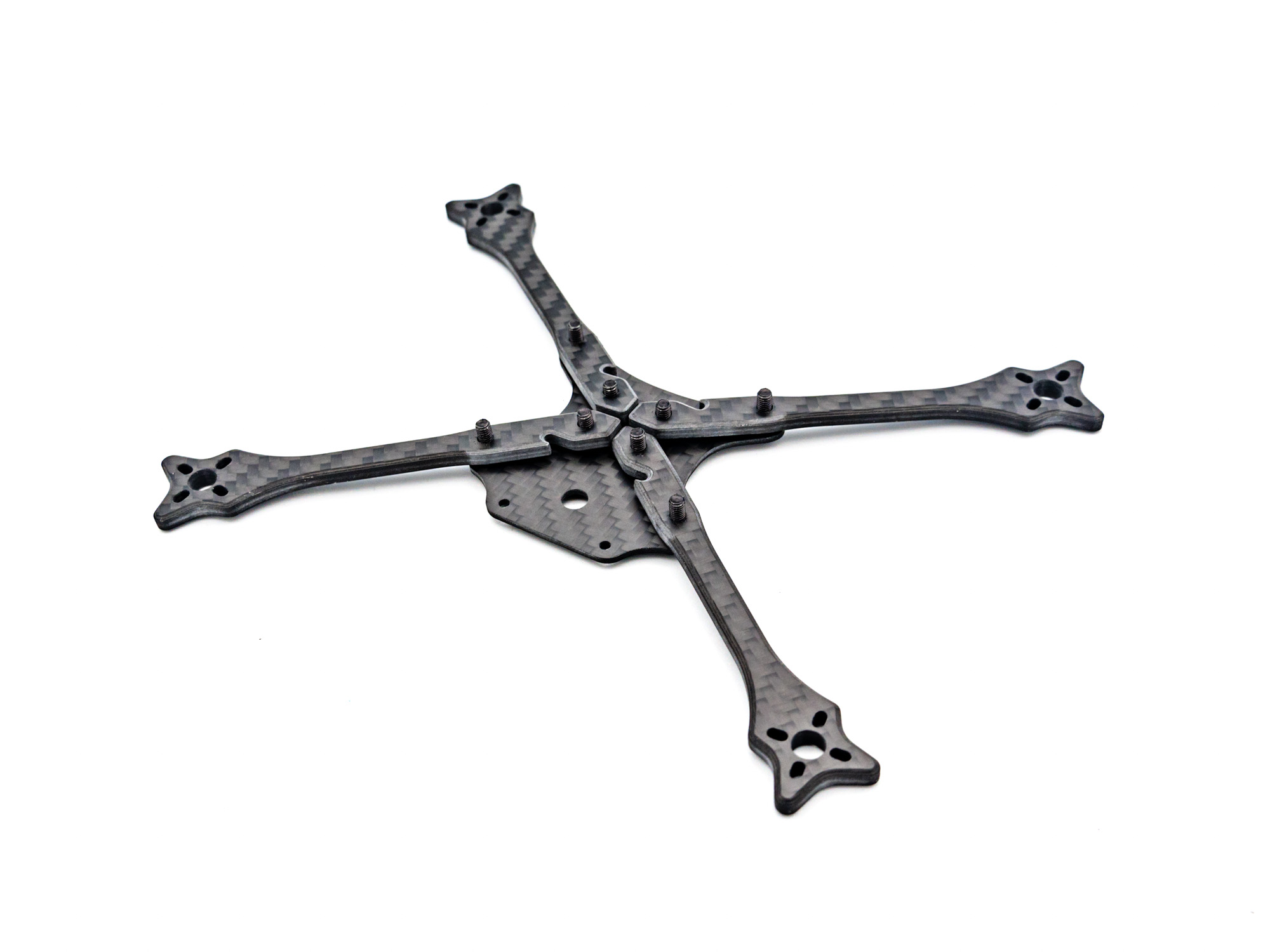
• Place the bottom plate on a flat surface
• Mount the arms as shown
• Secure using M3x10 mm screws
Step 2 – Middle Plate
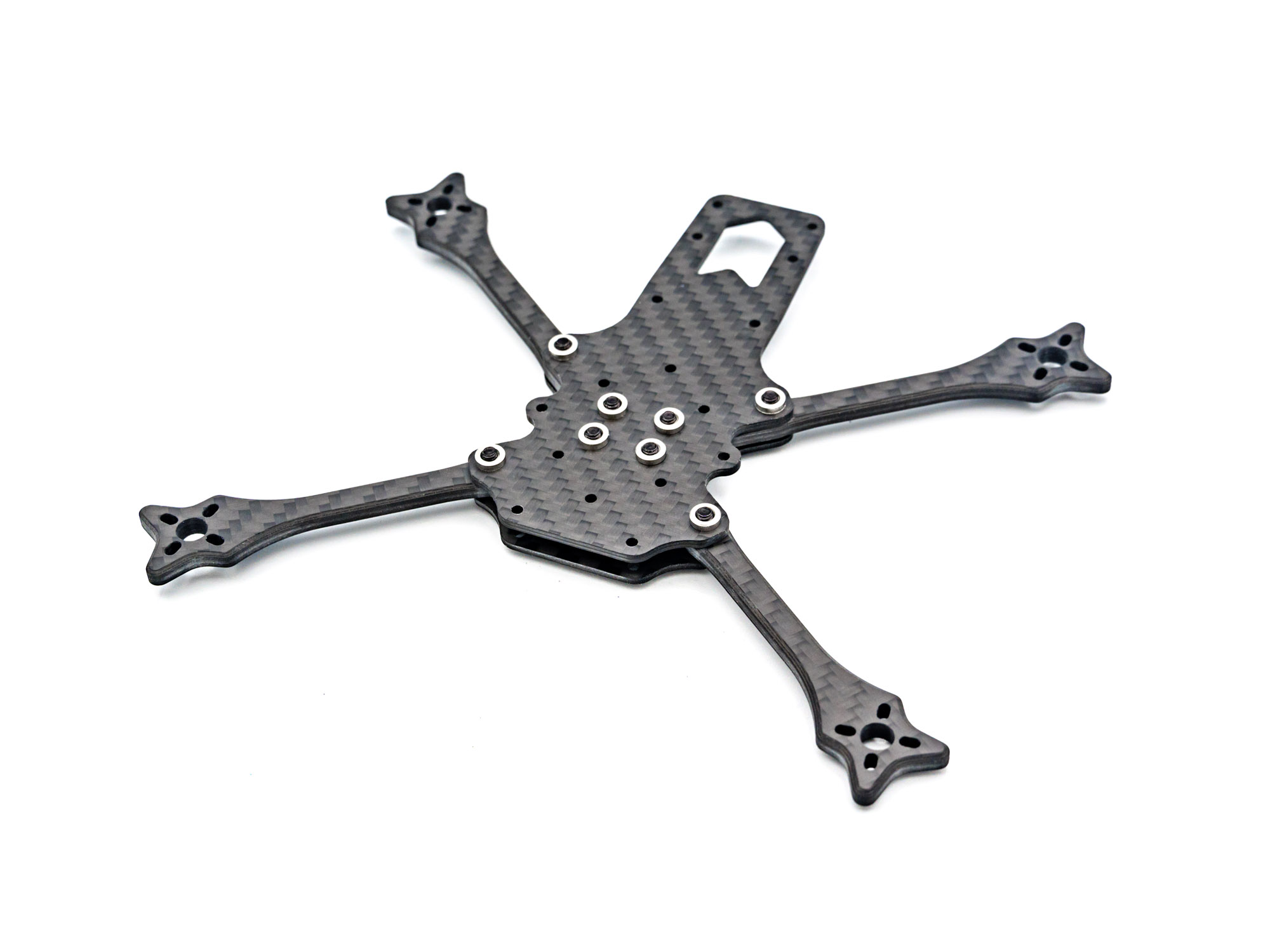
• Add the middle plate
• Align all arms correctly
• Tighten the screws to lock the arms in place
Step 3 – TPU Bottom Pod Mount
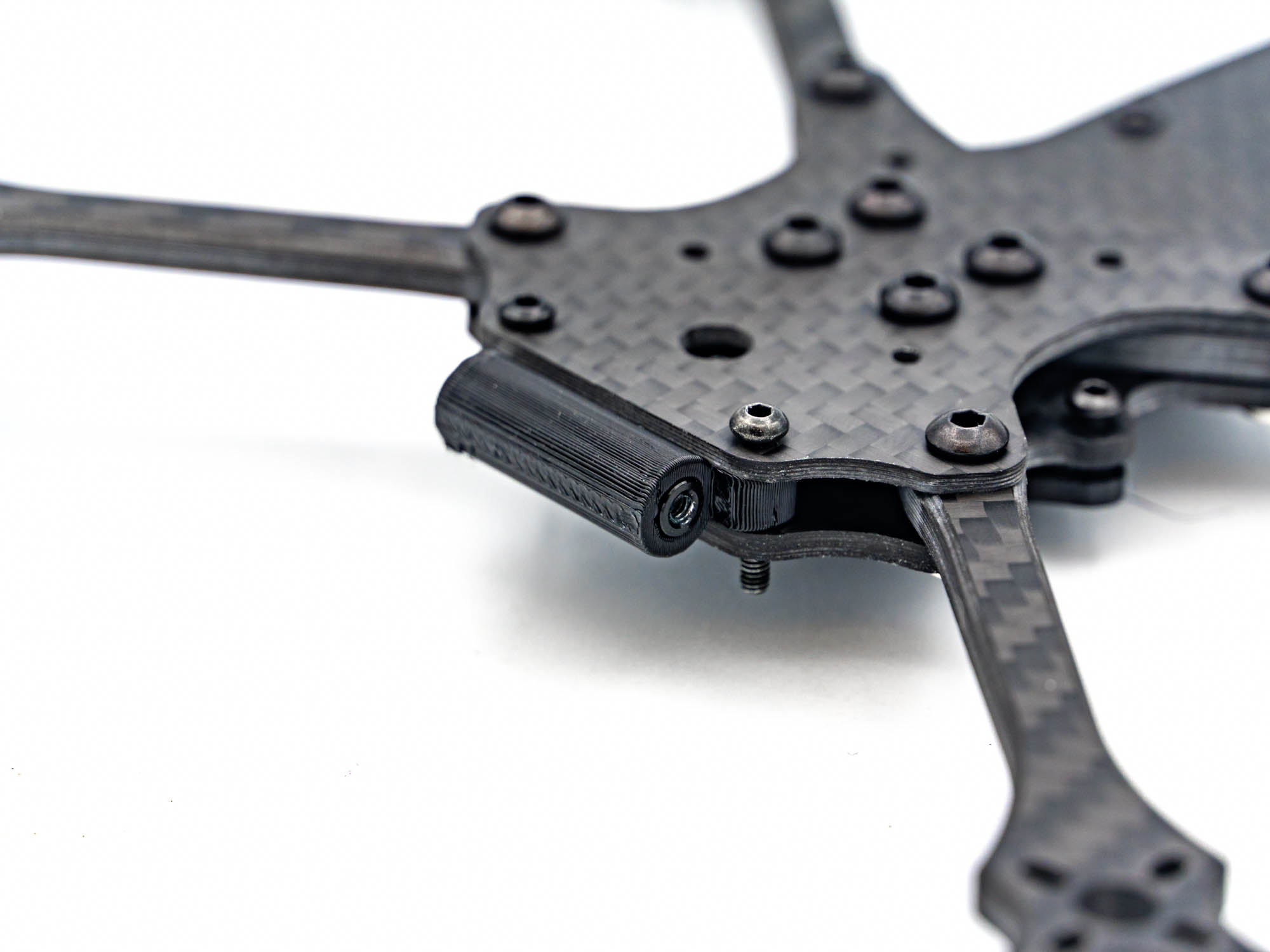
• Press an M2x20 mm standoff into the TPU bottom pod mount
• Insert the mount into the gap between the bottom plate and middle plate
• Secure with two M2x8 mm screws
Step 4 – TPU RX Mount
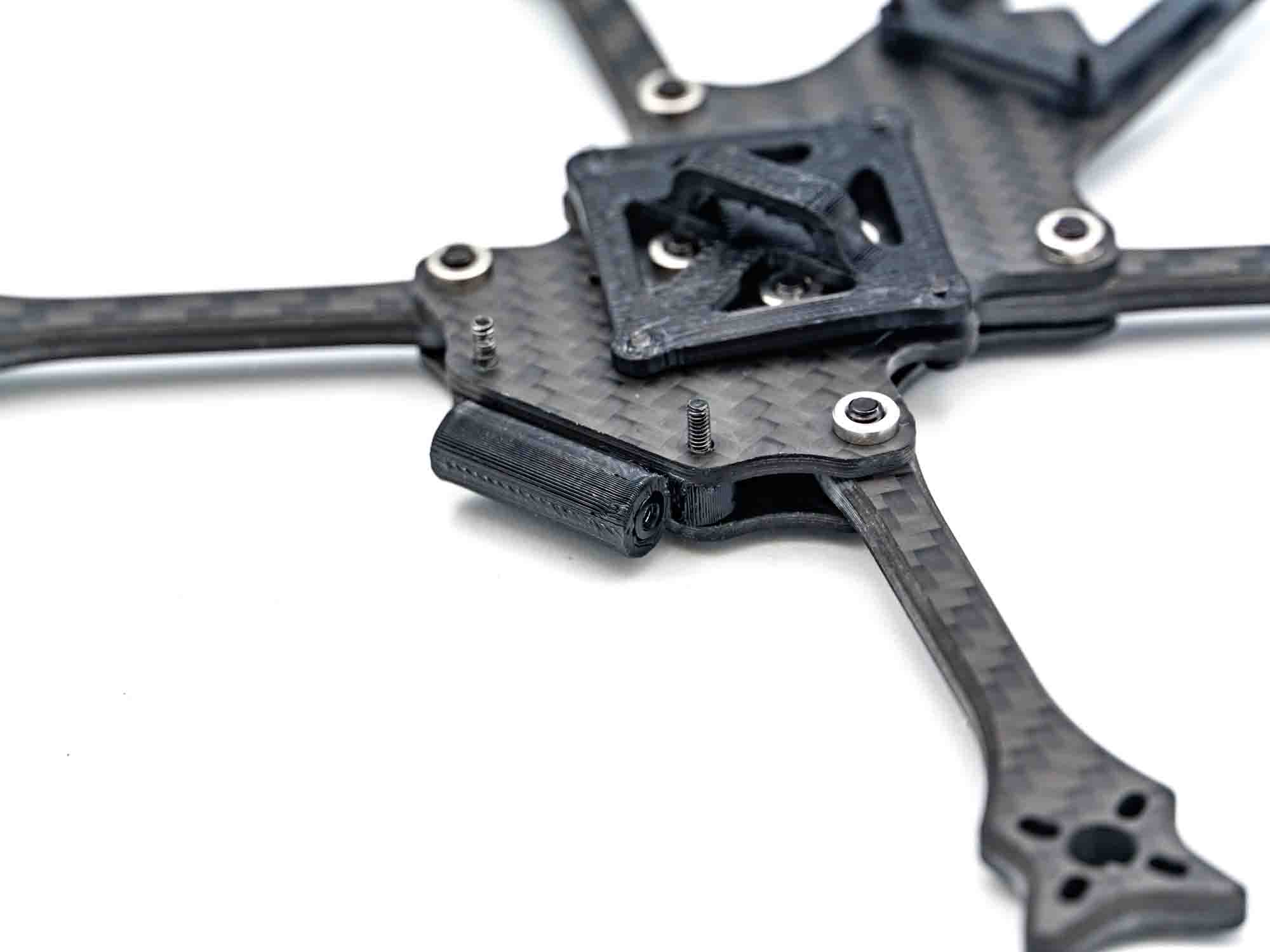
• Mount the TPU RX mount above the AIO
• Secure using M2x12 mm screws
Step 5 – TPU VTX Mount
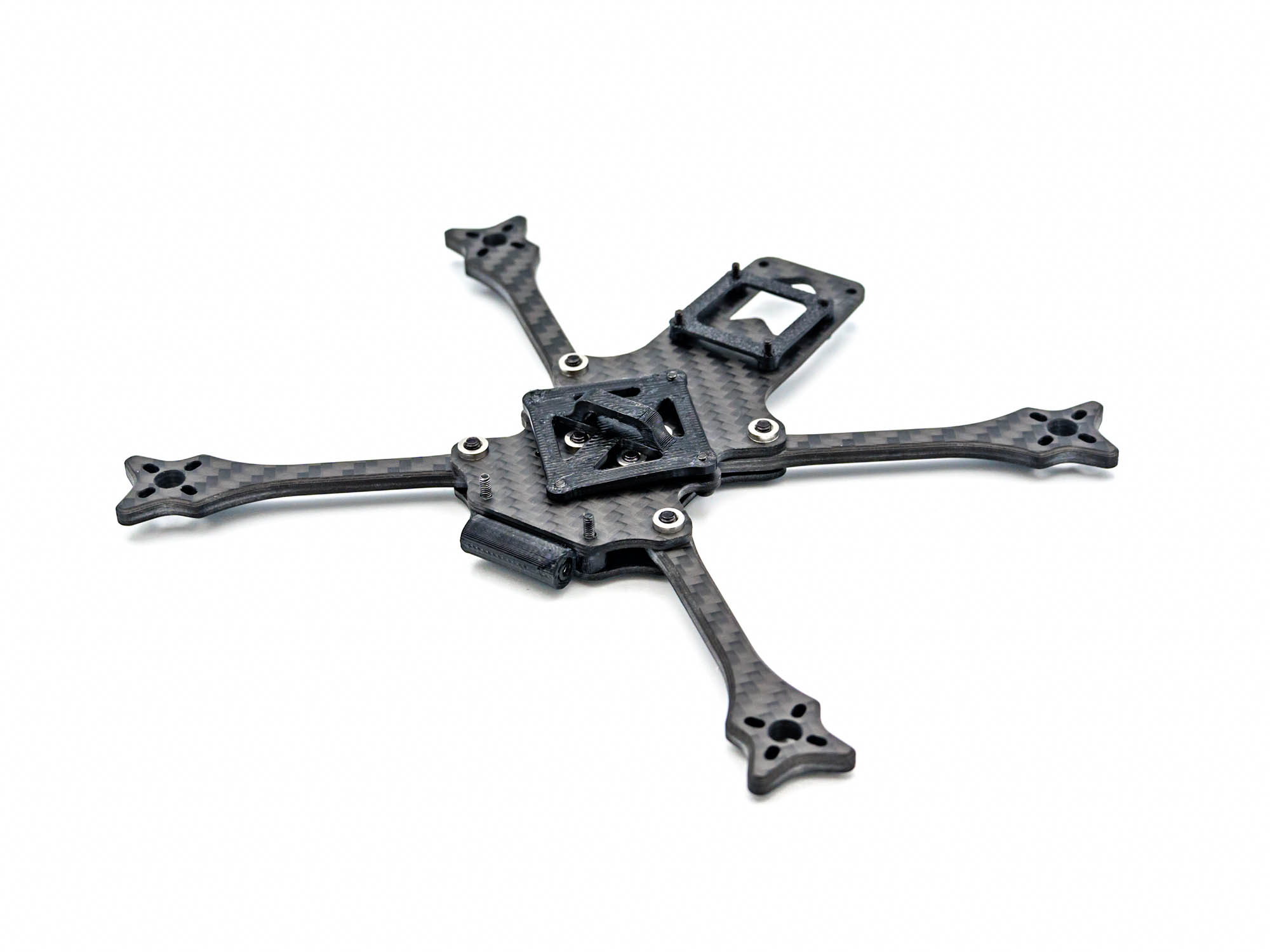
• Install the TPU VTX mount using M2x5 mm screws
• Place the DJI O4 / O3 unit on top of the mount
Step 6 – TPU Antenna & GPS Mount
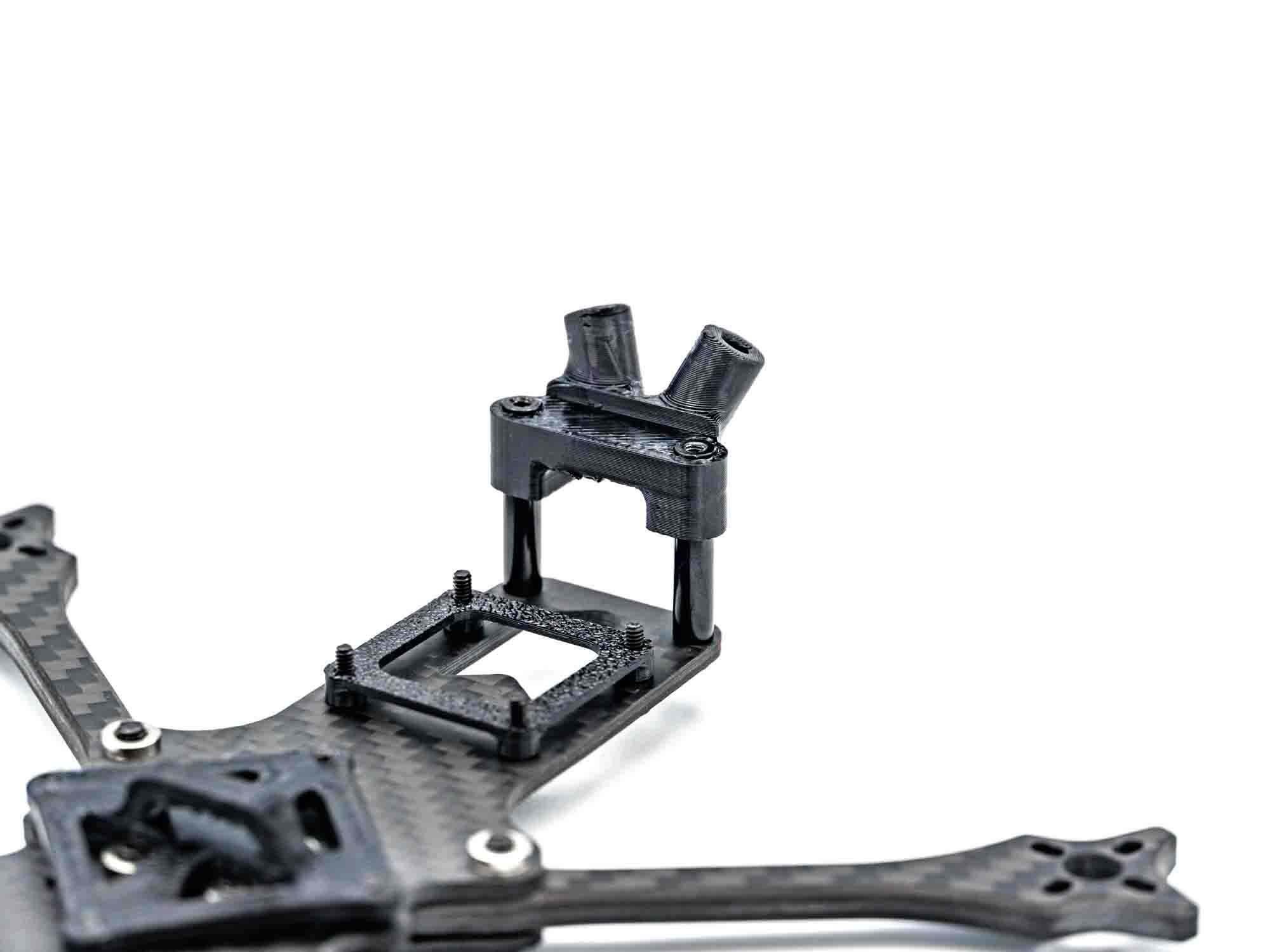
• Install two M2x20 mm standoffs using M2x8 mm screws
• Place the TPU antenna mount as shown
Optional: • If using a GPS, install the TPU GPS mount beneath the antenna mount
Step 7 – Prepare TPU Pod Top & Capacitor Mount
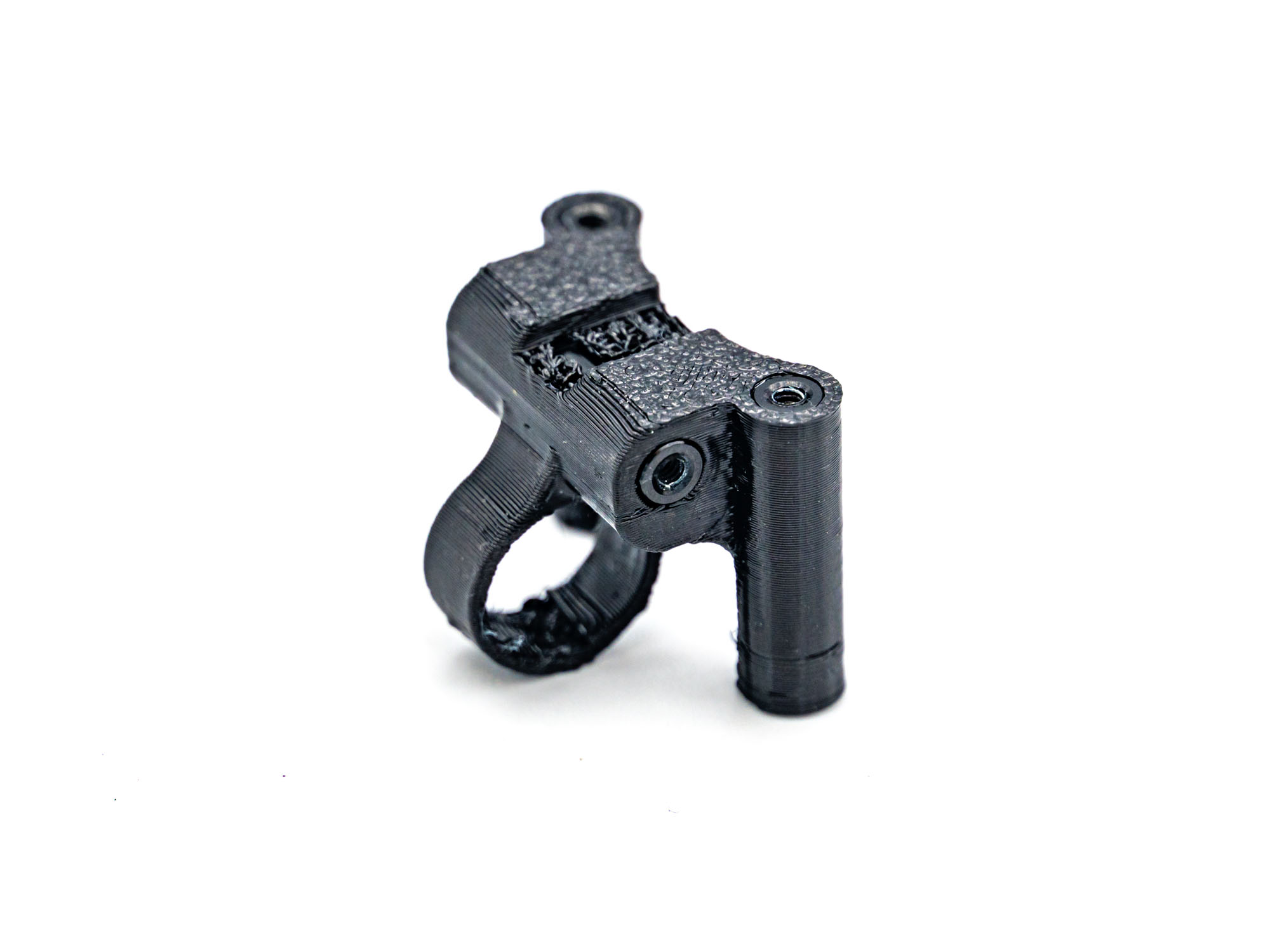
• Press M2x20 mm standoffs into the designated holes
• Prepare both the TPU pod top mount and capacitor mount
Step 8 – Install Pod Mount on Frame
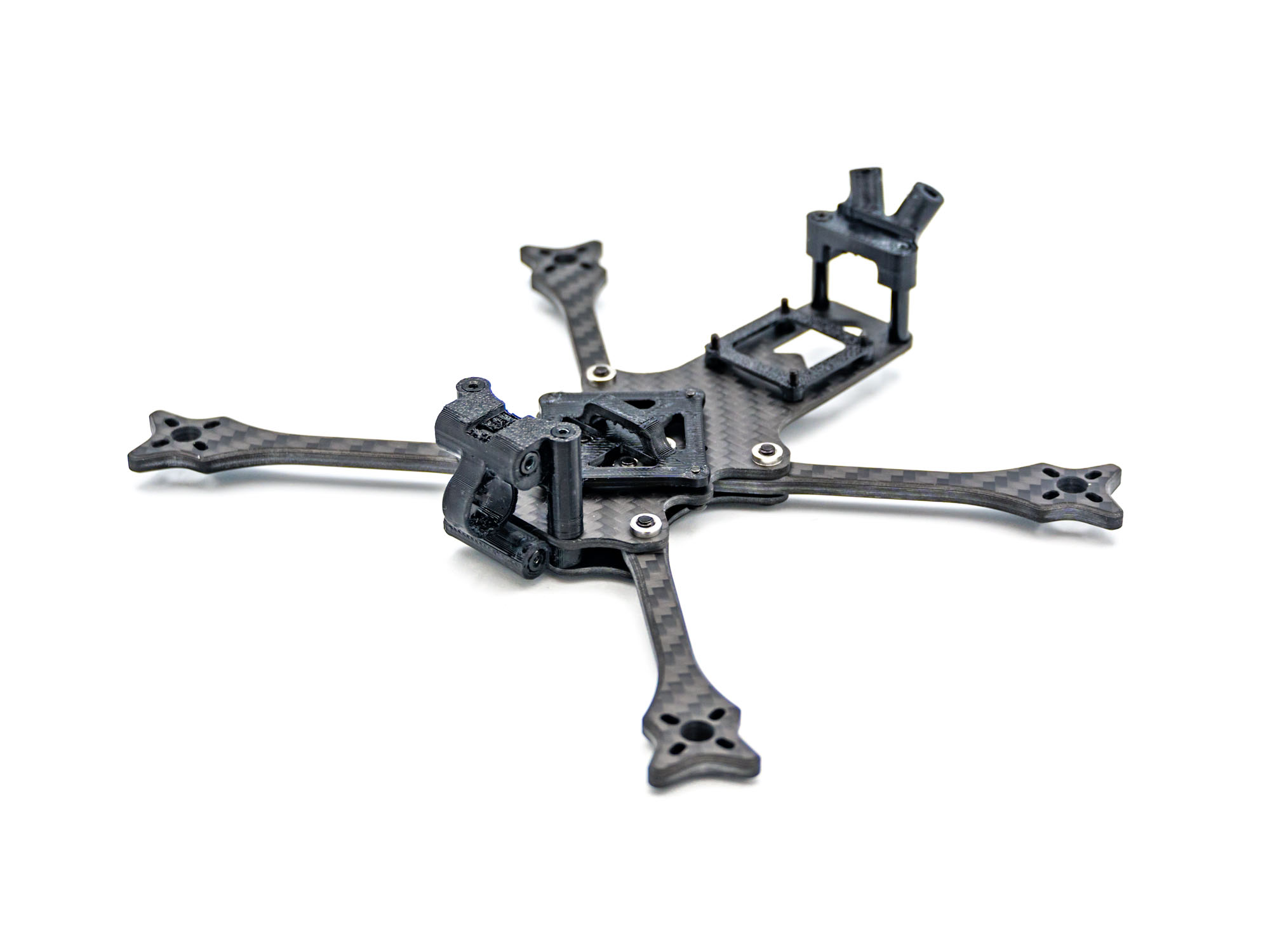
• Install the TPU pod mount
• Position it at the front of the middle plate
Step 9 – Pod Plates
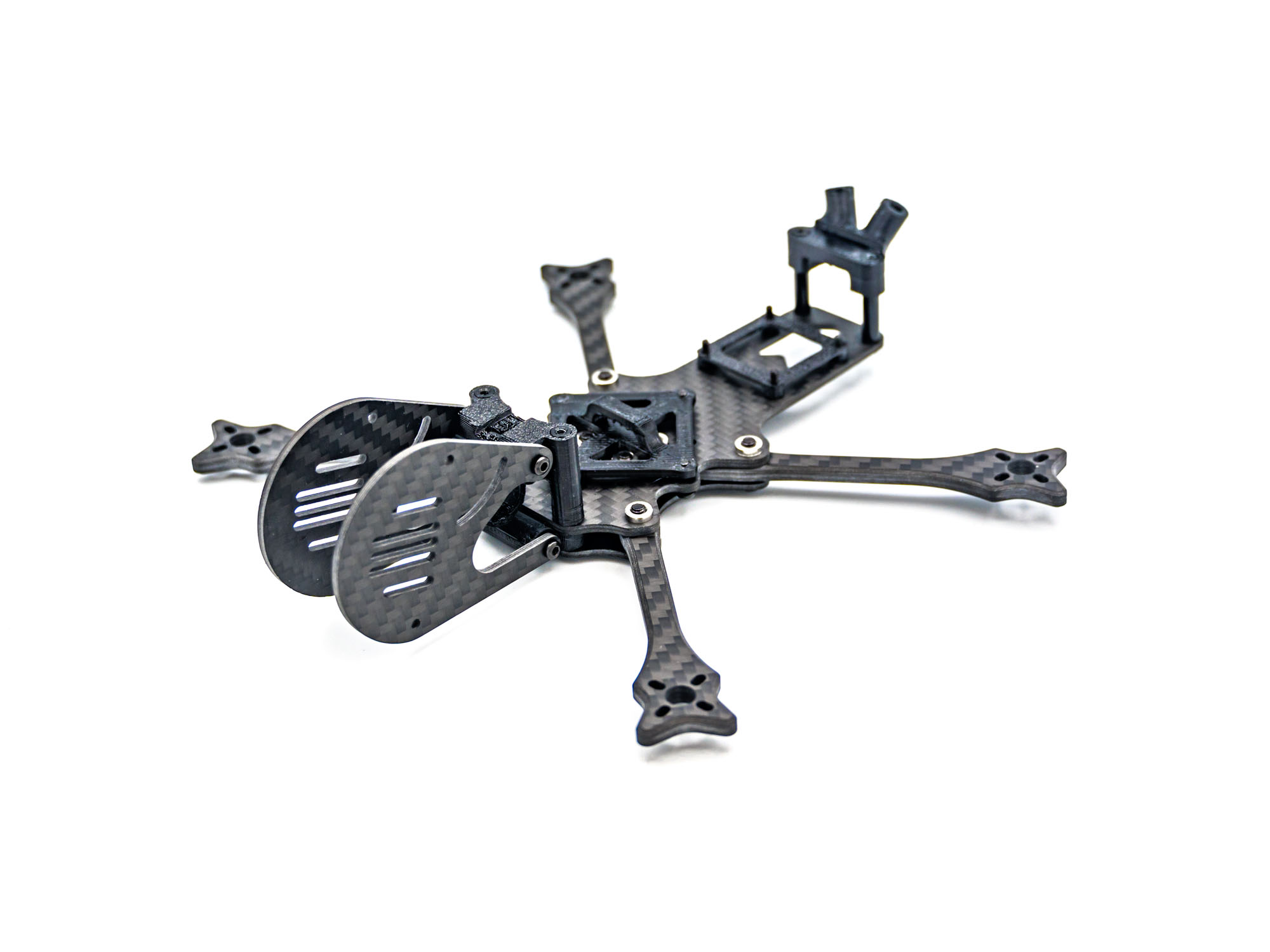
• Attach both pod plates
• Secure using M2x8 mm screws
Step 10 – Top Plate
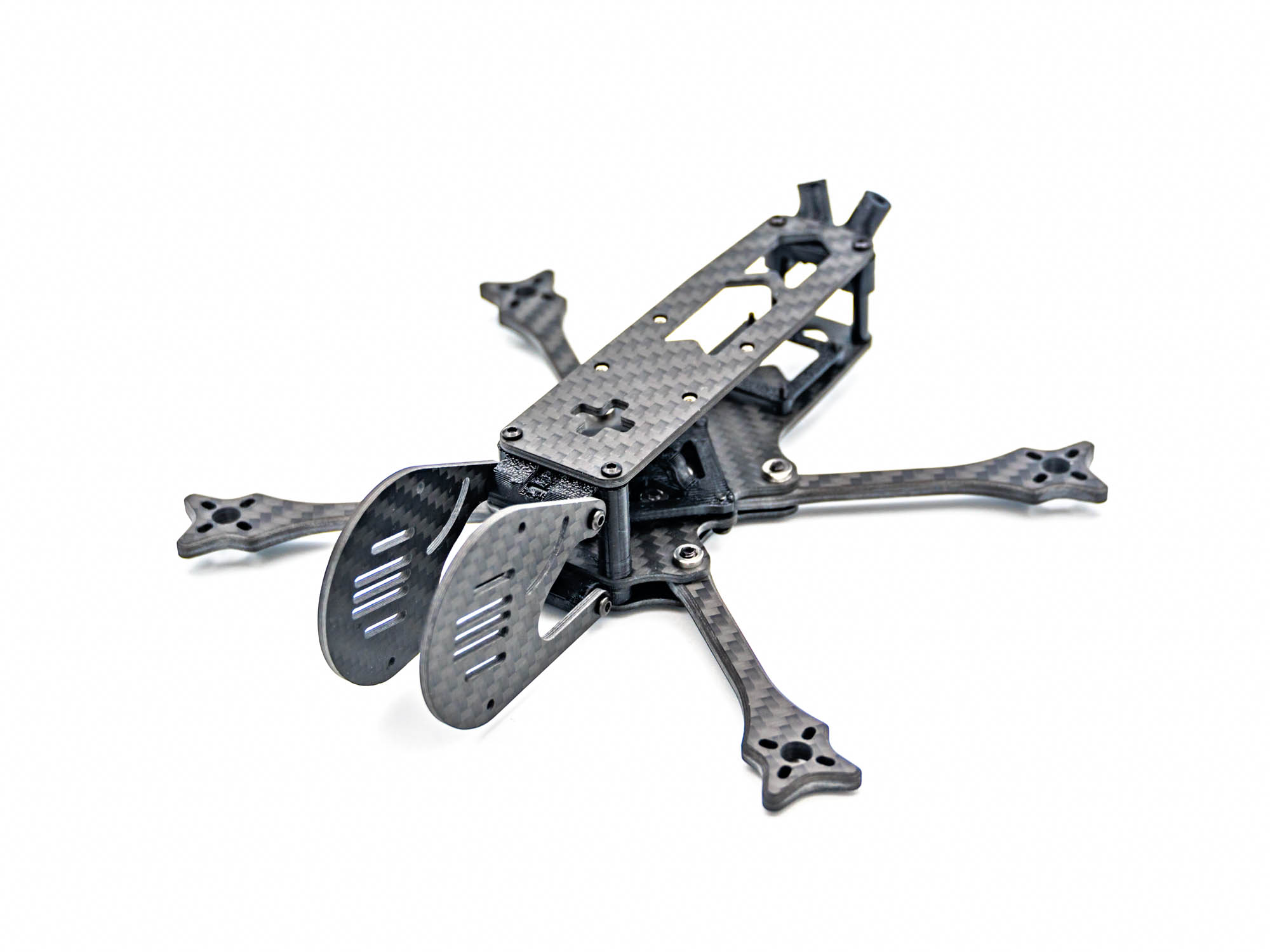
• Install the top plate
• Secure with M2x8 mm screws
Step 11 – TPU RX Antenna Mount
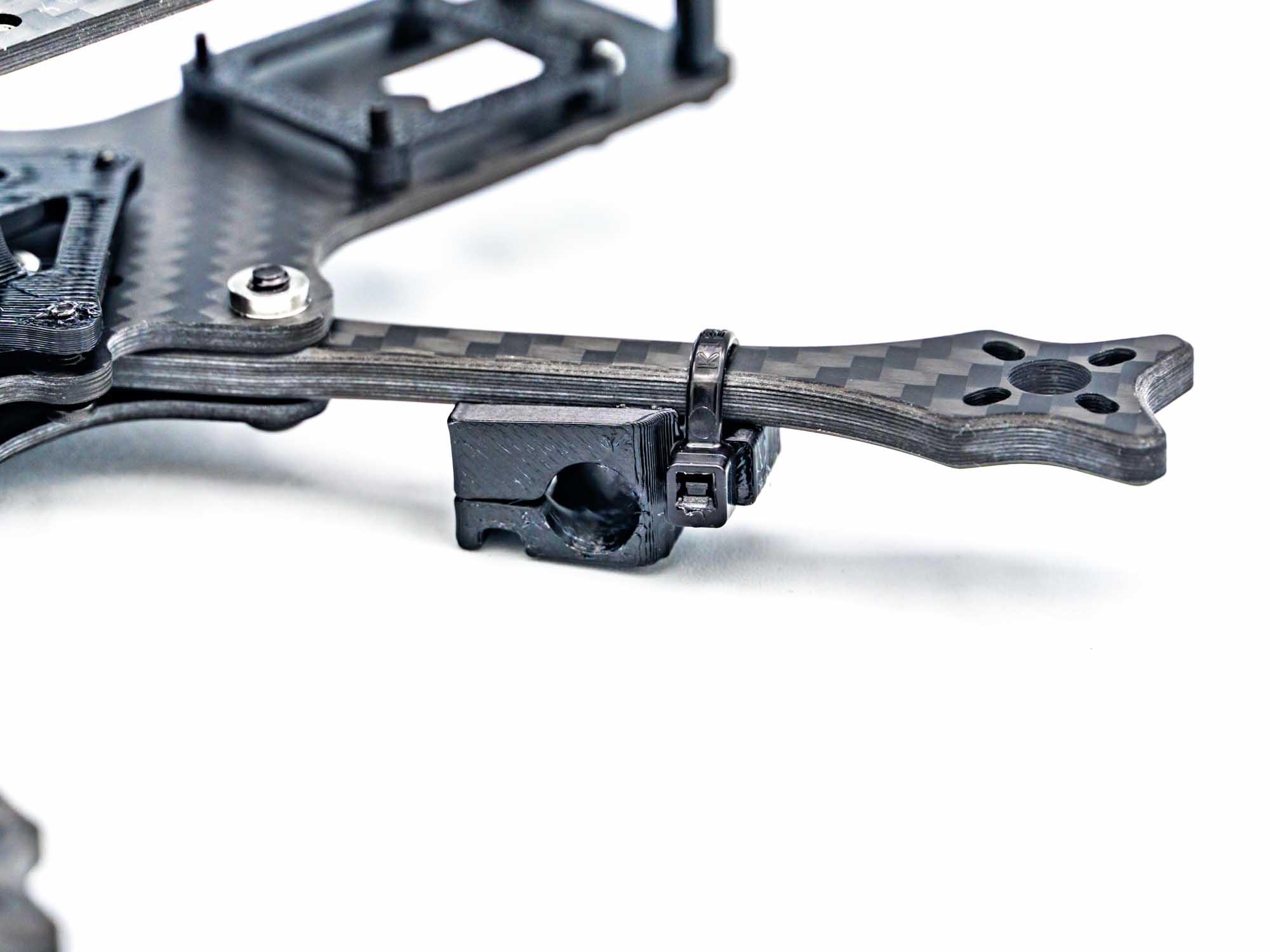
• Install the TPU RX antenna mount using zip ties
• Slide the antenna into the mount
• Secure it with a second zip tie wrapped around the mount and arm
Finish
Congratulations! Your FlowX Mini V2 Frame is now fully assembled and ready for electronics installation.
Complete DIY Manual
Step 1 – Bottom Plate & Arms
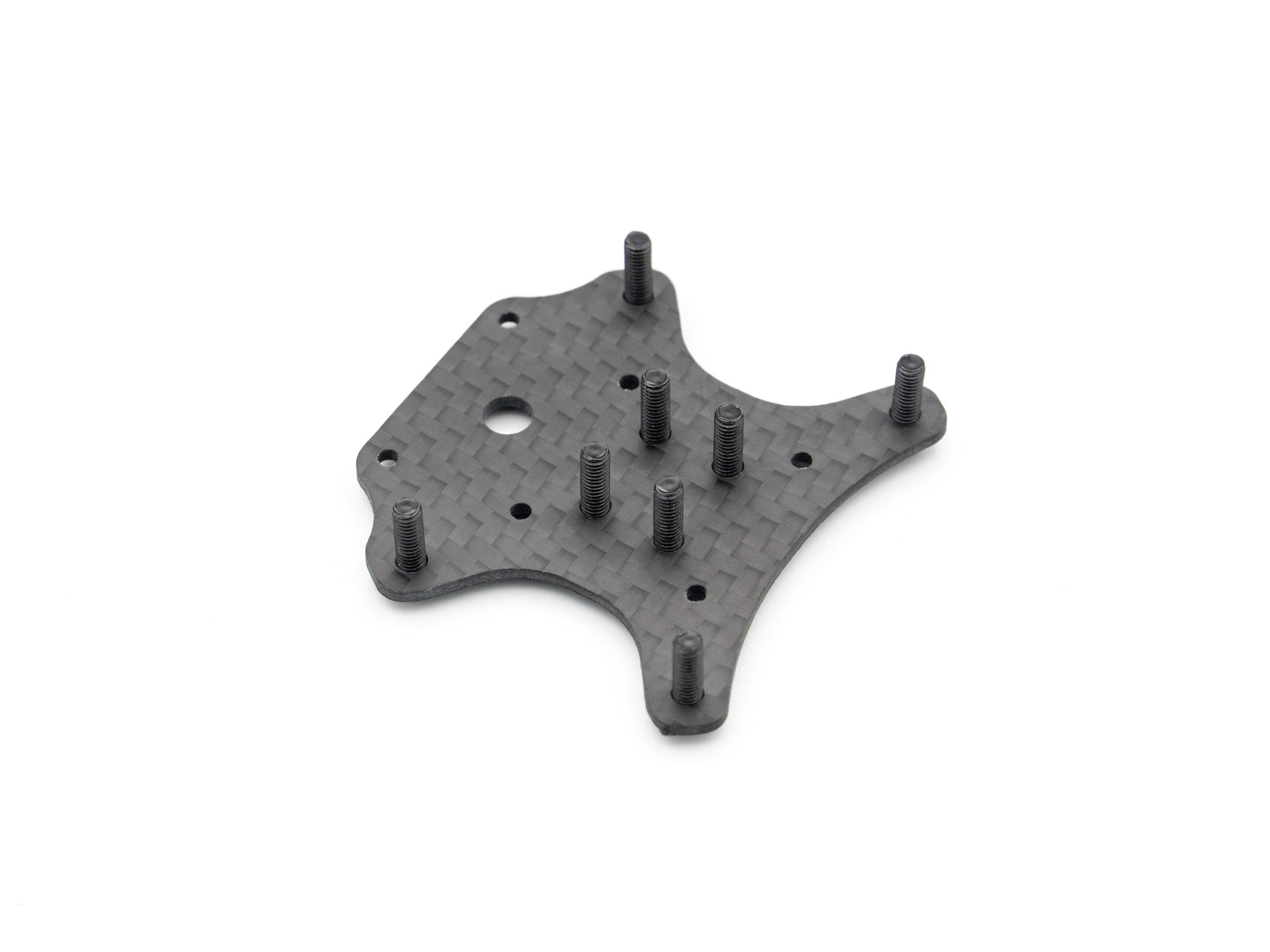
• Prepare the bottom plate
• Install M3x10 mm screws as shown
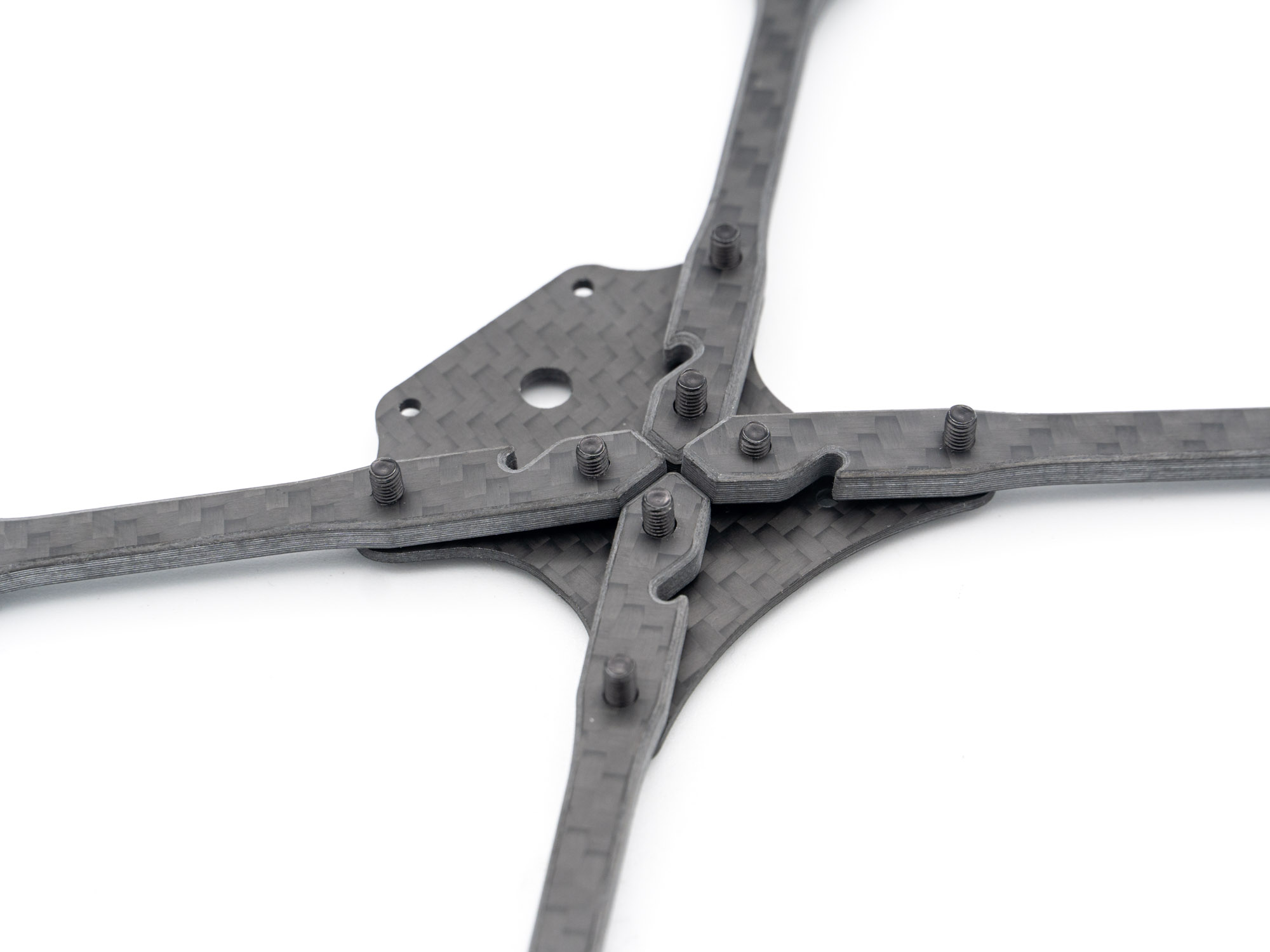
• Lay out the arms in their correct orientation
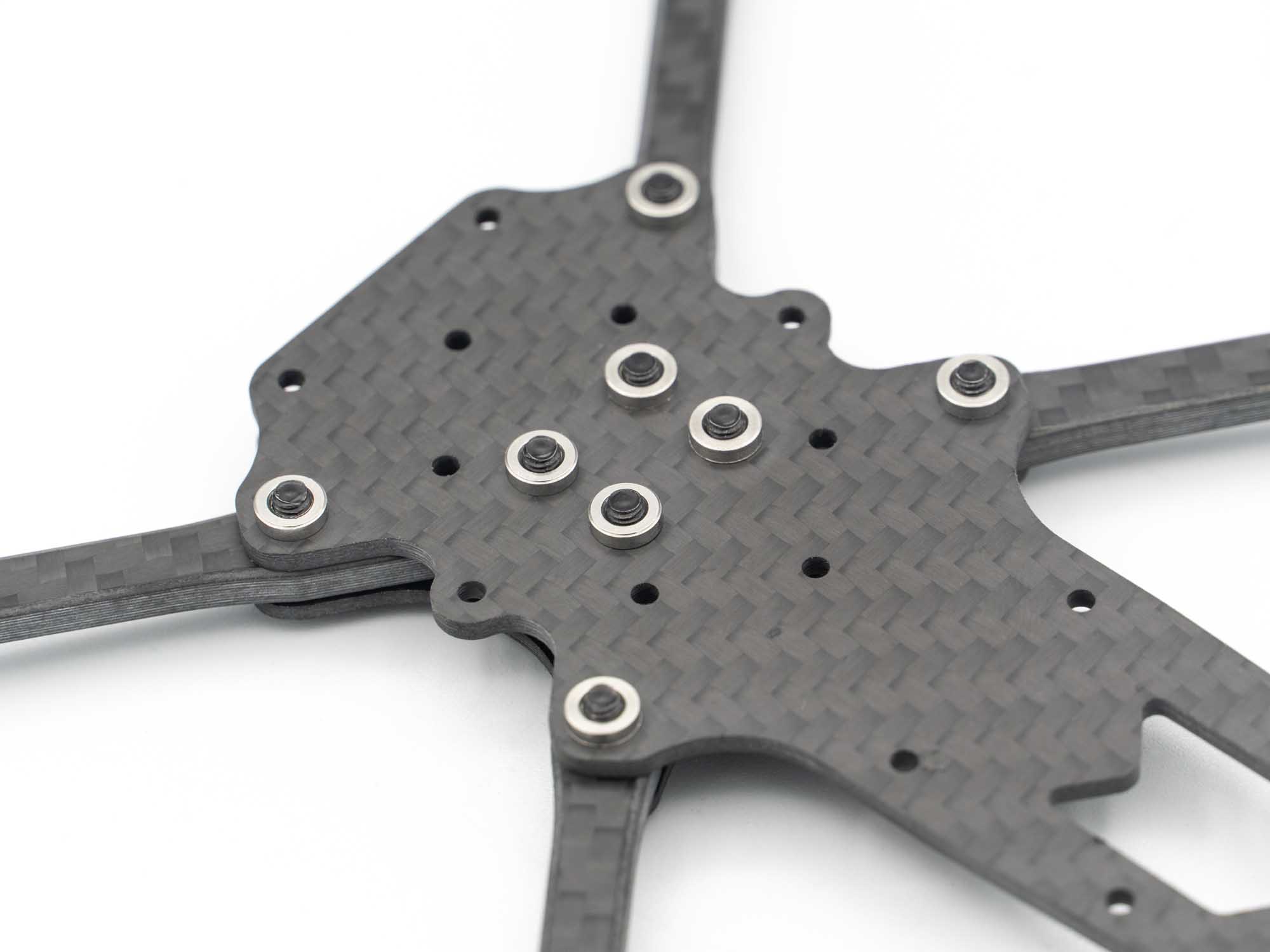
• Install the middle plate
• Tighten all screws evenly
Step 2 – Motor Installation
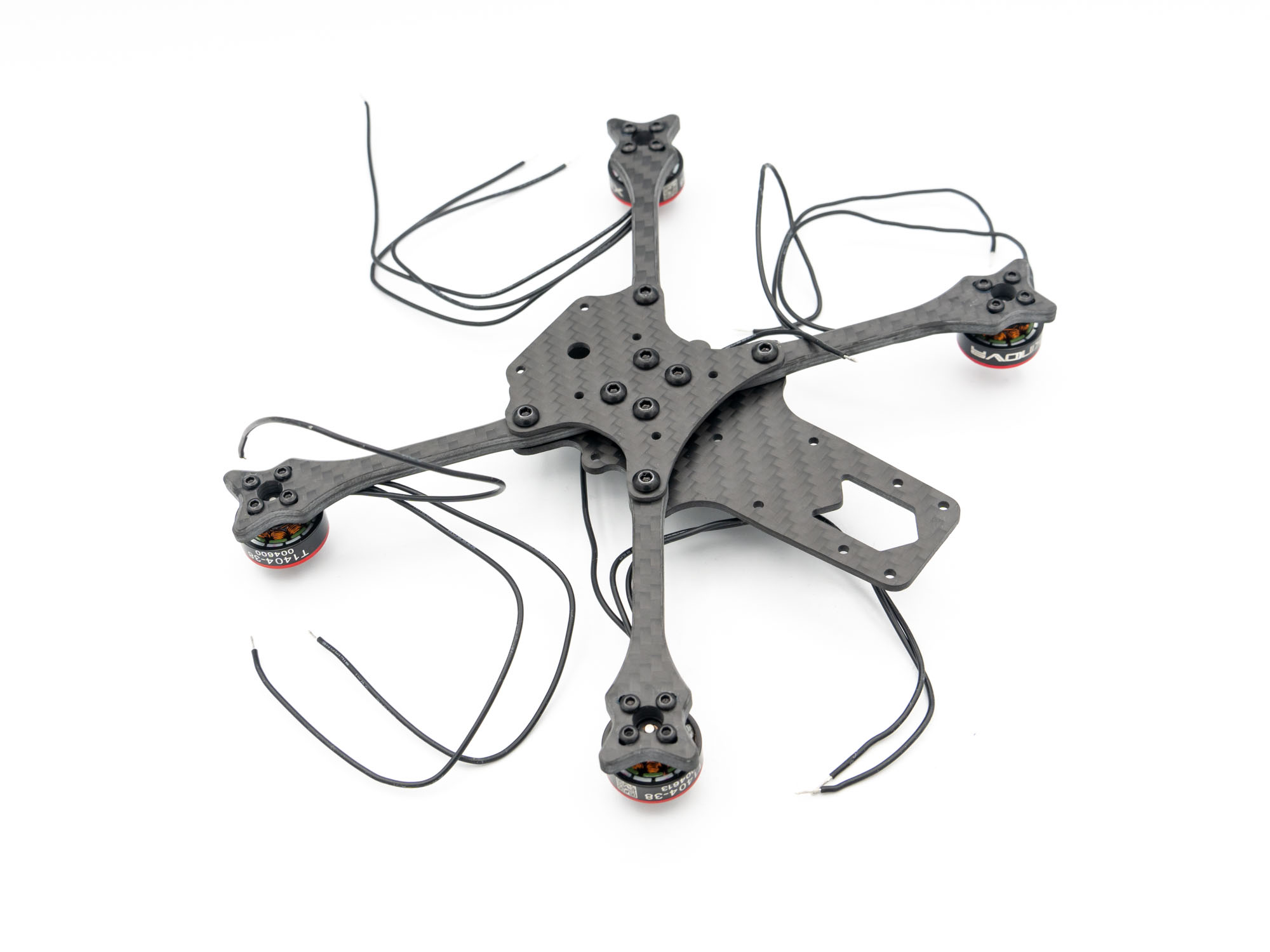
• Install the motors using M2x10 mm screws
• Apply blue Loctite
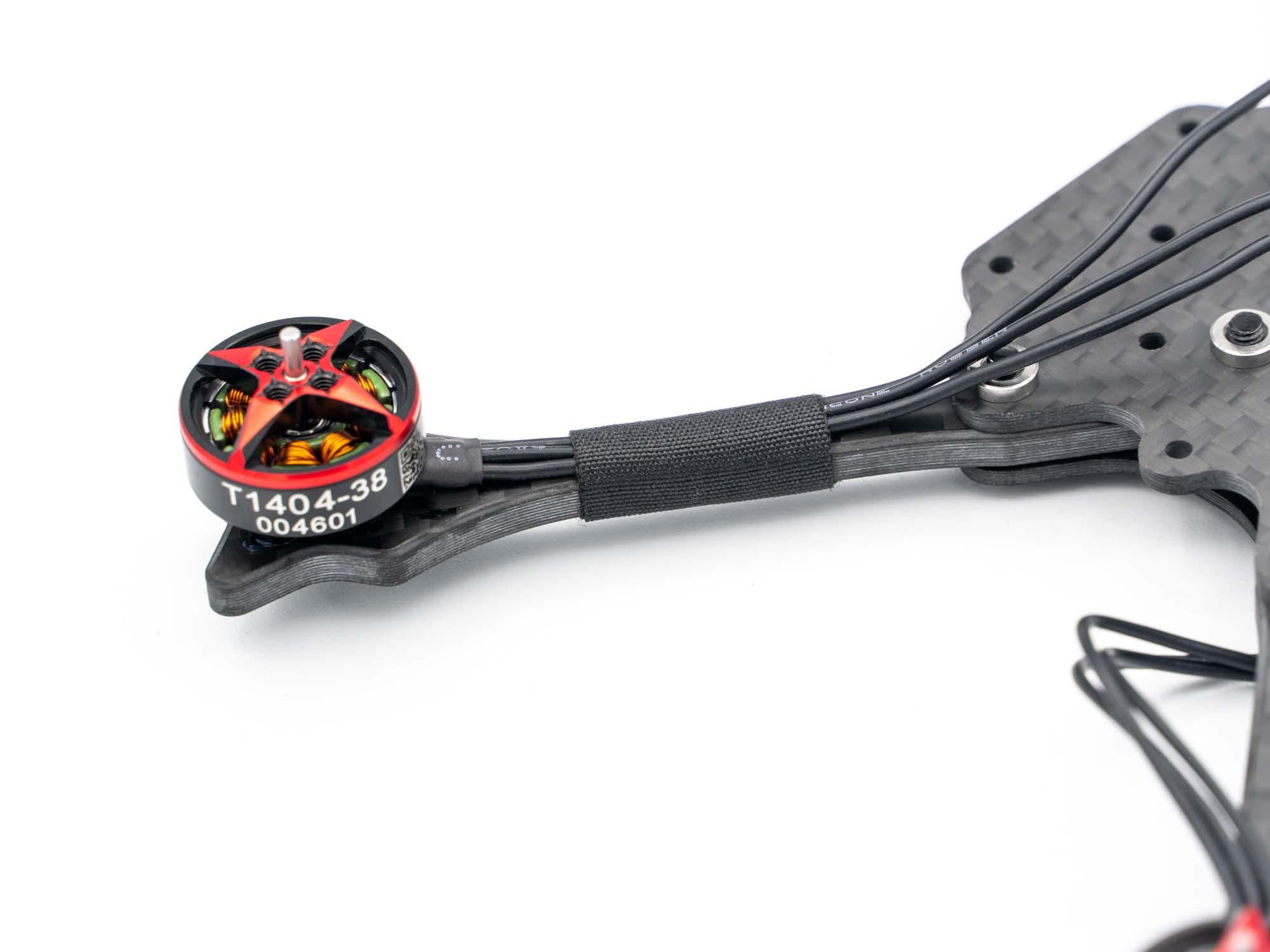
• Tape the motor wires neatly along the arms
Step 3 – Conformal Coating (Bottom Side)
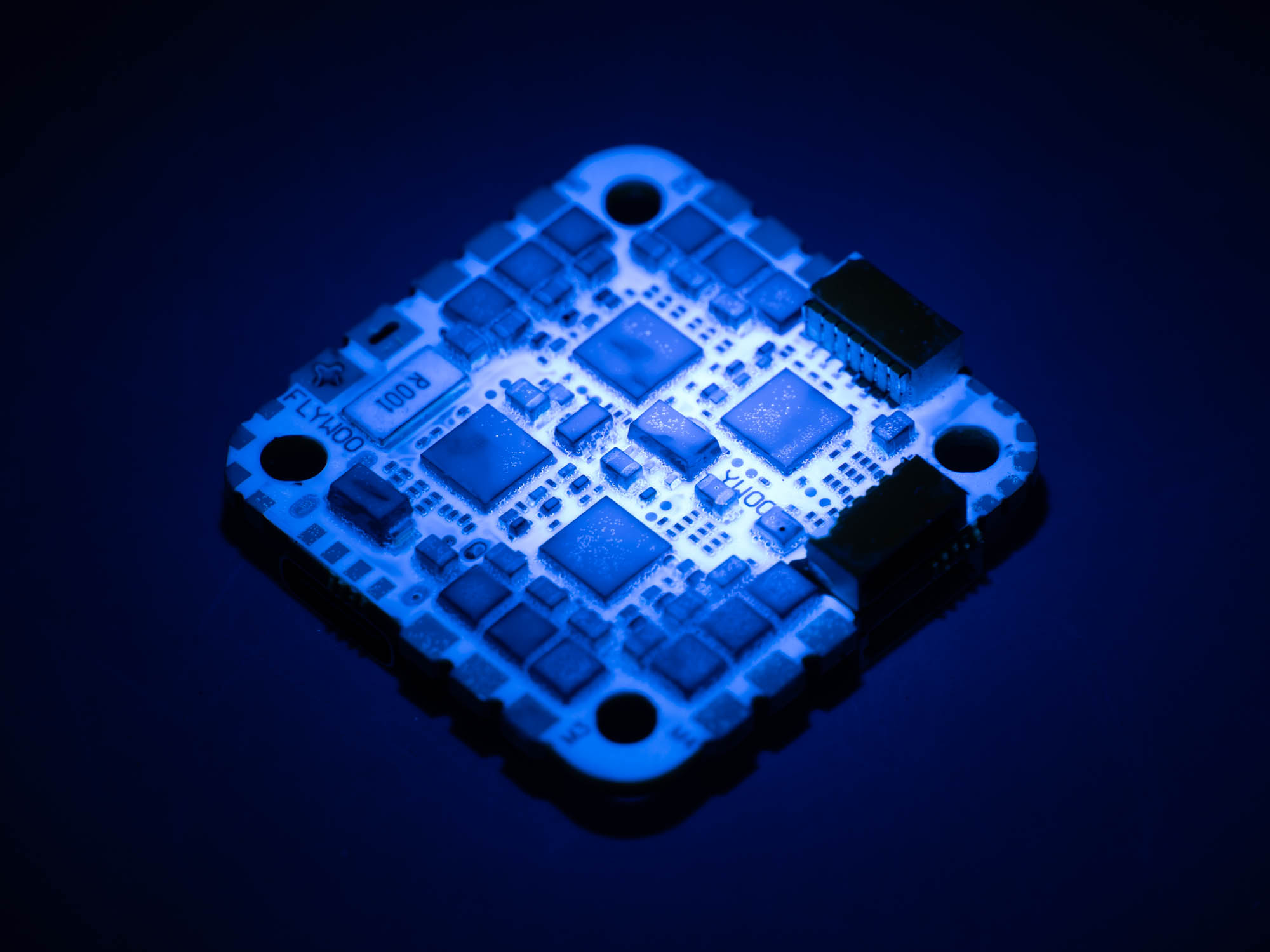
• Apply conformal coating to the bottom side of the AIO FC
Tip: Conformal coating becomes visible under UV light.
Step 4 – Flight Controller Mounting
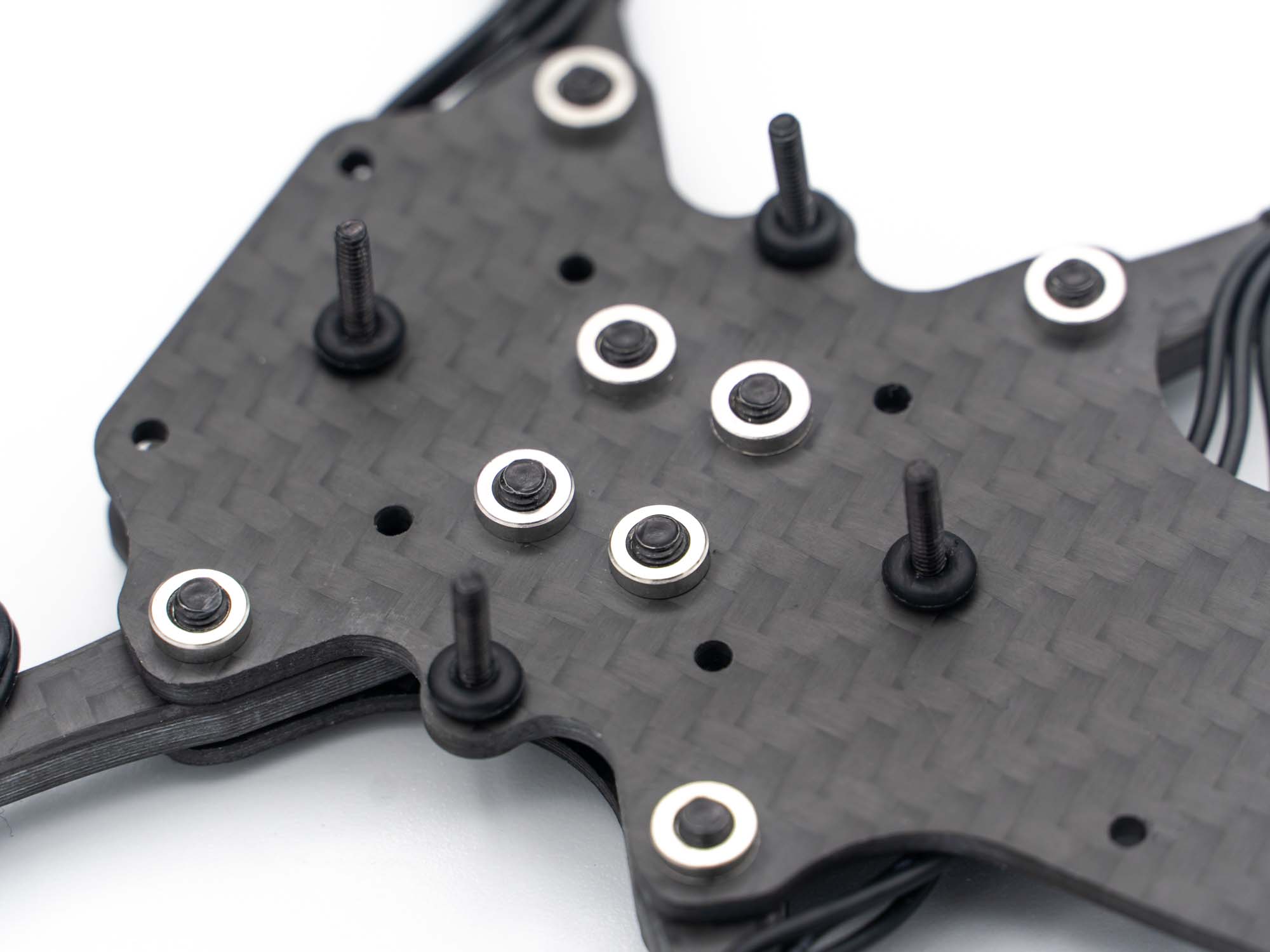
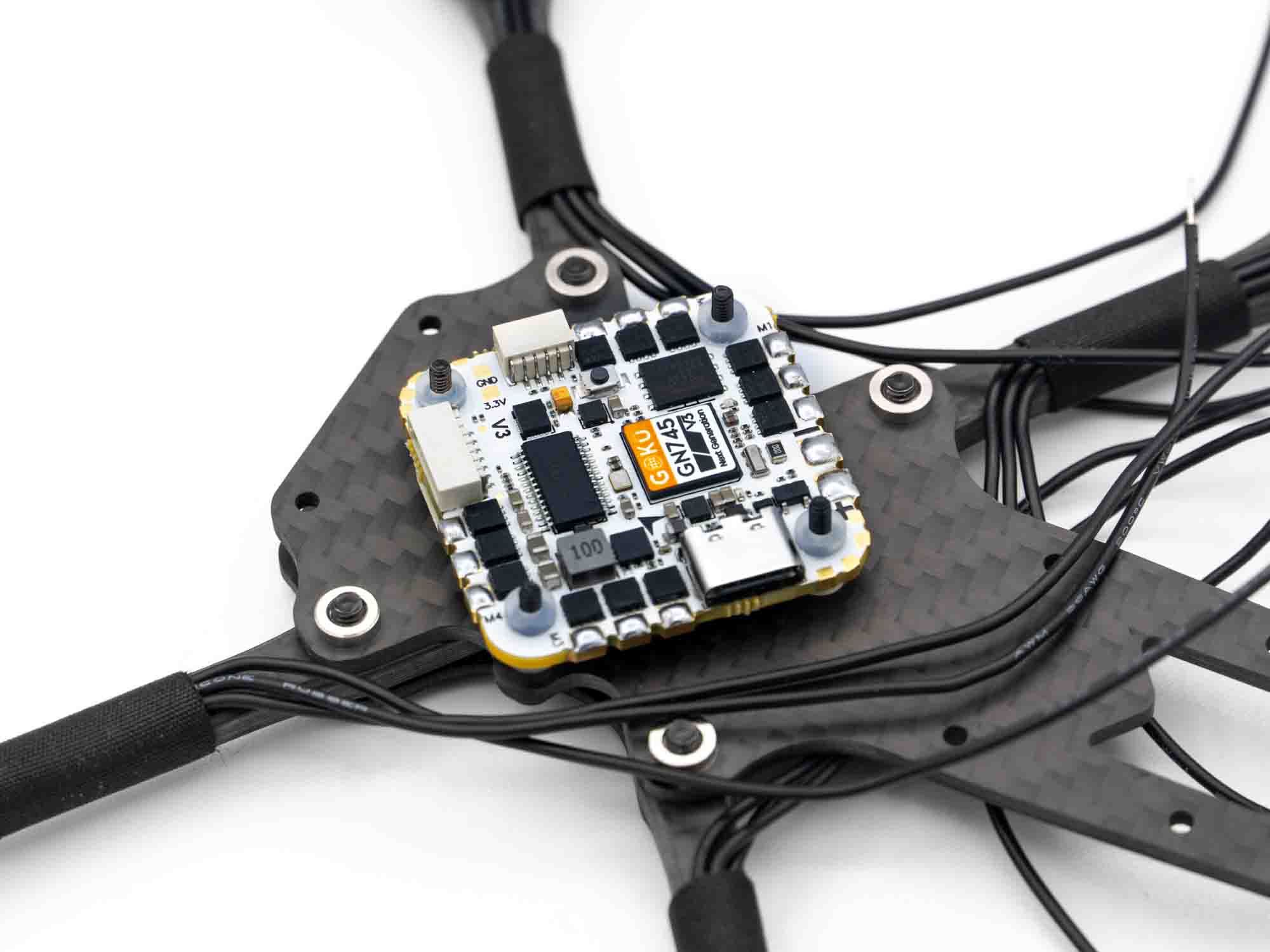
• Insert M2x12 mm screws through the frame
• Secure them with rubber donut spacers
• Install rubber grommets into the FC mounting holes
• Mount the FC onto the frame
Step 5 – Motor Wire Preparation
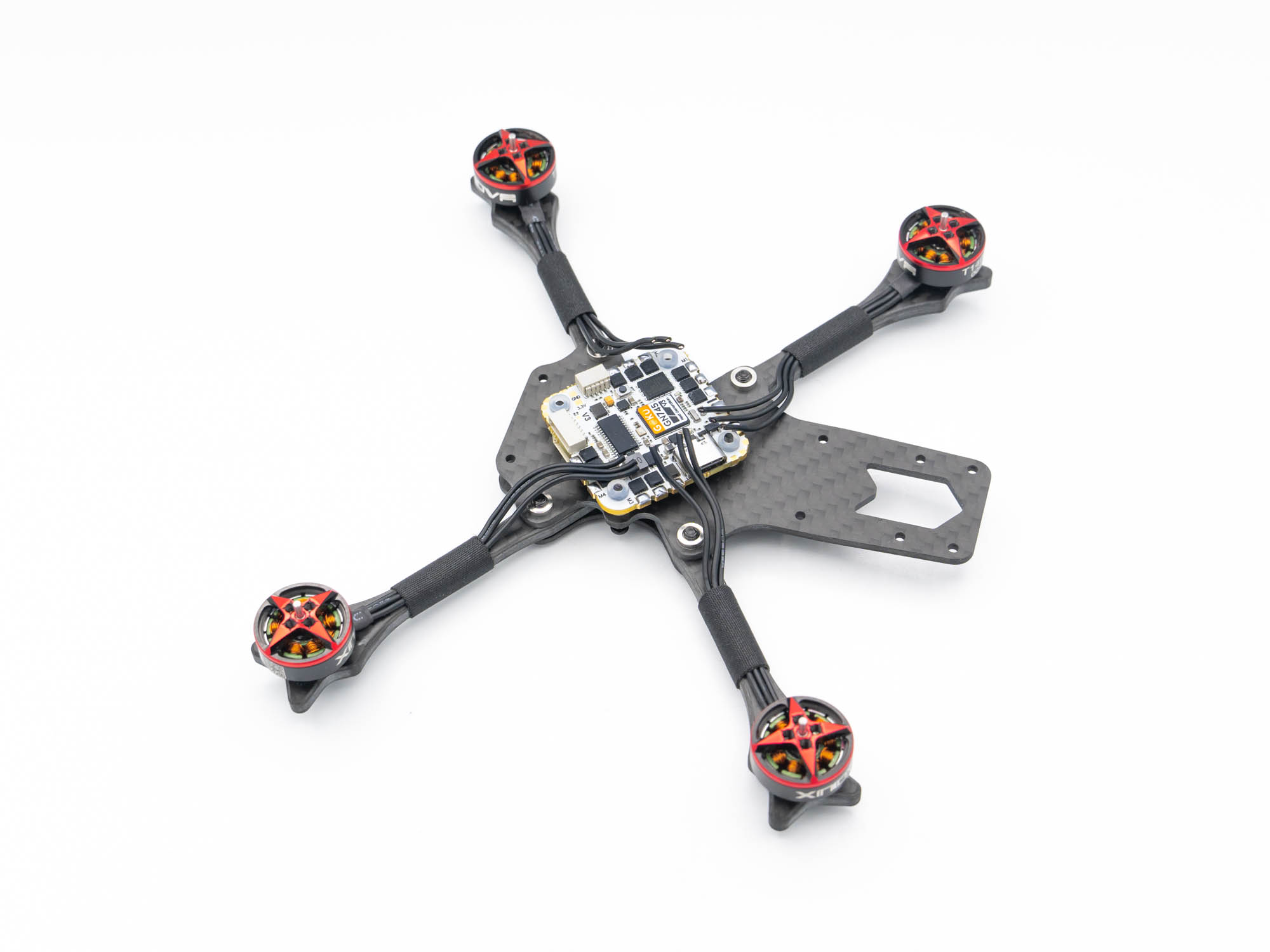
• Cut motor wires to length
• Leave a small amount of slack
• Strip and pre-tin the wire ends
Step 6 – Motor Wire Soldering
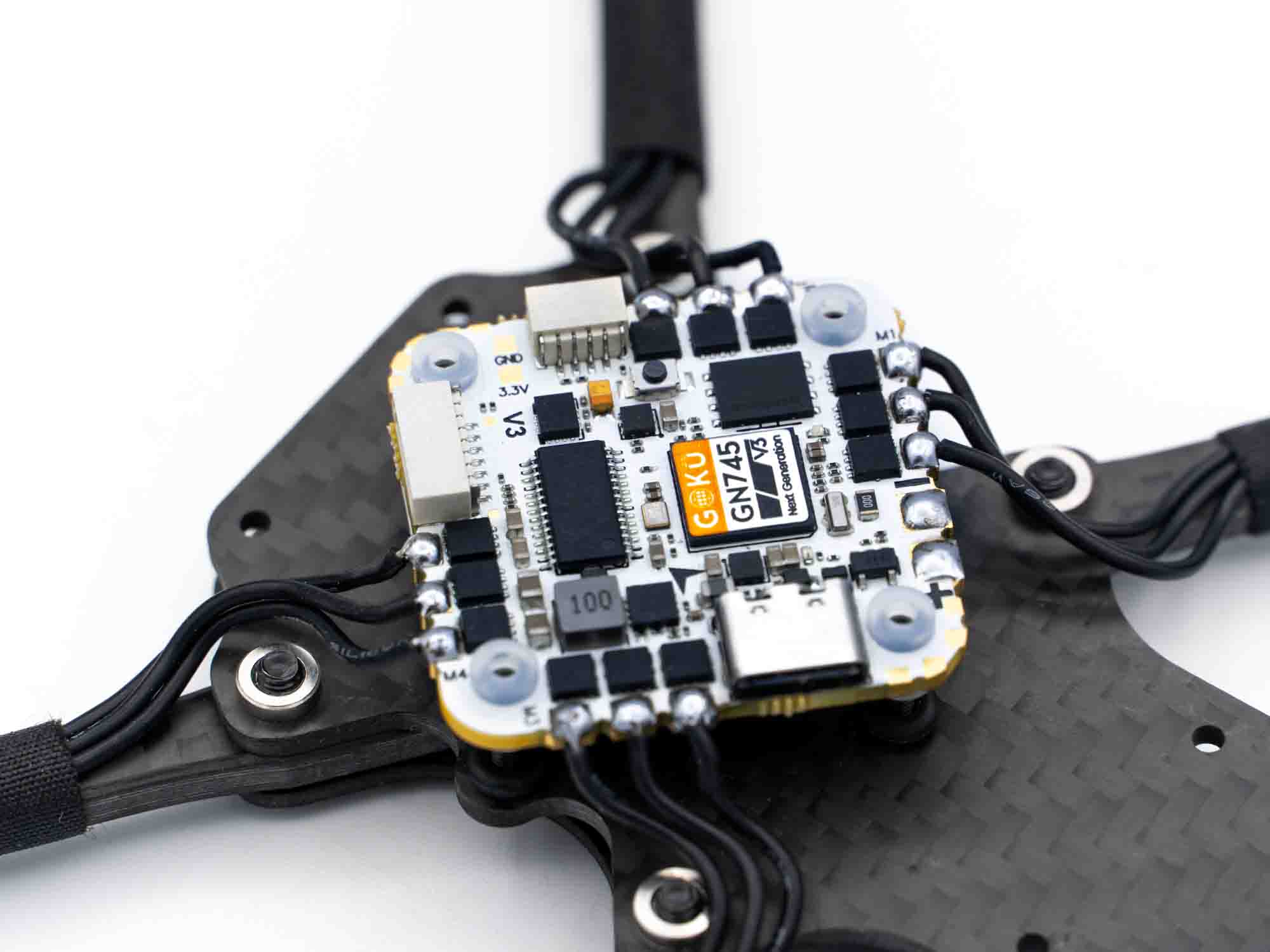
• Solder the motor wires to the ESC pads
Step 7 – Main Power Wires
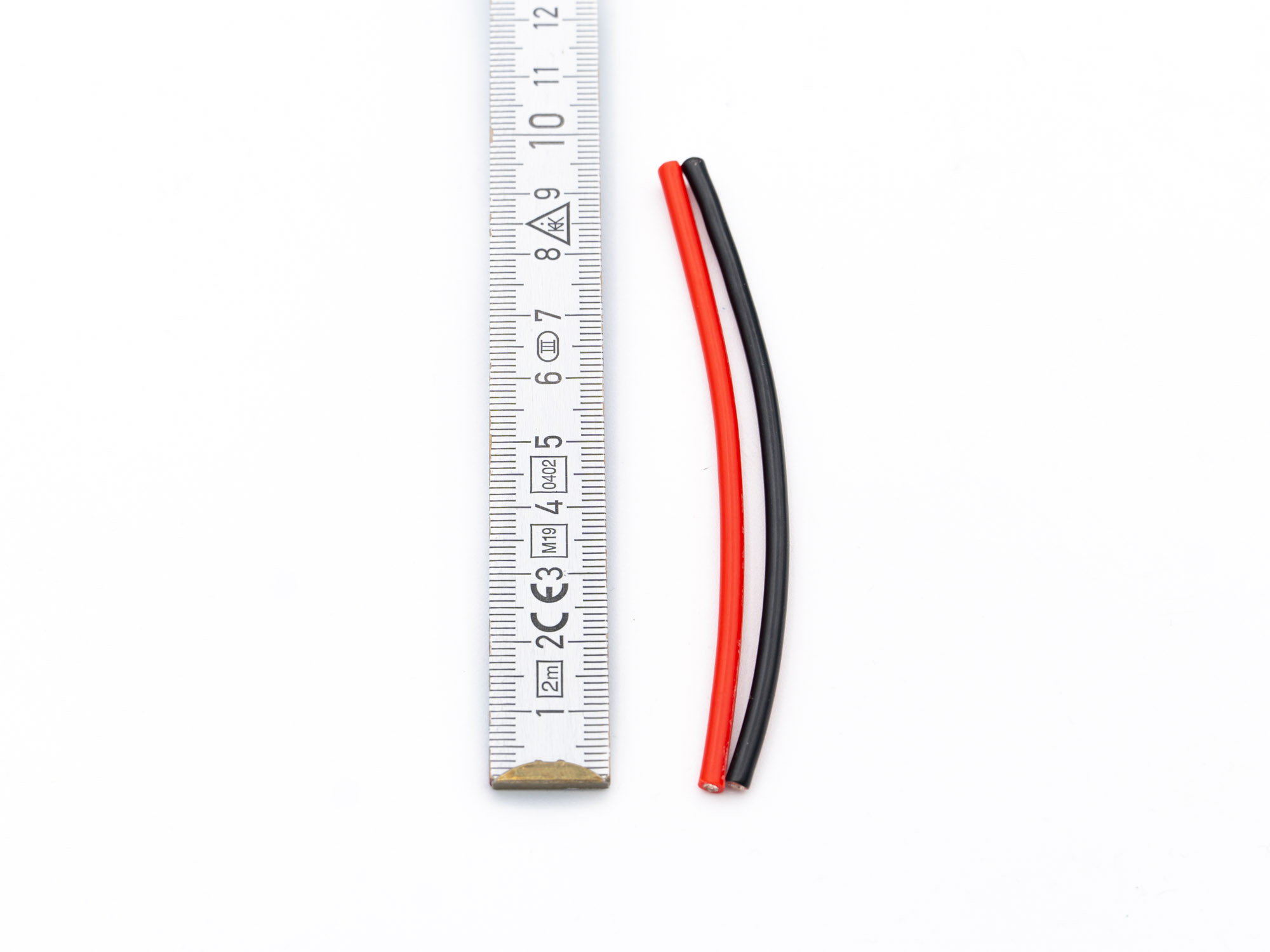
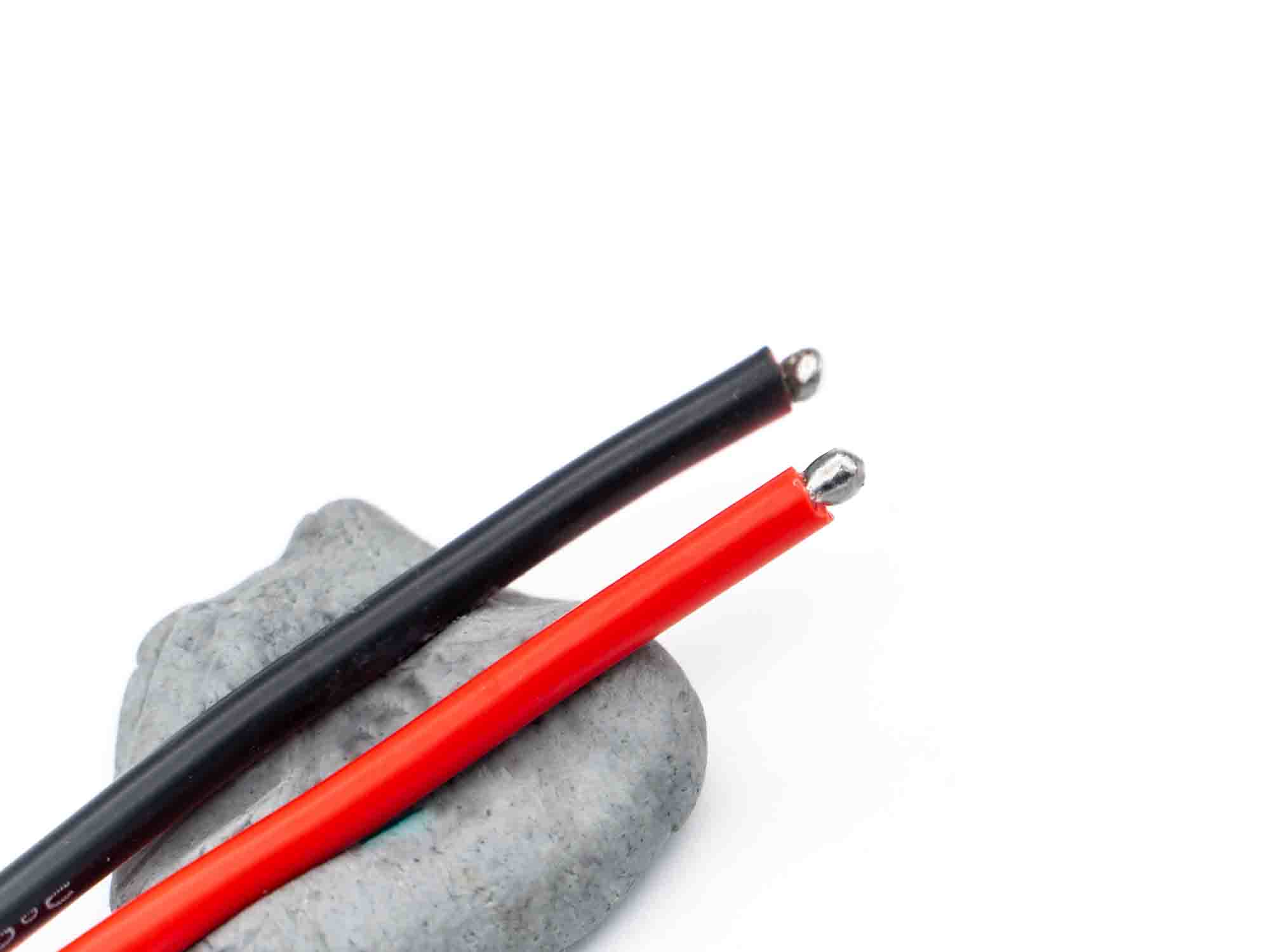
• Cut main power wires to approx. 10 cm
• Pre-tin both ends
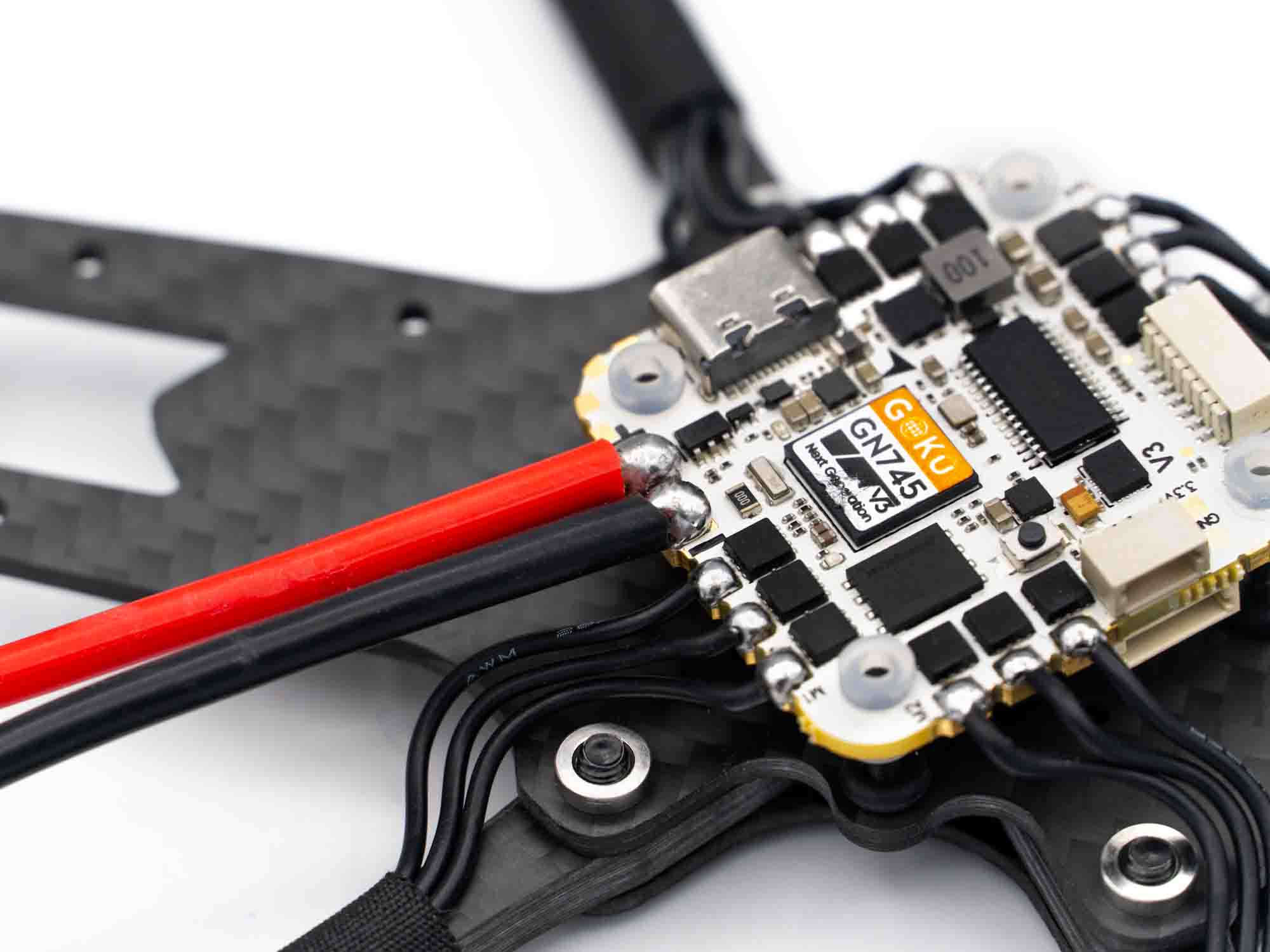
• Solder the main power wires to the FC power pads
Step 8 – Front TPU Bottom Mount
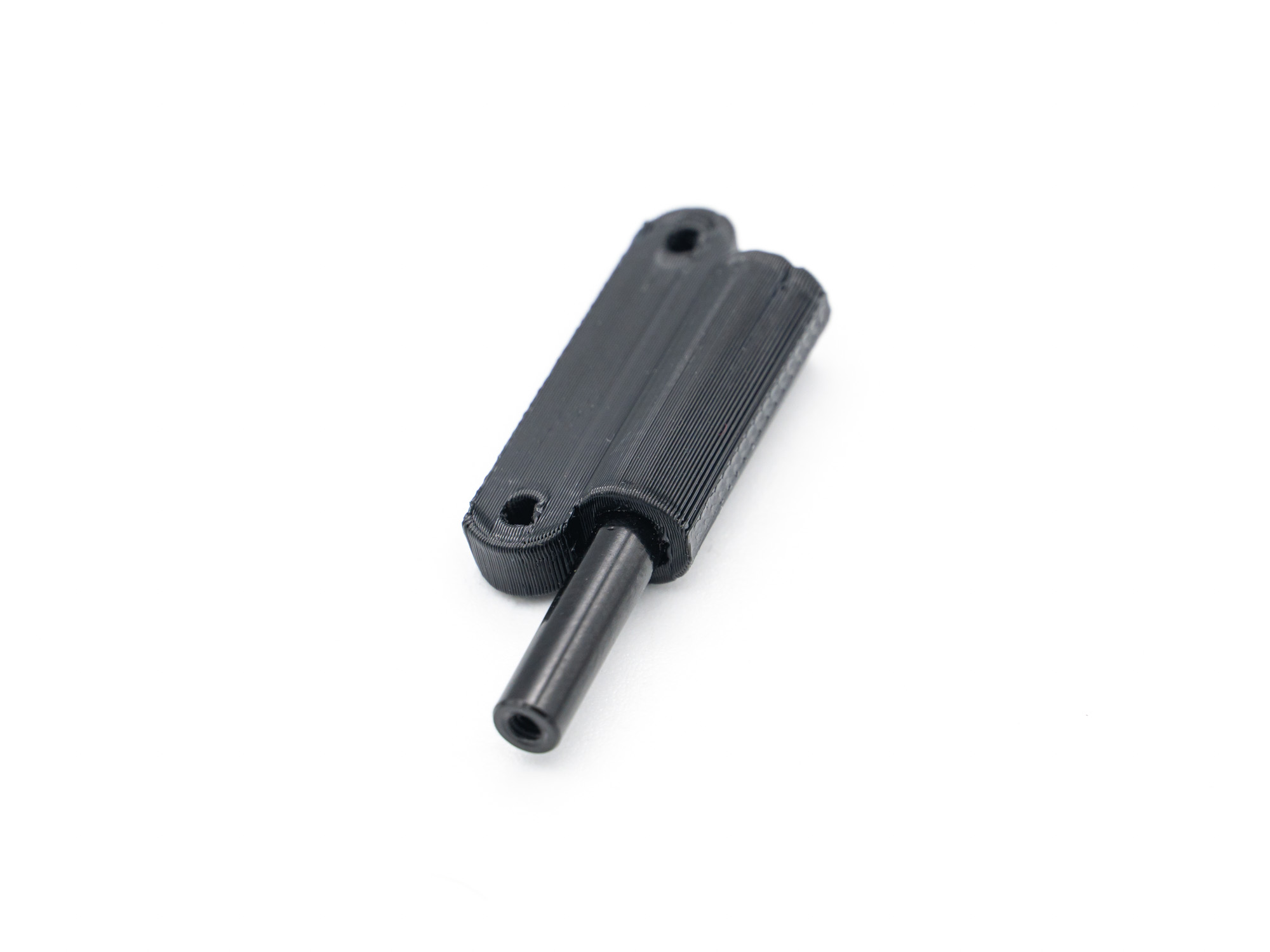
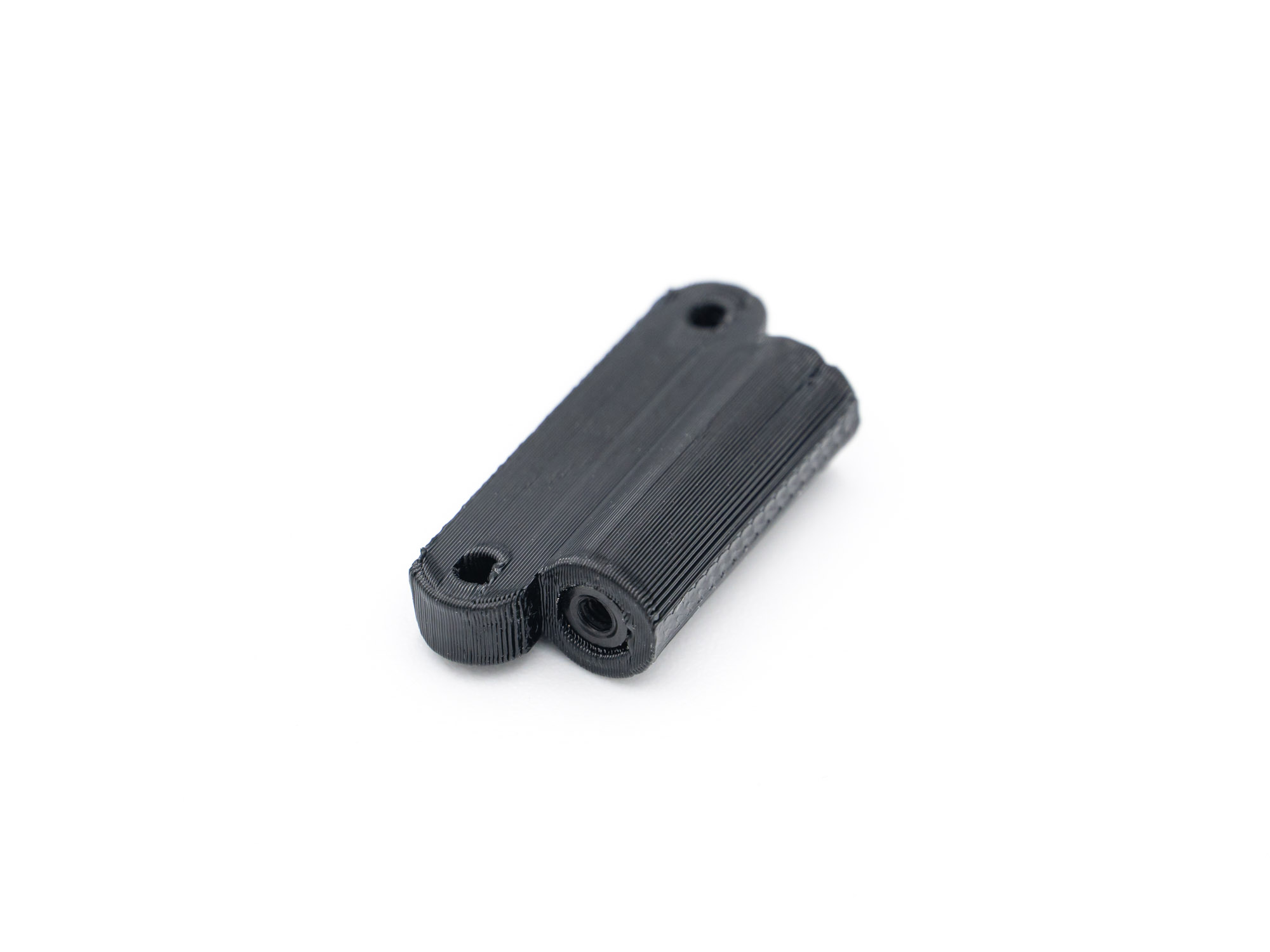
• Insert an M2x20 mm standoff into the TPU bottom mount
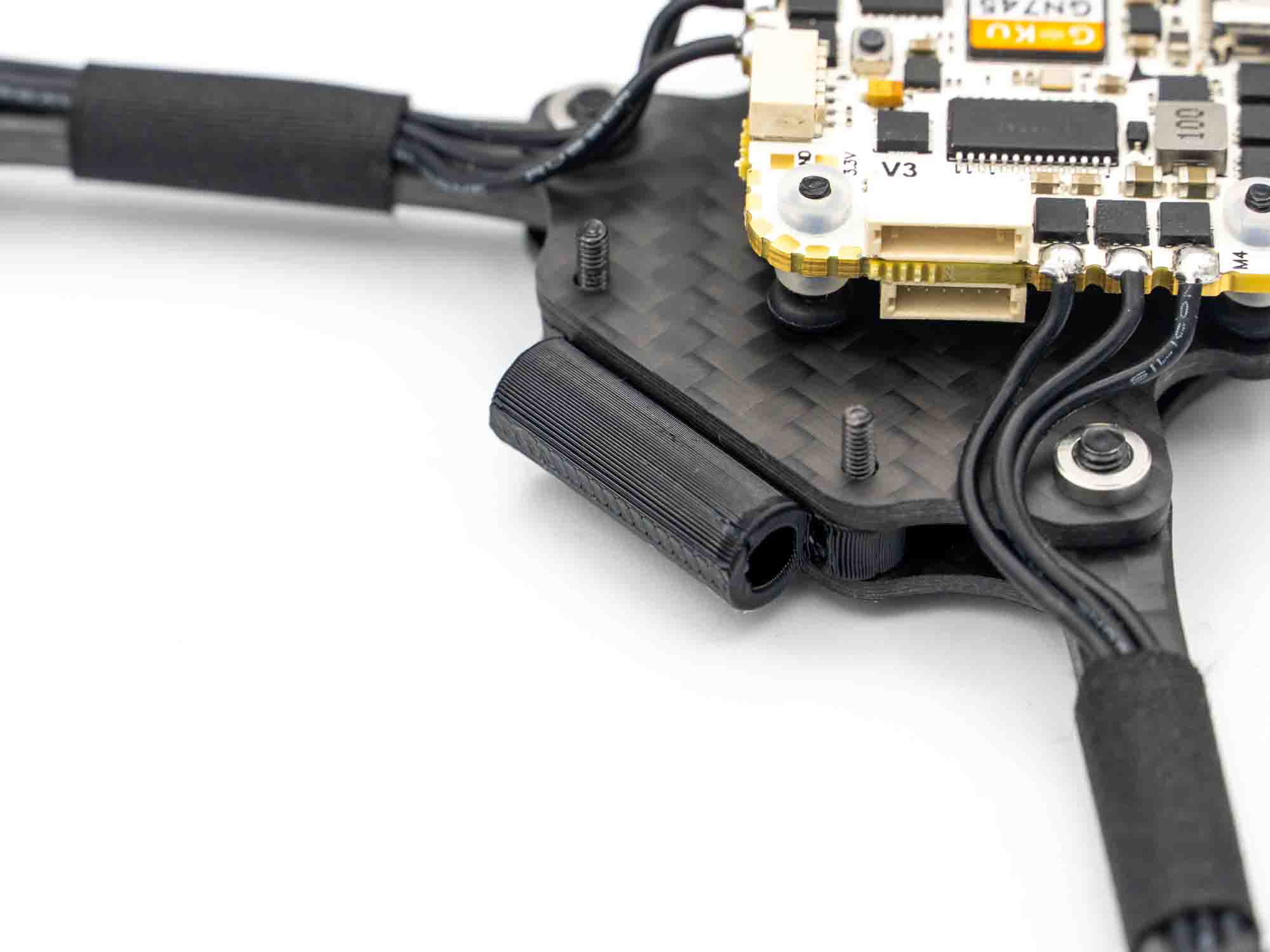
• Push the TPU mount into the frame
• Insert M2 screws through the mount
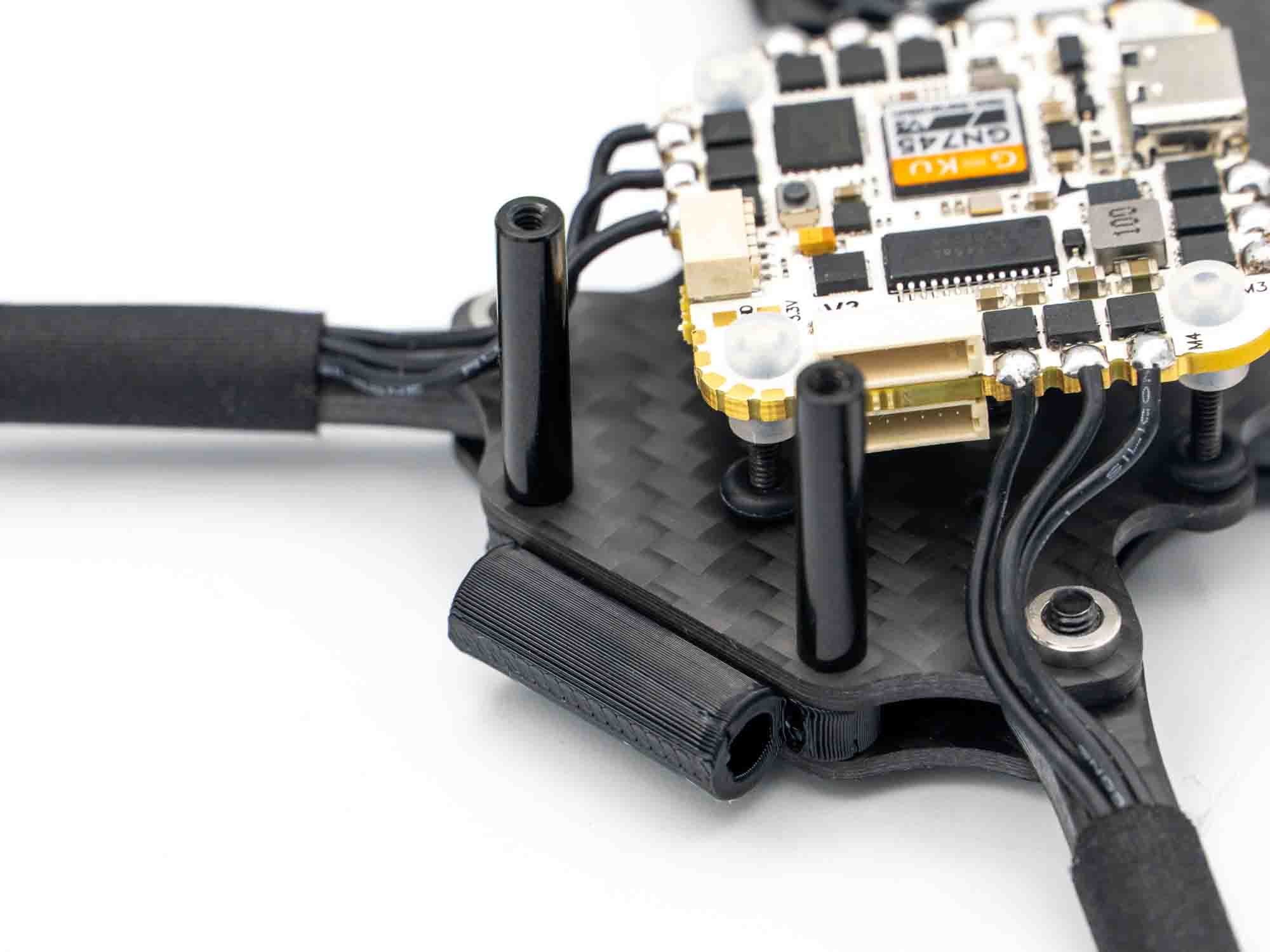
• Secure with M2x20 mm standoffs
Step 9 – Rear Standoffs
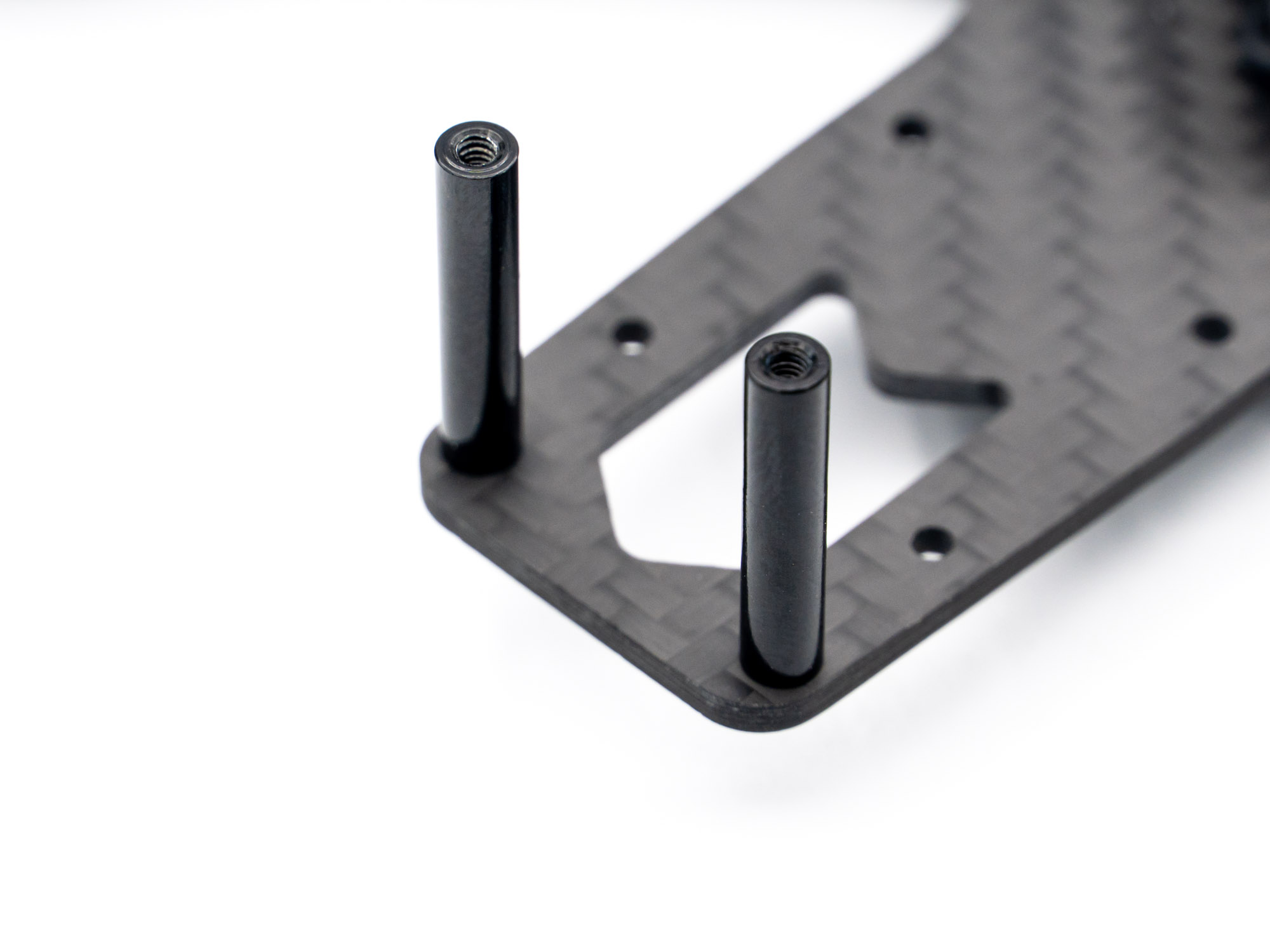
• Install M2x20 mm standoffs at the rear
• Secure using M2x8 mm screws
Step 10 – TPU Pod Top & Capacitor Mount
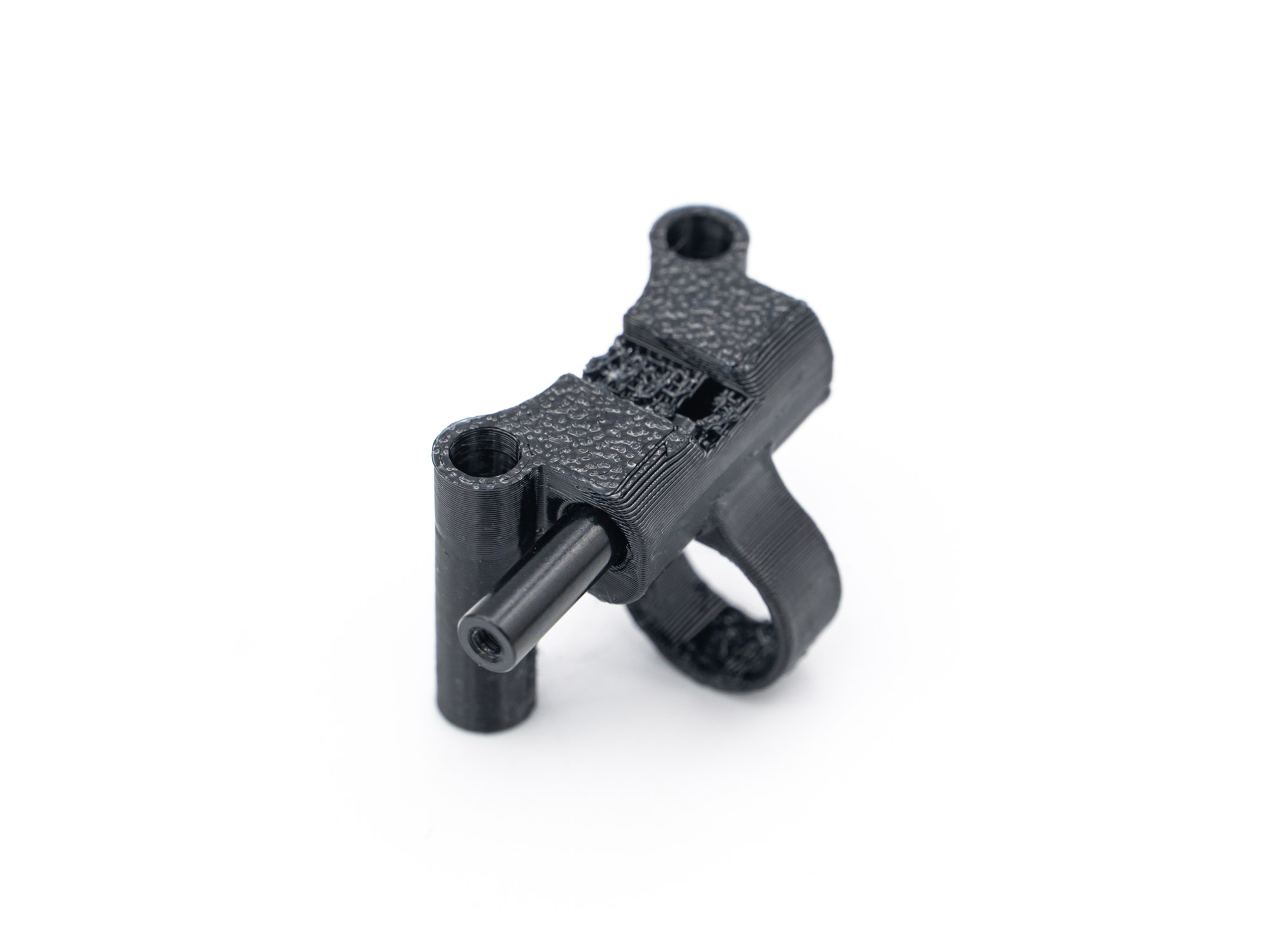
• Press an M2x20 mm standoff into the TPU top pod & capacitor mount
Step 11 – Capacitor Preparation
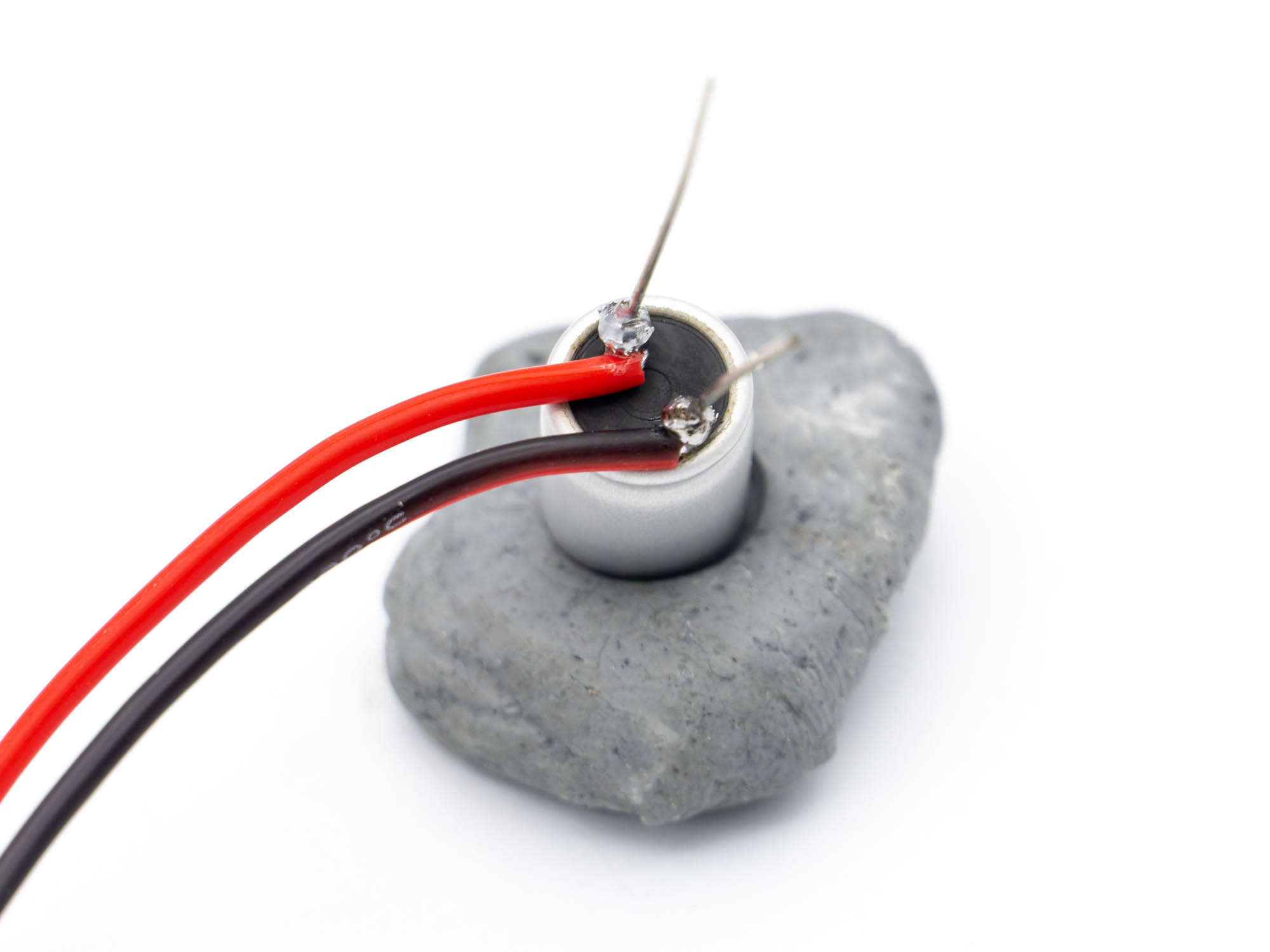
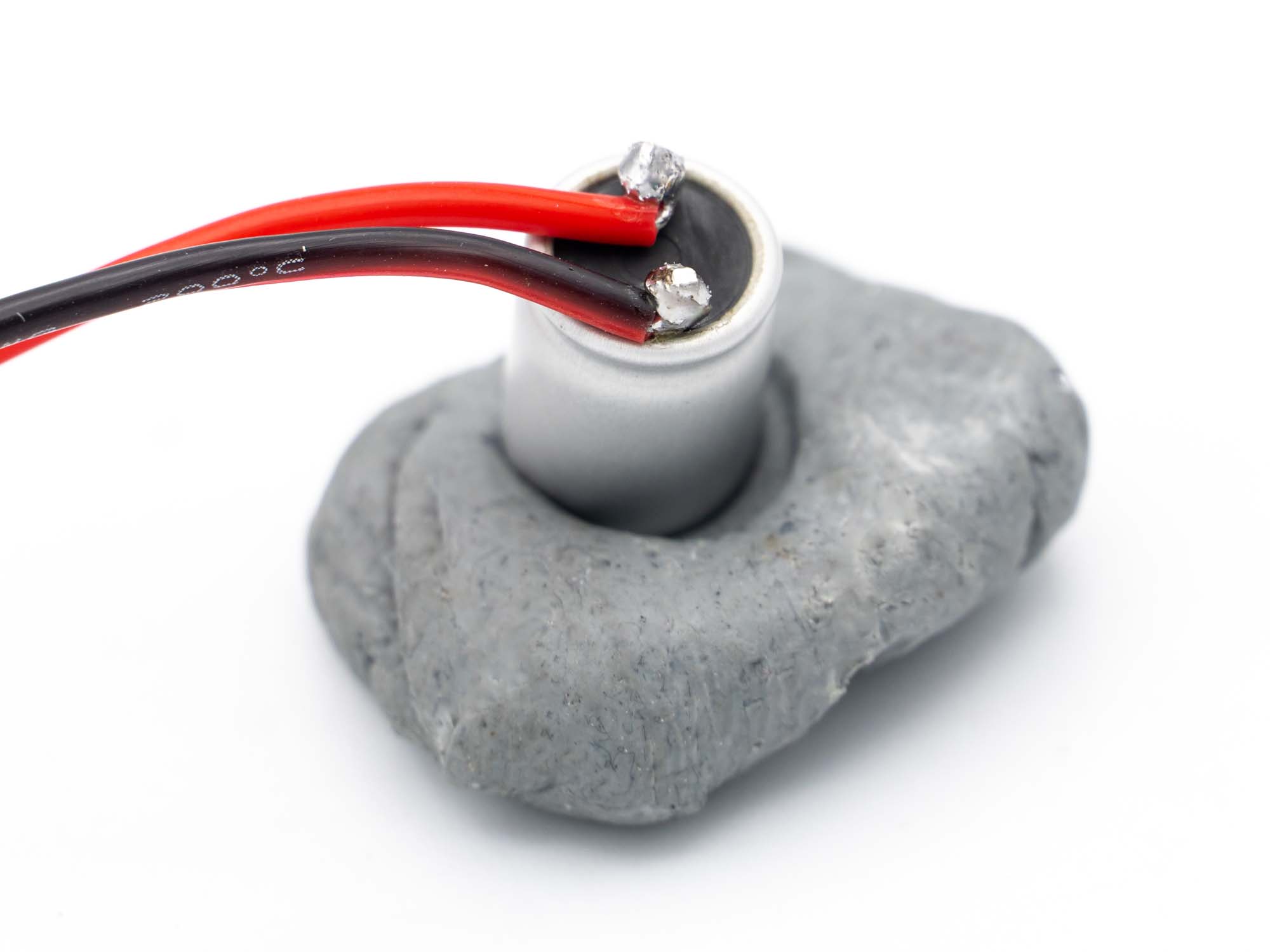
• Strip a small section of insulation from the wires
• Wrap wires tightly around the capacitor legs
• Solder securely
Polarity: • Black = Ground / – (short leg)
• Red = Plus / + (long leg)
• Trim excess capacitor legs
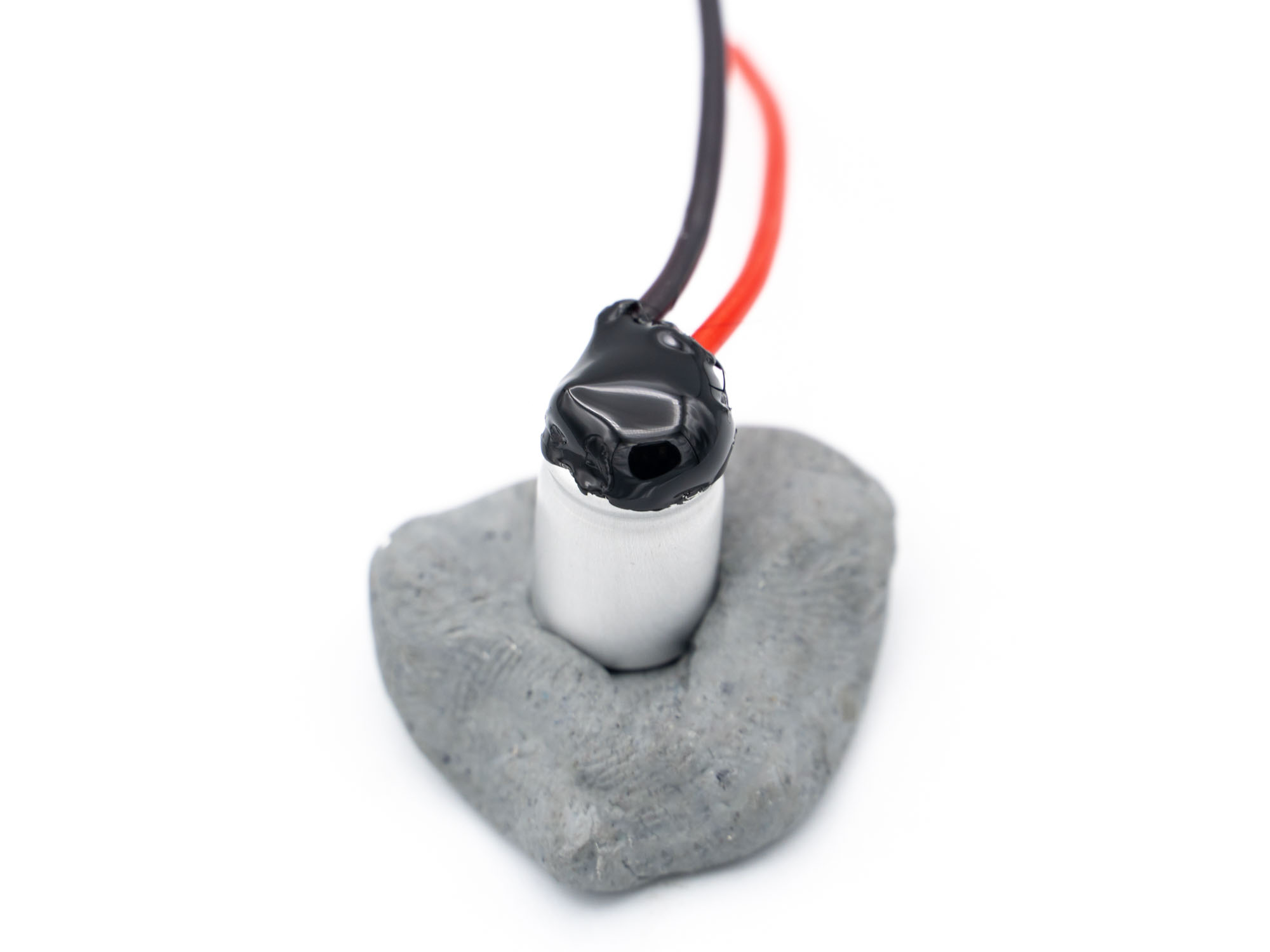
• Apply liquid rubber / Plasti Dip to exposed solder joints
Step 12 – Capacitor Installation
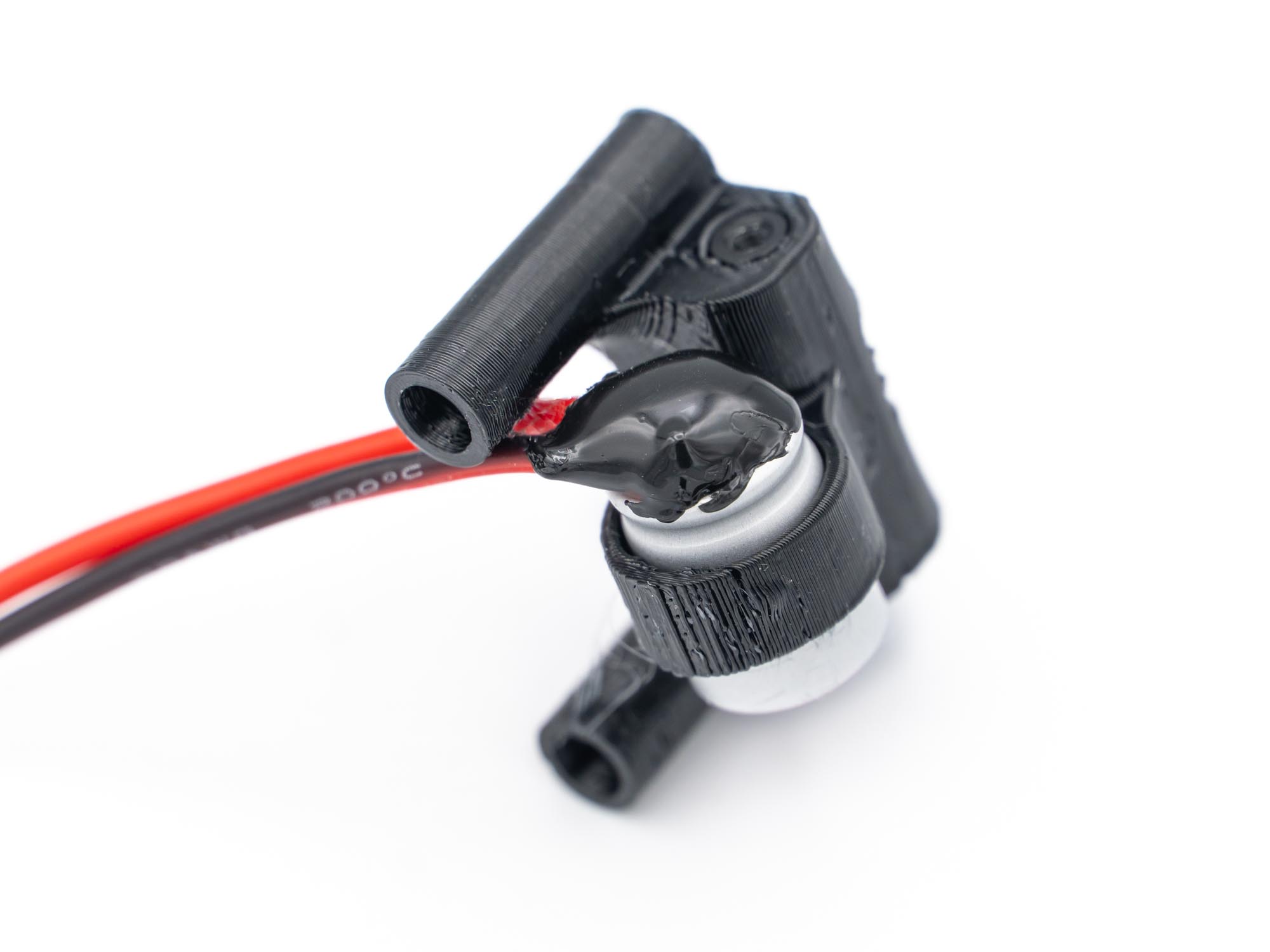
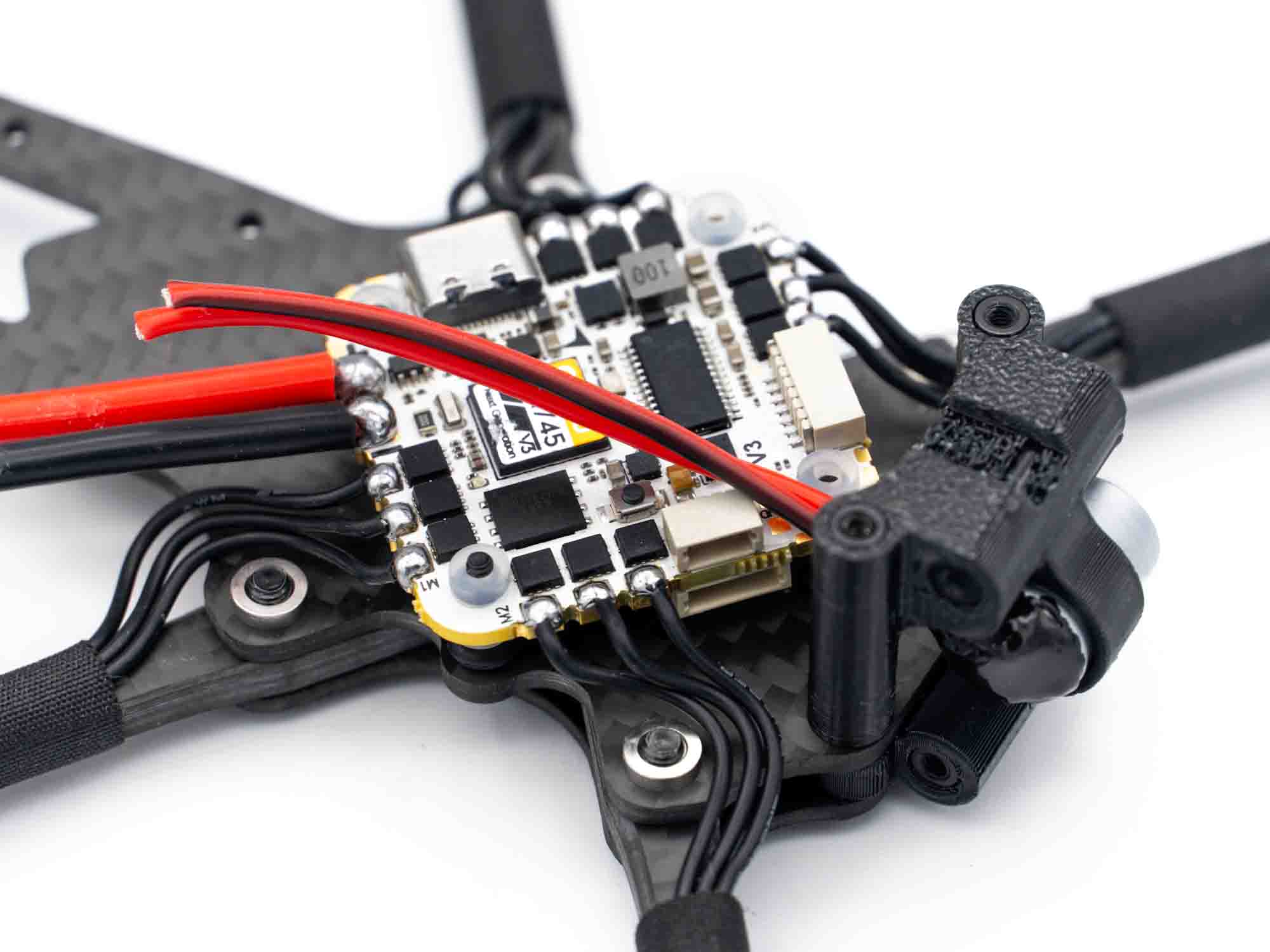
• Insert the capacitor into the TPU mount
• Install the assembly at the front of the frame
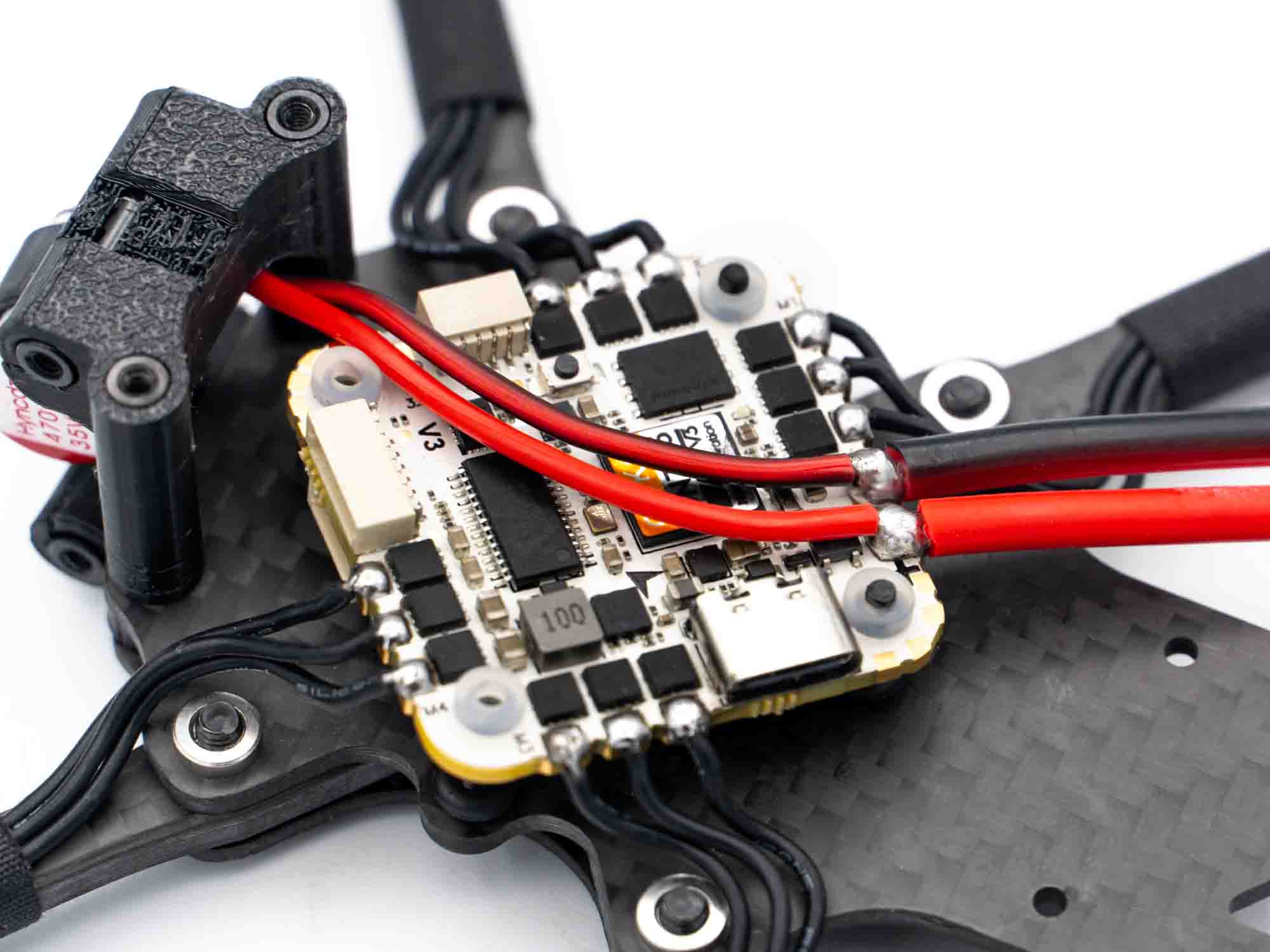
• Cut capacitor wires to length
• Solder them to the FC power pads
Step 13 – Naked Action Cam Power
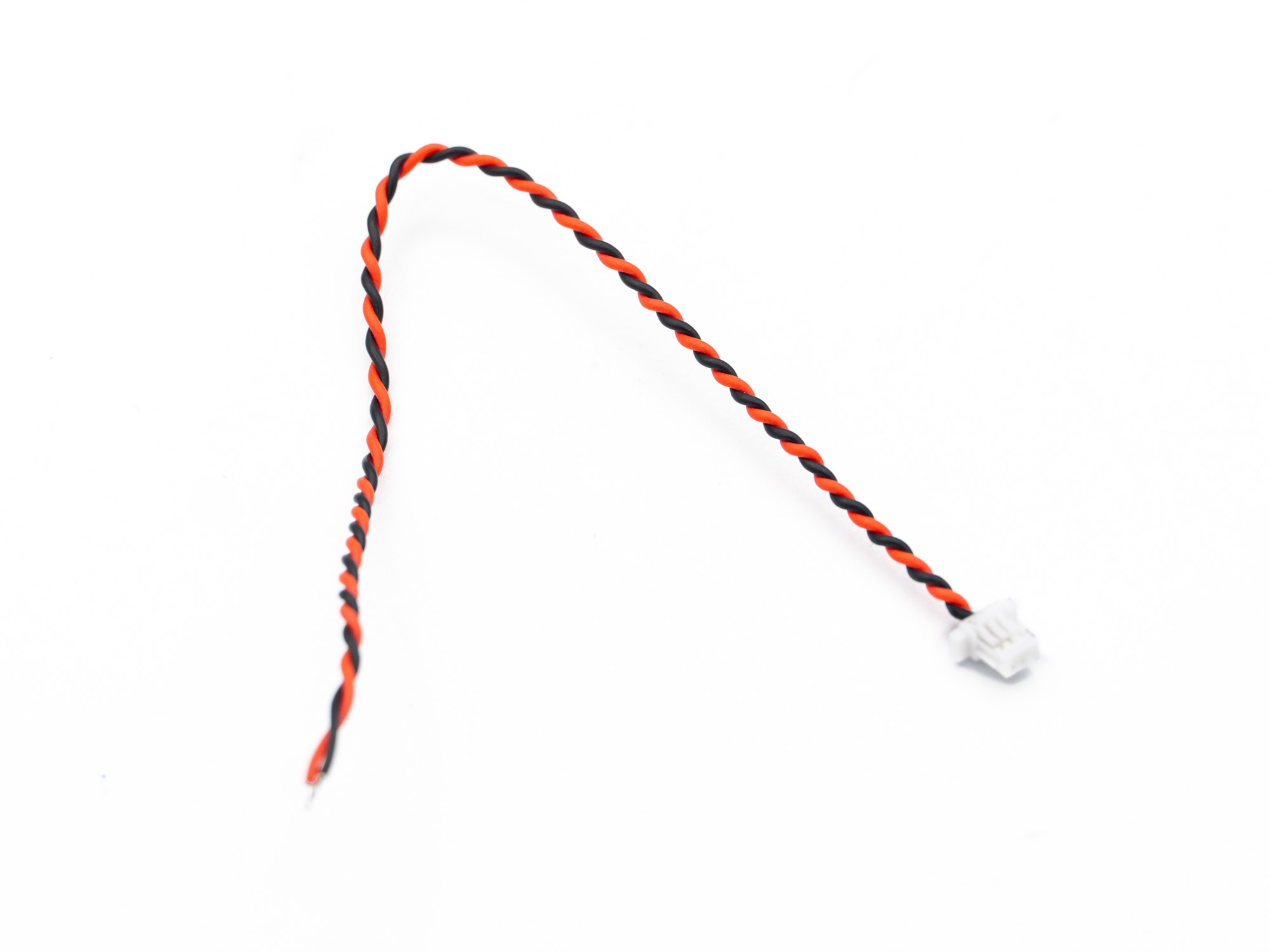
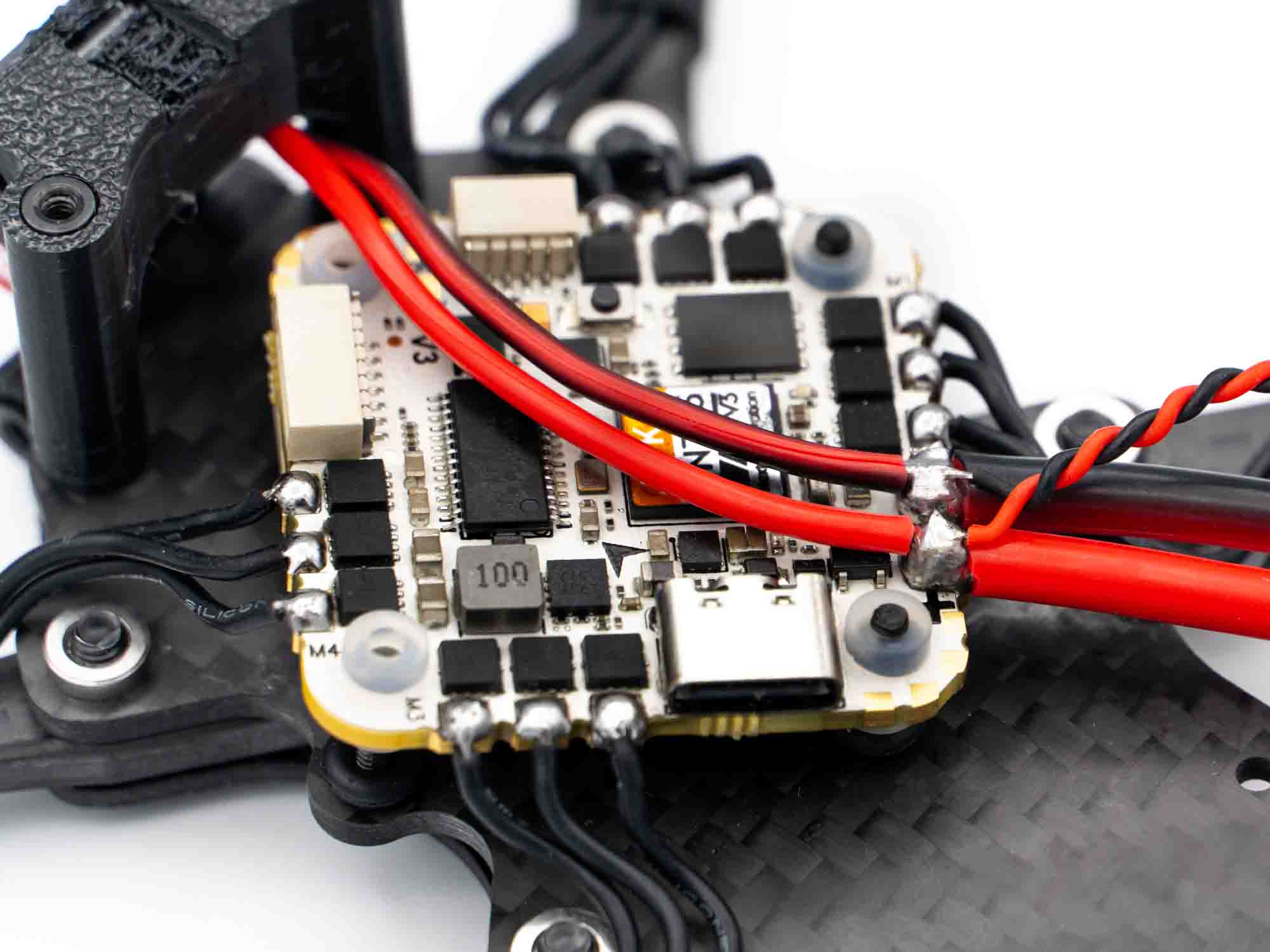
• Cut and solder the naked action cam power wire to the FC power pads
⚠️ Take your time — this step requires clean, precise solder joints.
Step 14 – XT30 Connector (Optional)
Only perform this step if you plan to use different battery sizes.
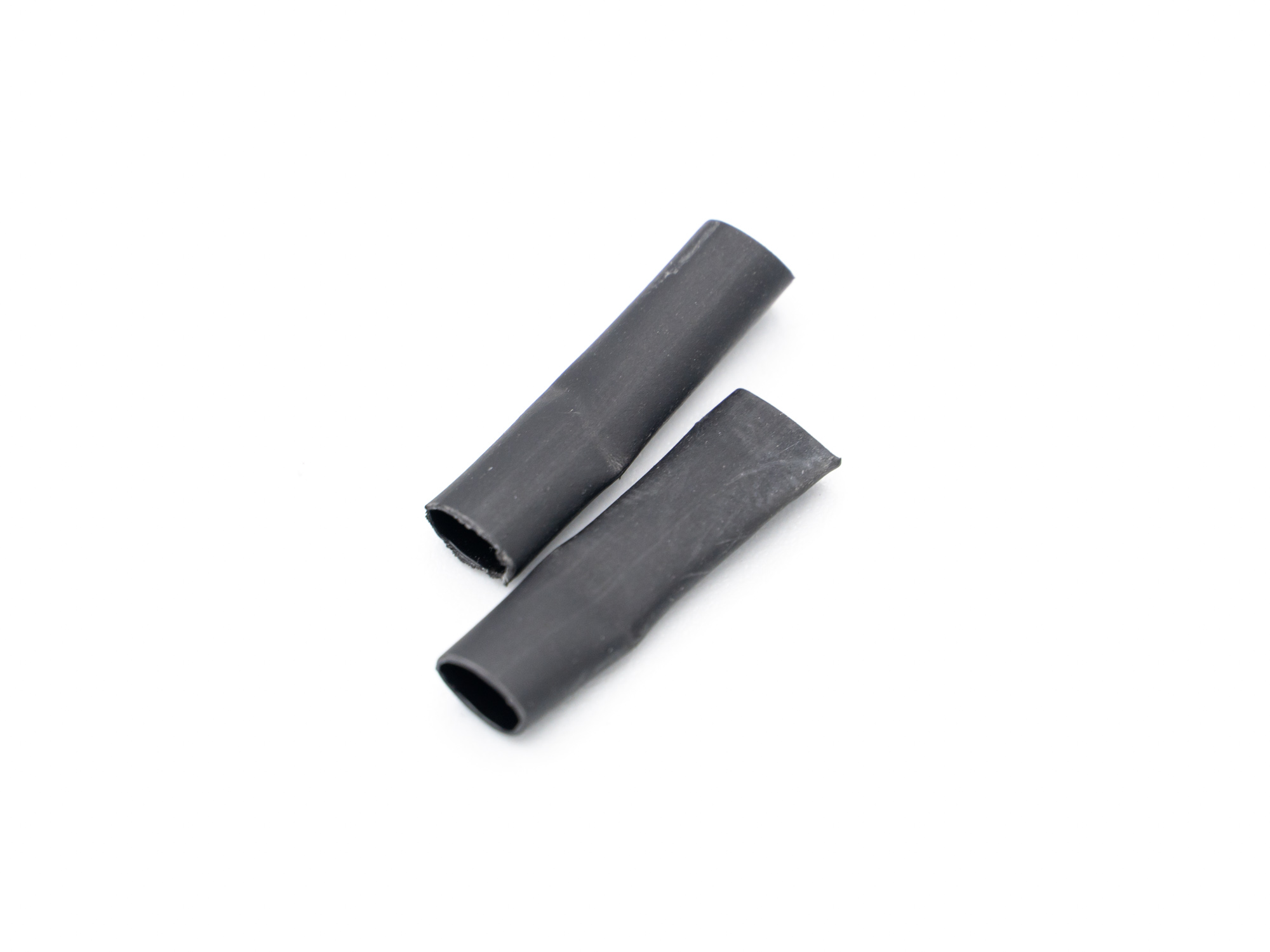
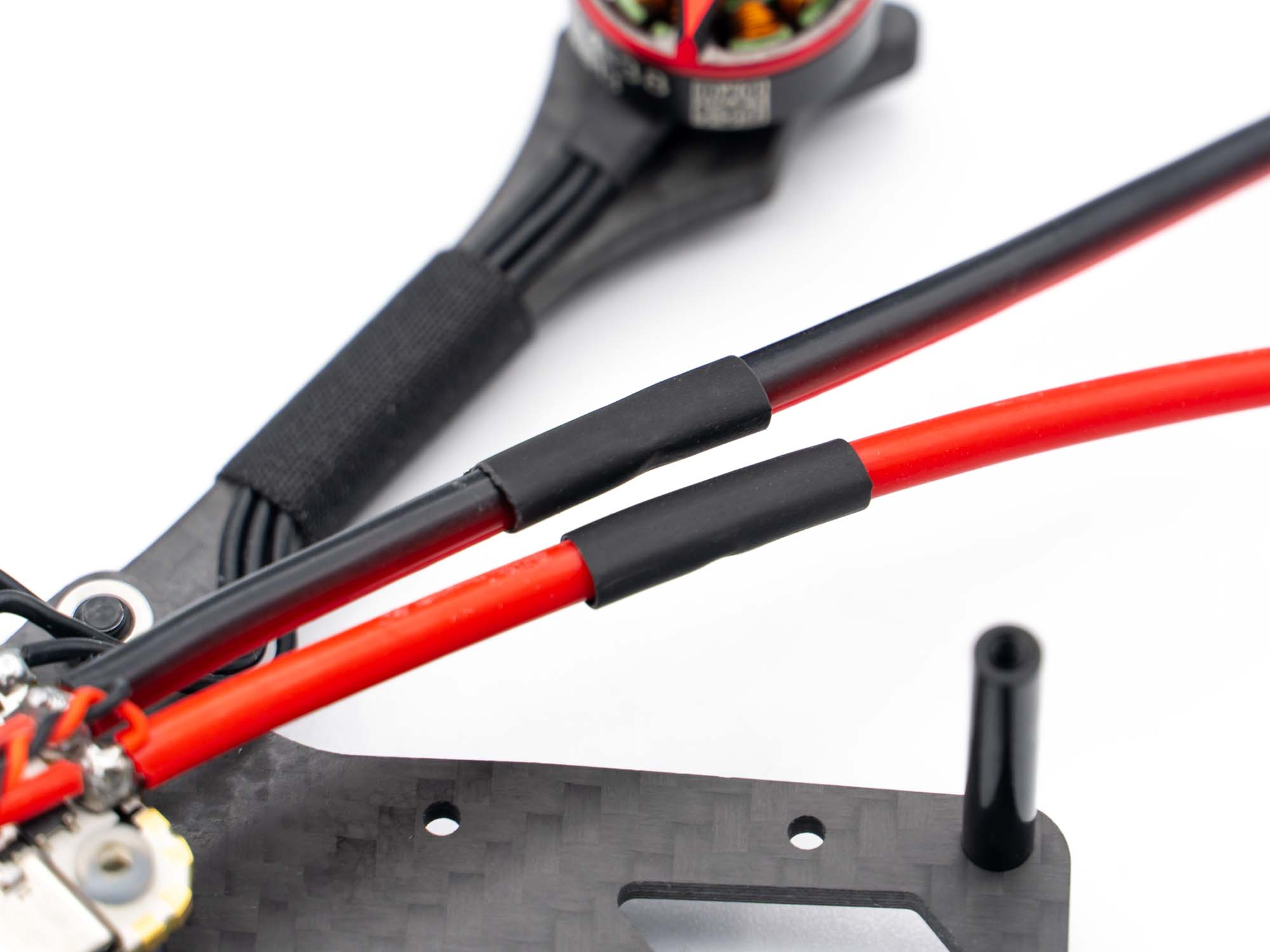
• Slide two pieces of heat shrink onto the power wires
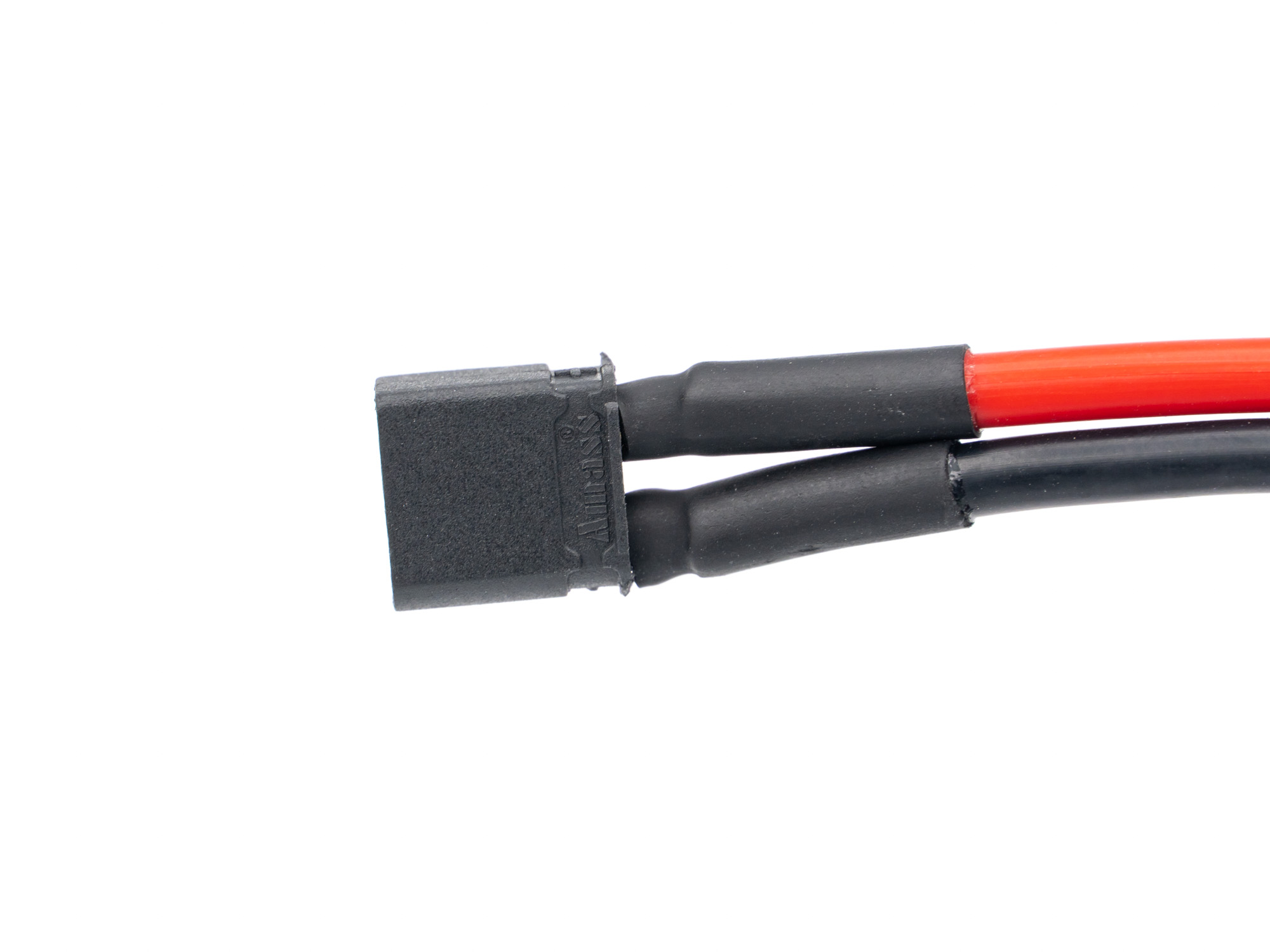
• Cut wires to length
• Solder to the XT30 connector
• Insulate joints using heat shrink
Step 15 – Conformal Coating (Top Side)
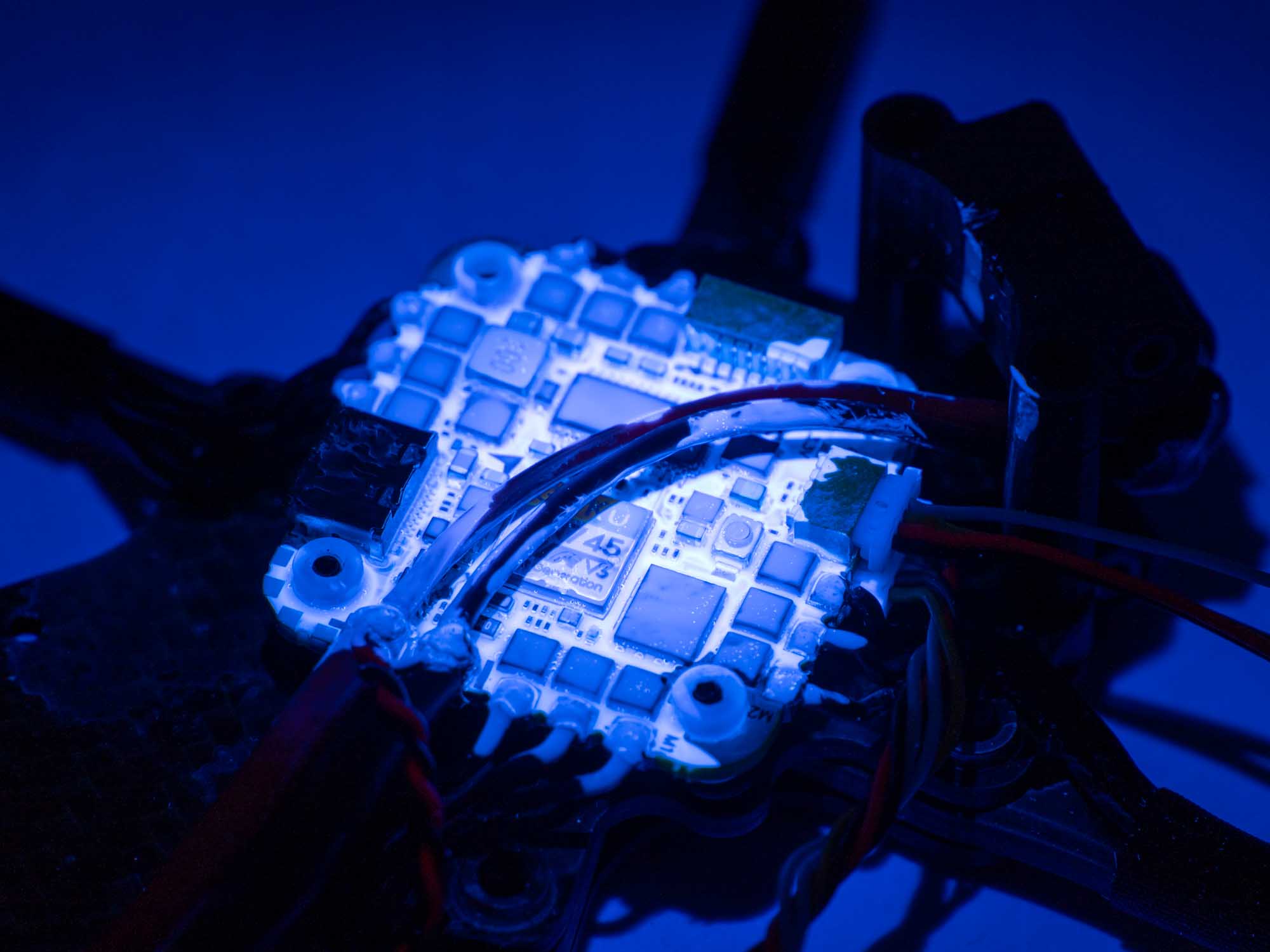
• Apply conformal coating to the top of the FC
Step 16 – Receiver Preparation
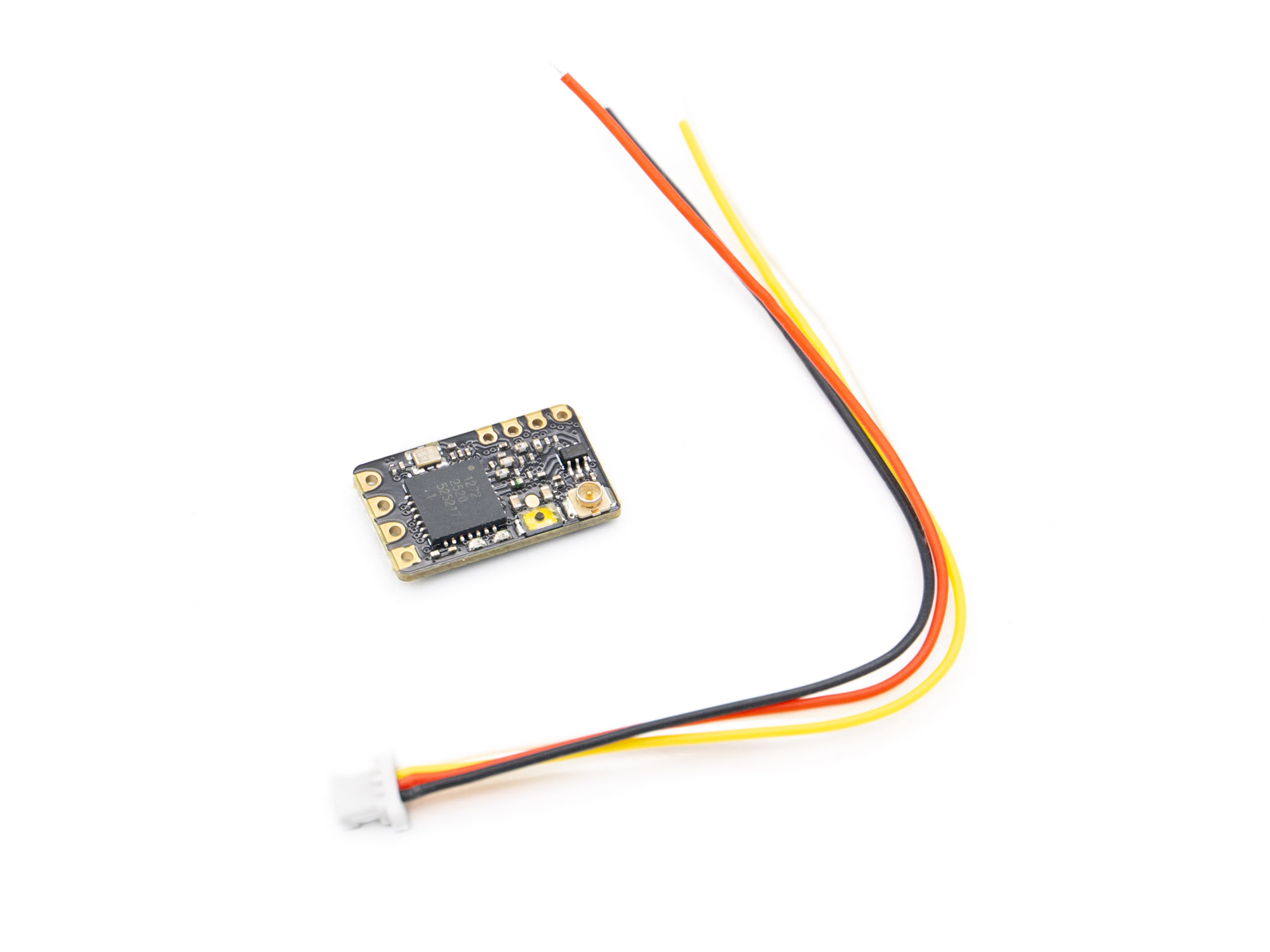
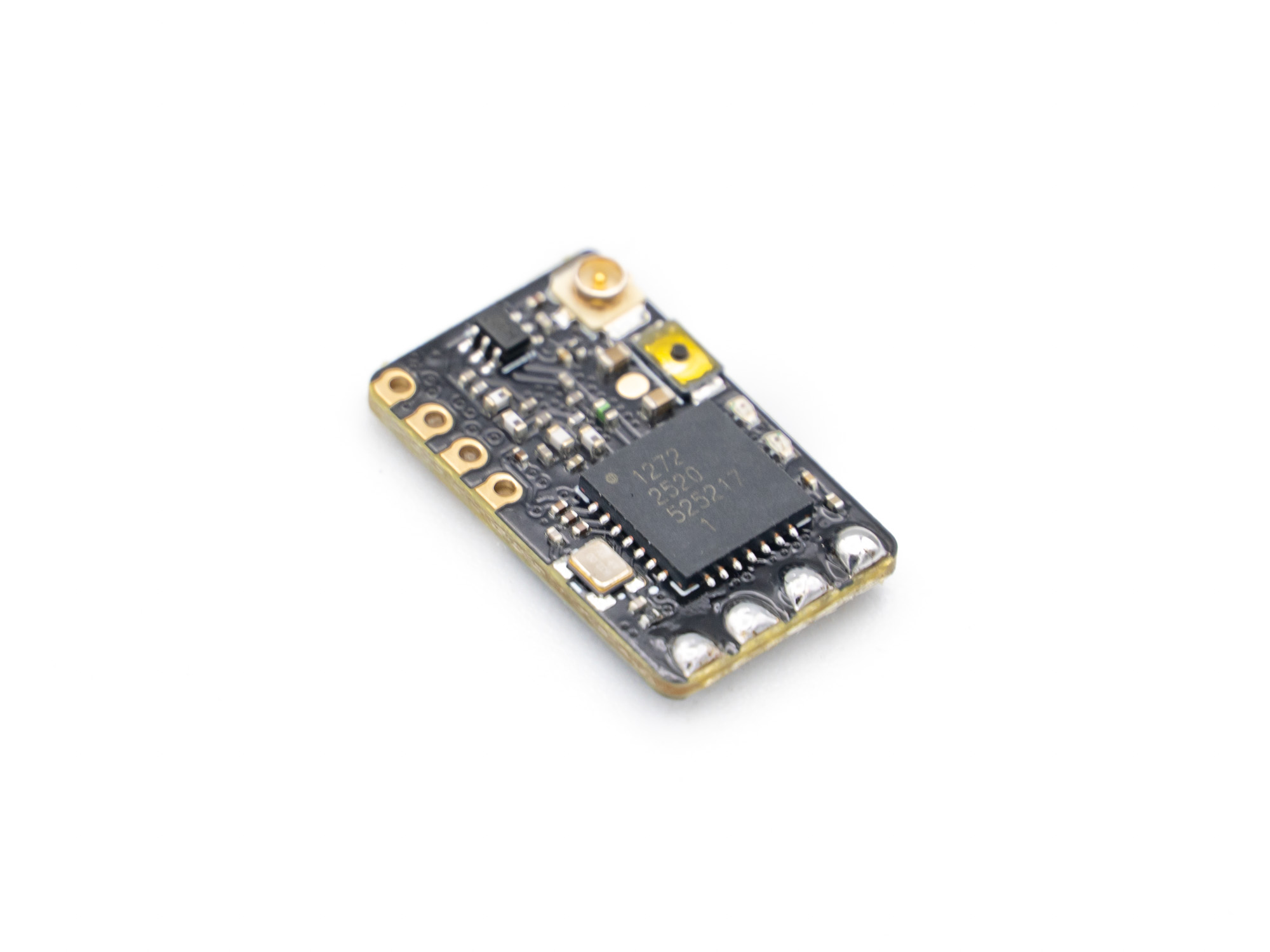
• Pre-tin the receiver solder pads
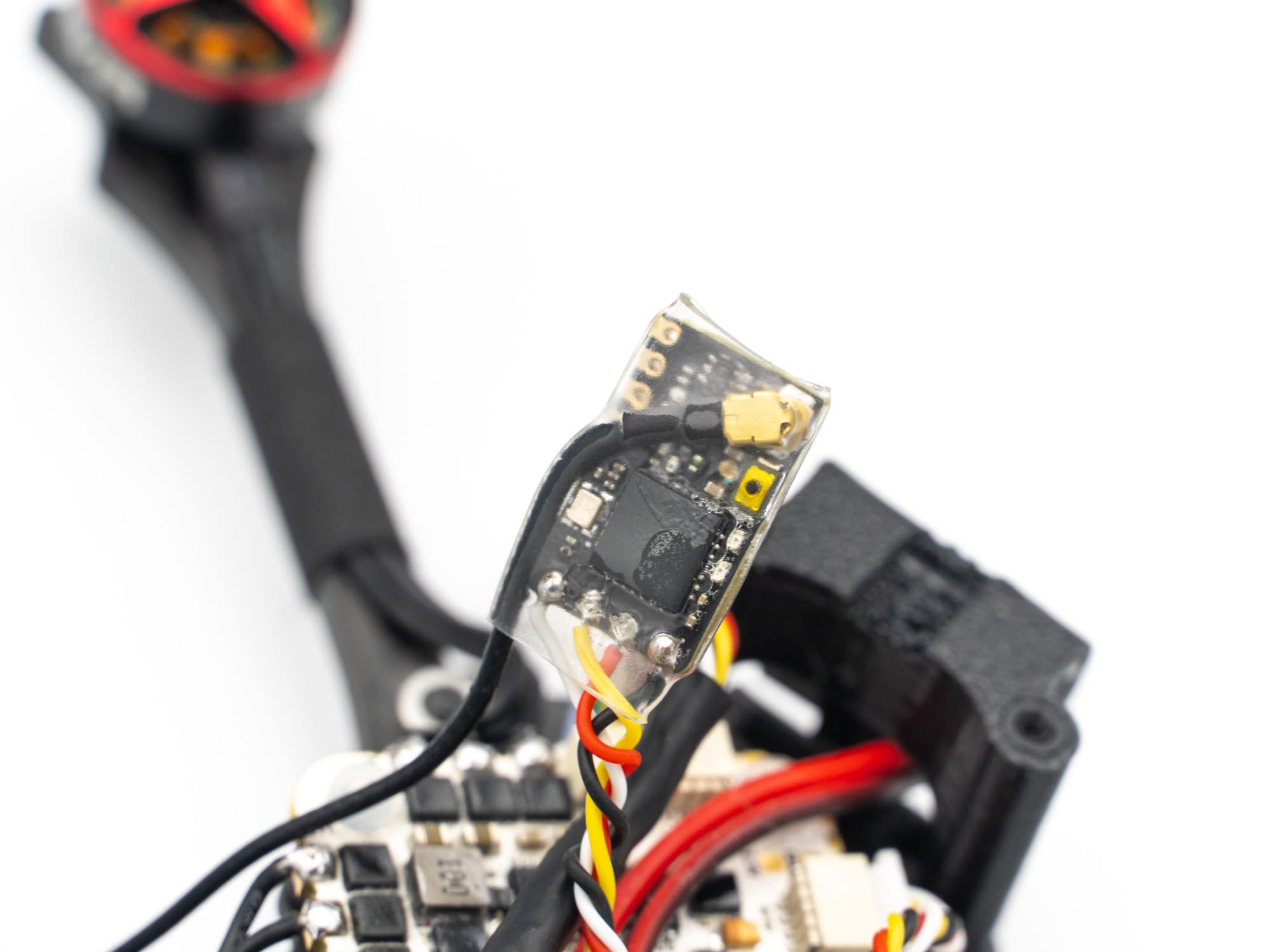
• Solder RX wires
• Bend antenna slightly so the bind button remains accessible
• Cover with shrink tube
Step 17 – Receiver Installation
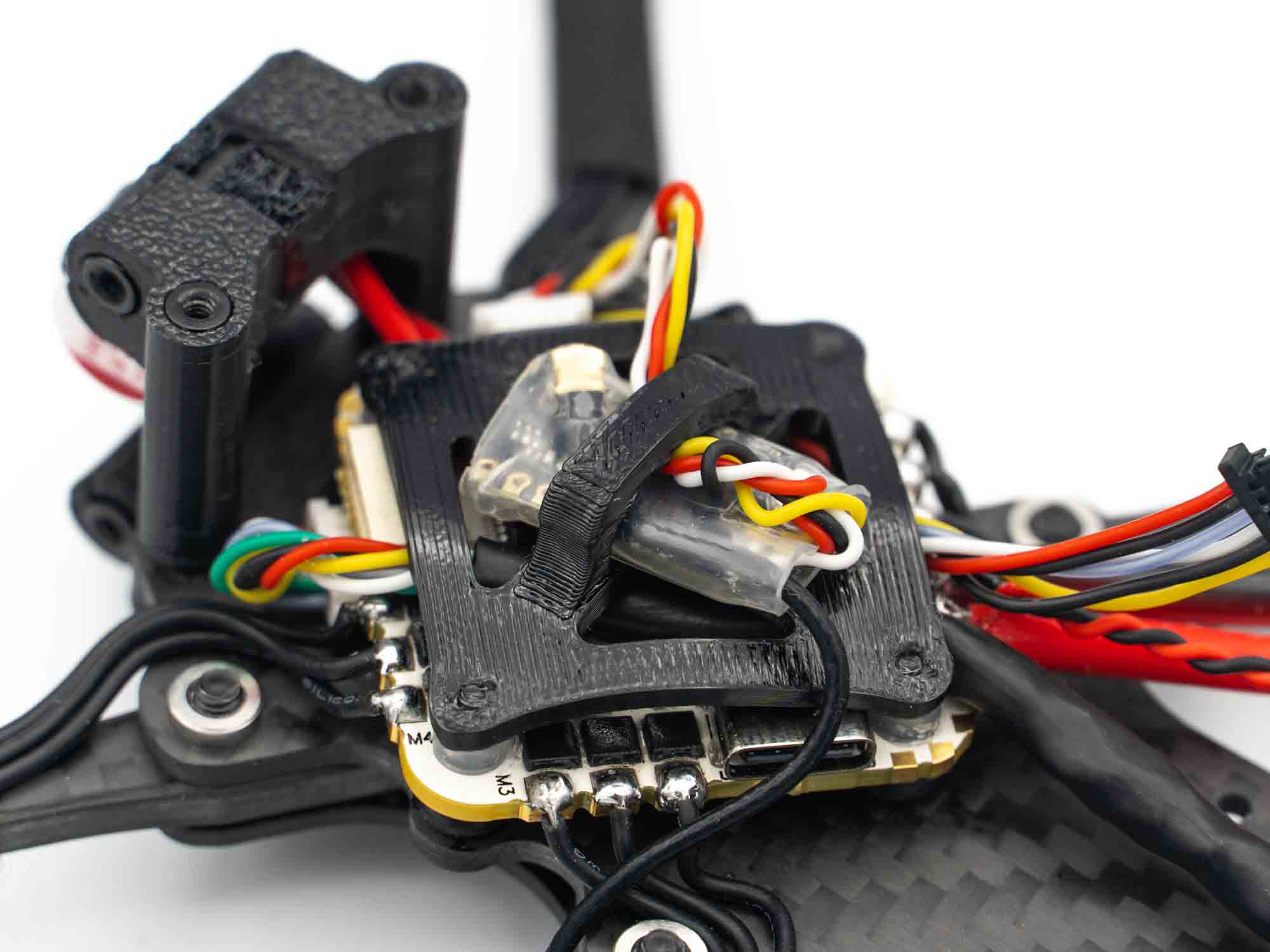
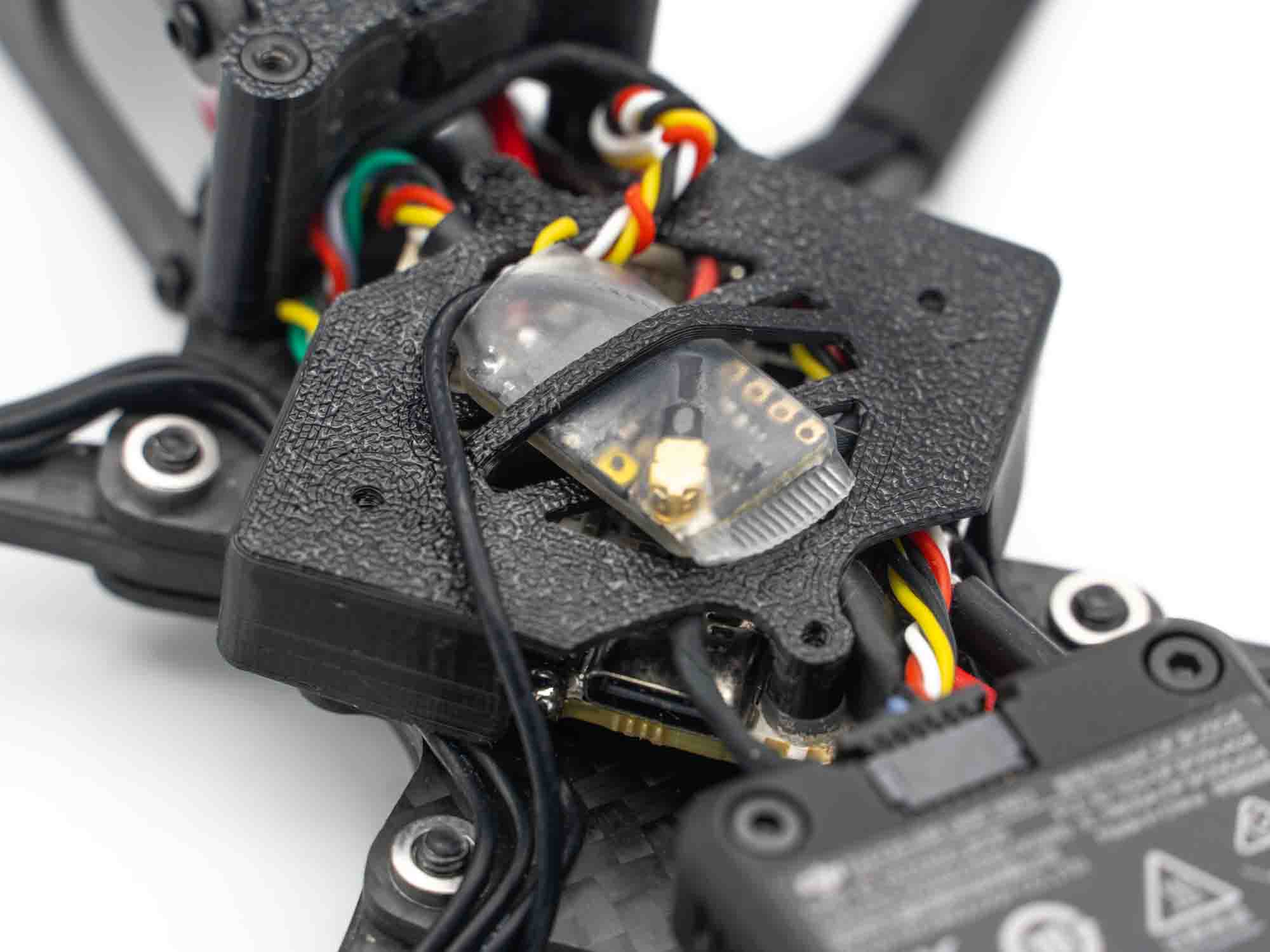
• Install the TPU FC cover
• Mount the receiver on top
• Use the cover that best fits your FC
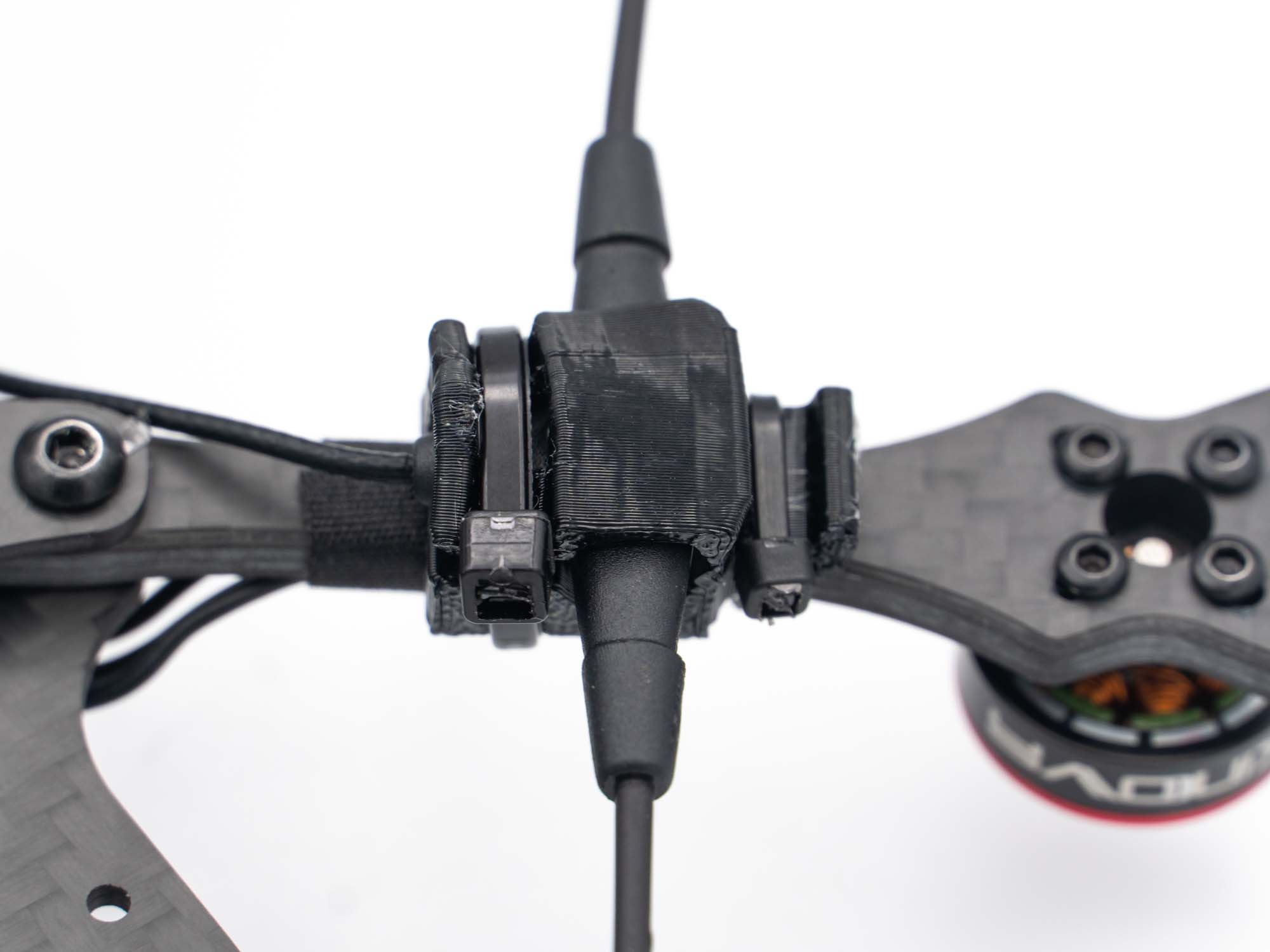
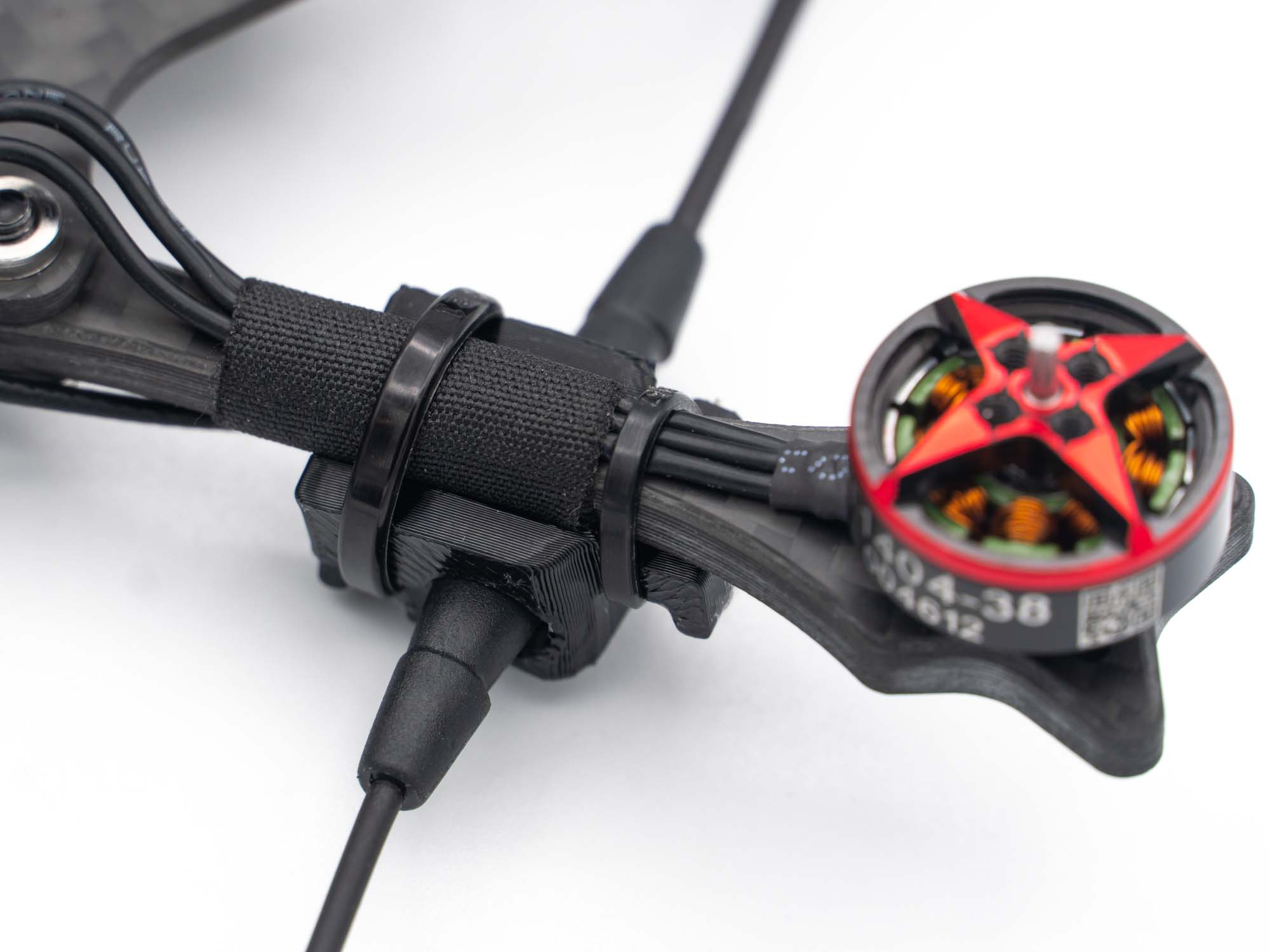
• Mount the RX antenna on the rear left arm
• Secure using two zip ties and the TPU antenna mount
Step 18 – GPS Installation
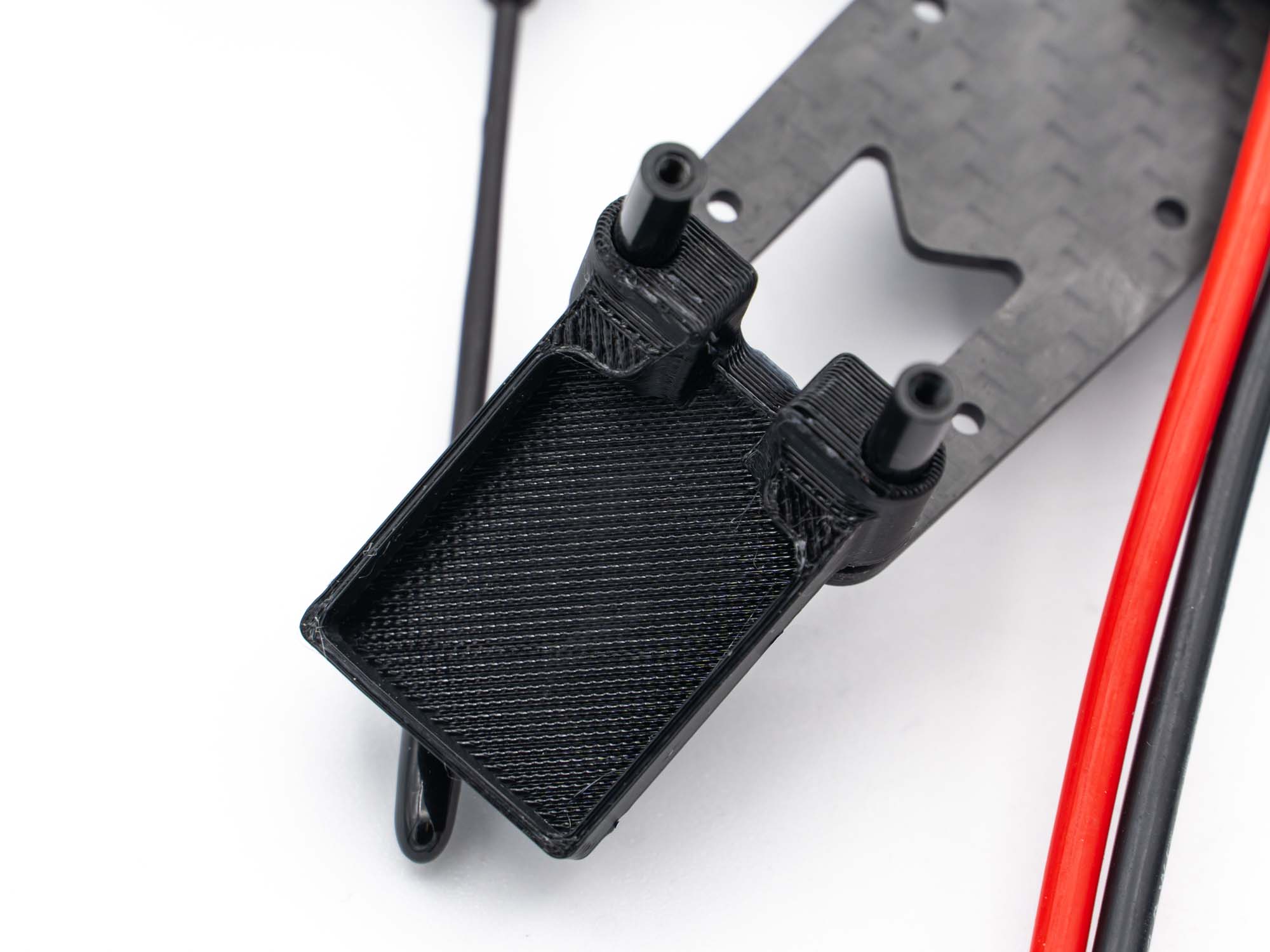
• Install the TPU GPS mount on the rear standoffs
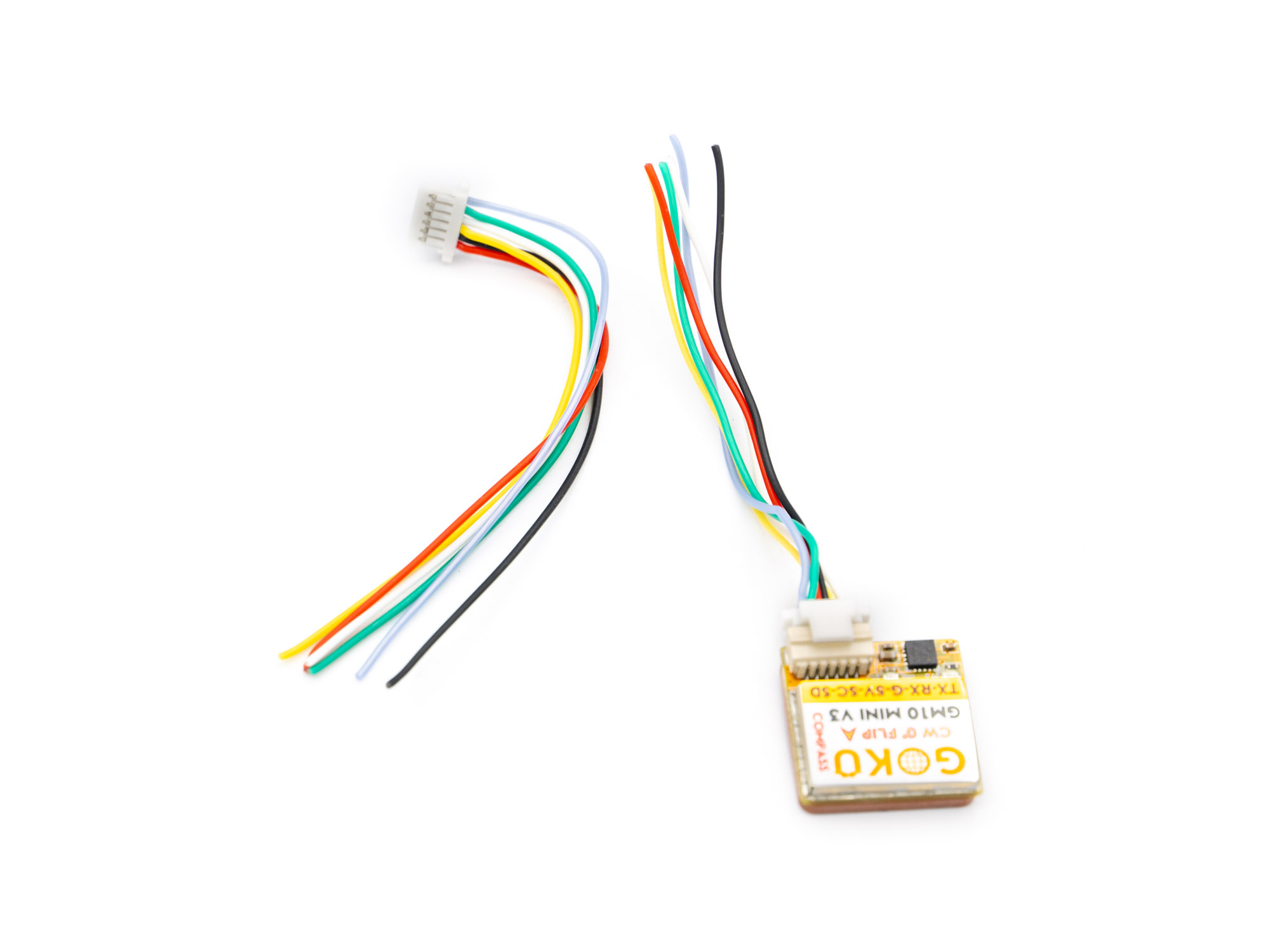
• Prepare the GPS wiring
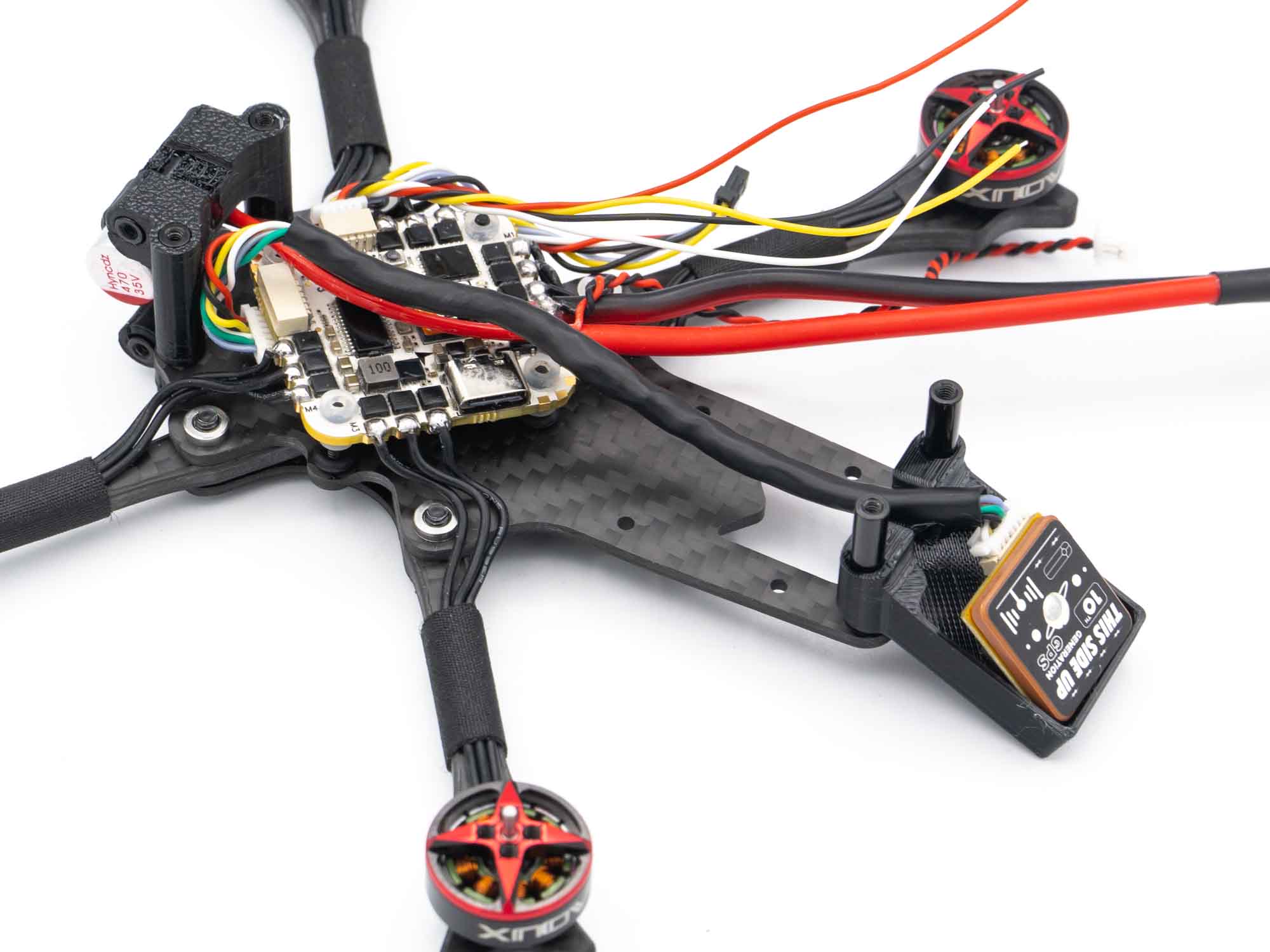
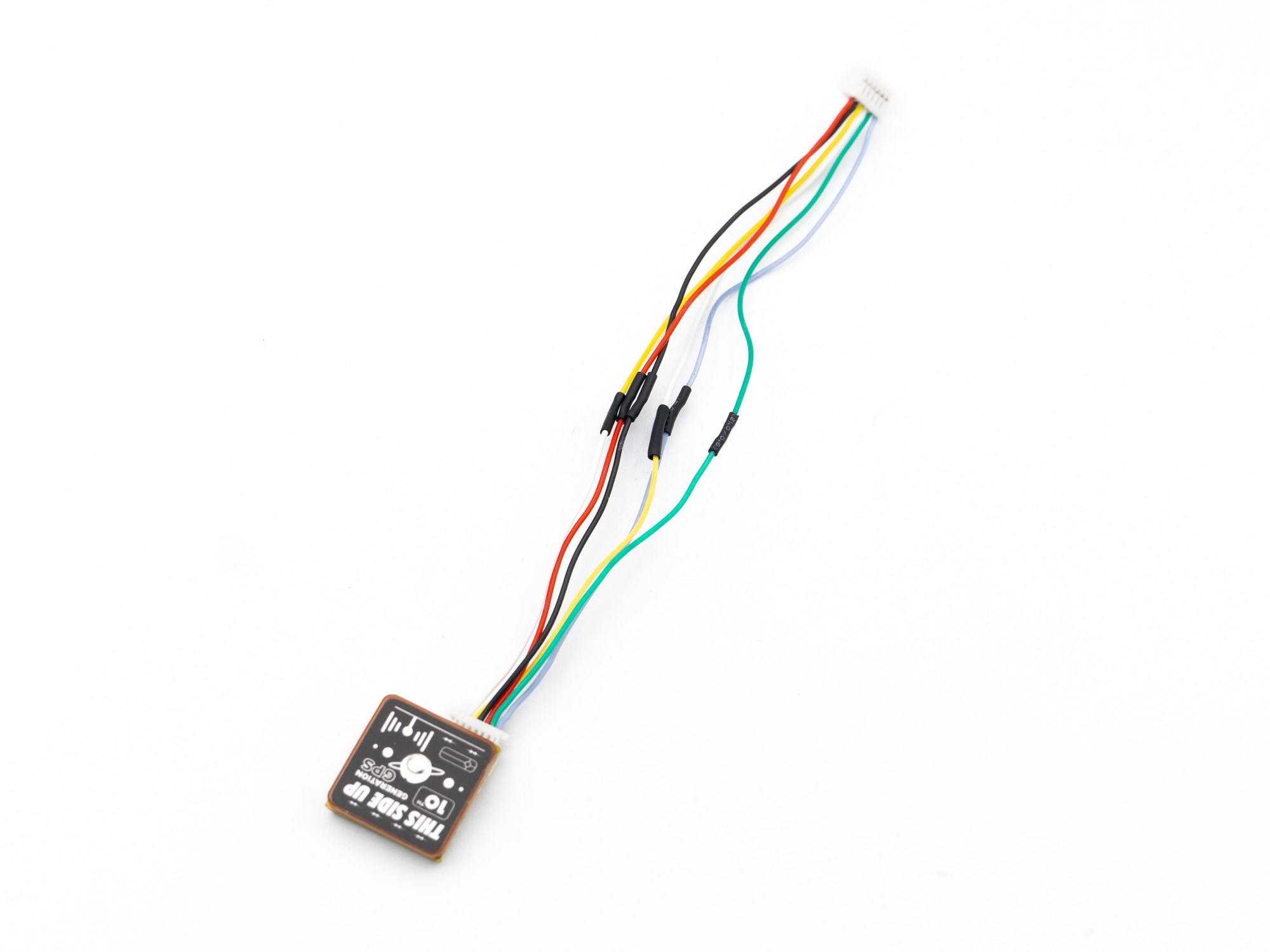
• Trim wires to length (reference image for sizing)
• Add shrink tube
• Solder wires according to your hardware configuration
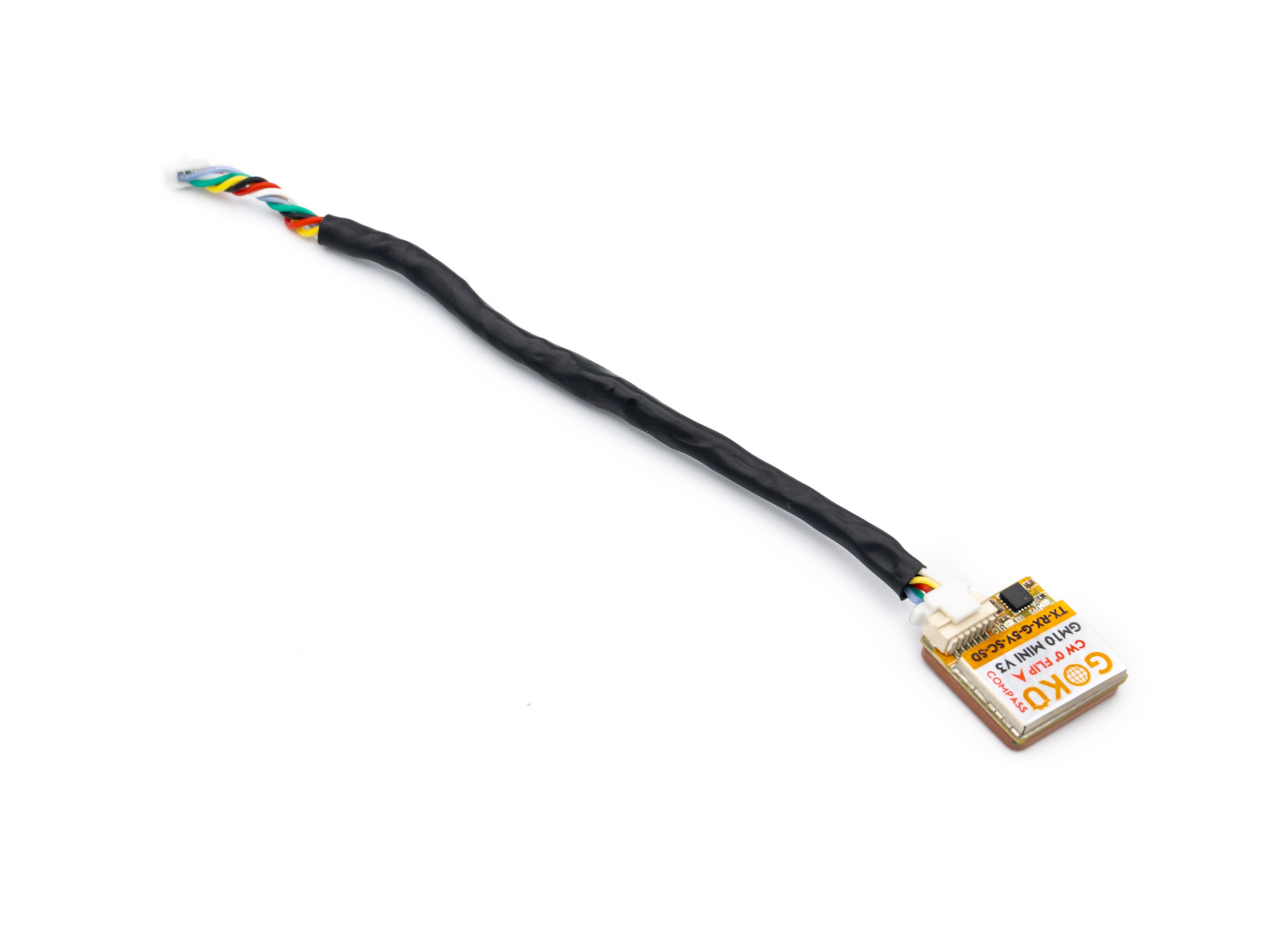
• Twist GPS wires
• Shield with copper tape
• Insulate with shrink tube or tape for maximum performance
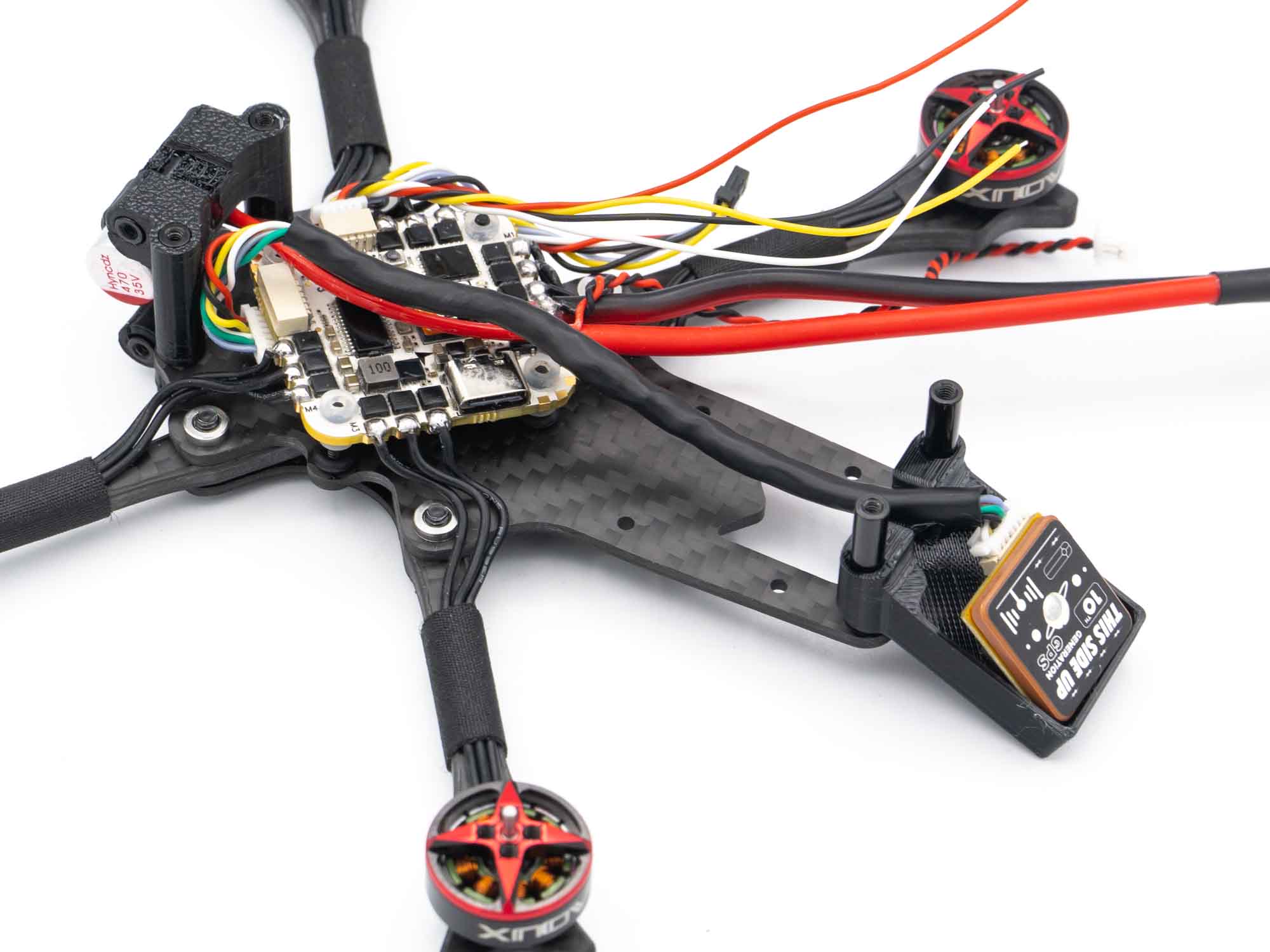
• Install the GPS module
• Plug the connector into the FC
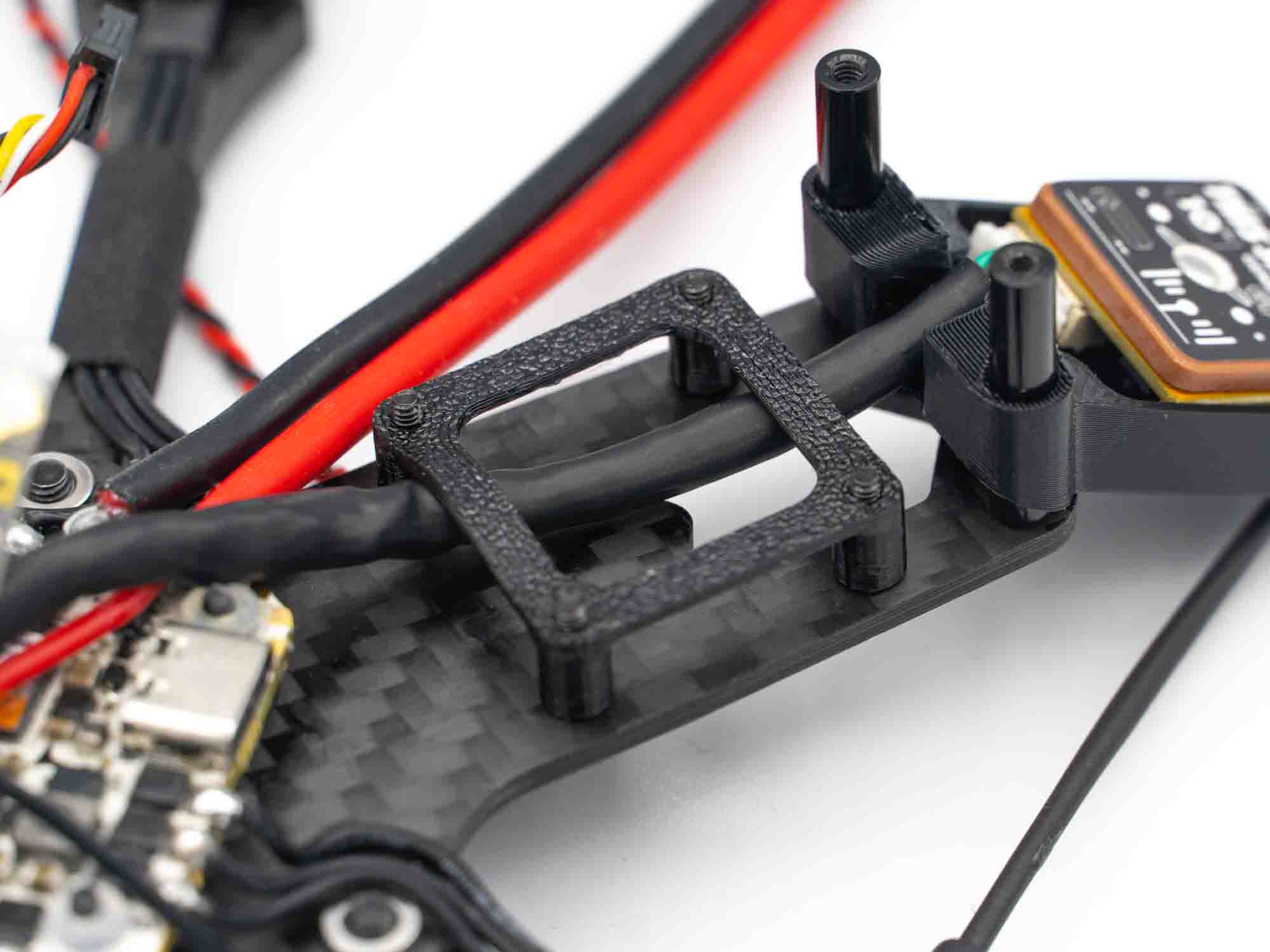
• Secure the GPS using shrink tube or tape
Step 19 – O4 / O3 Air Unit
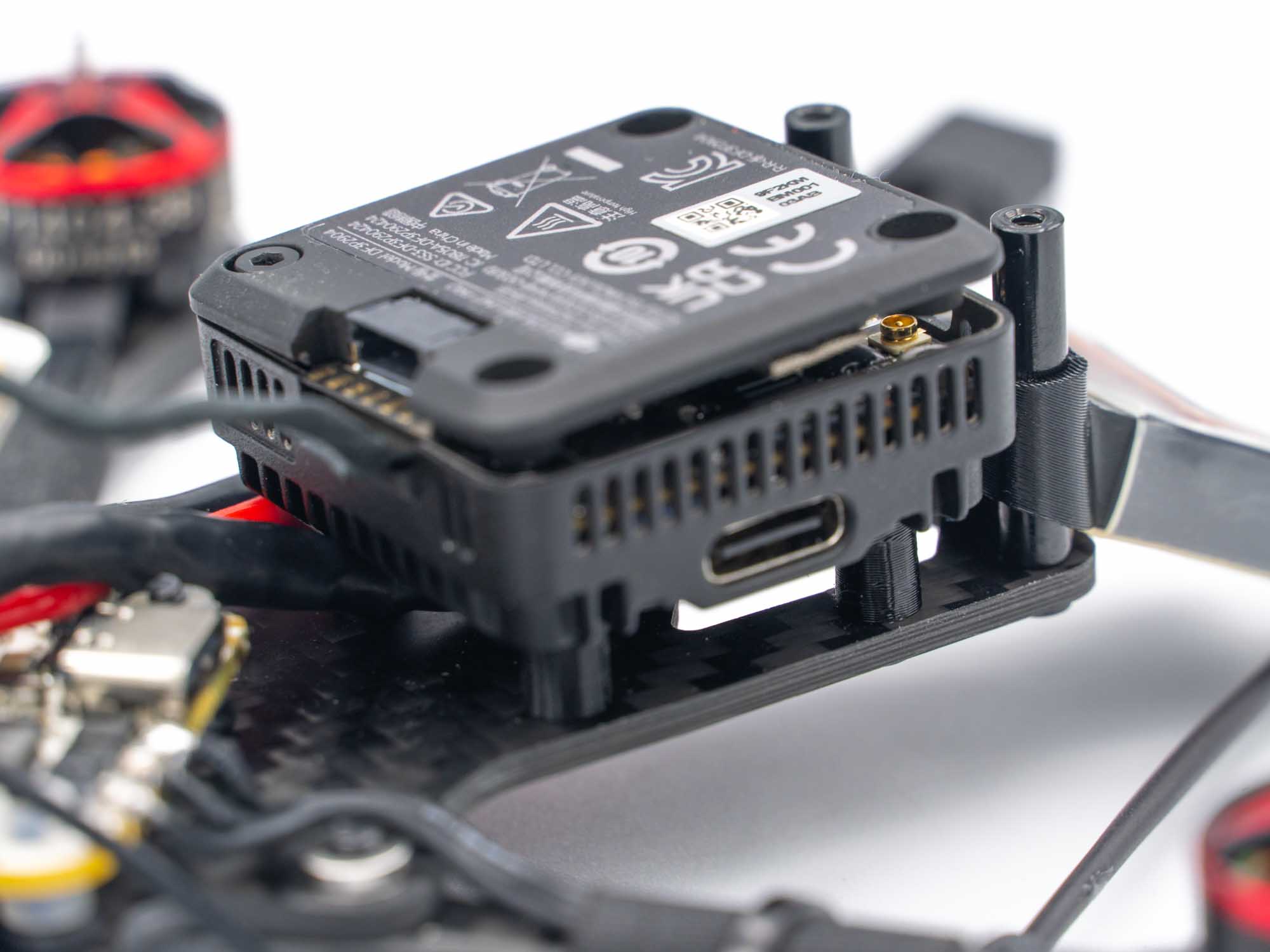
• Install the O4/O3 air unit
• Open the top cover and carefully remove antennas
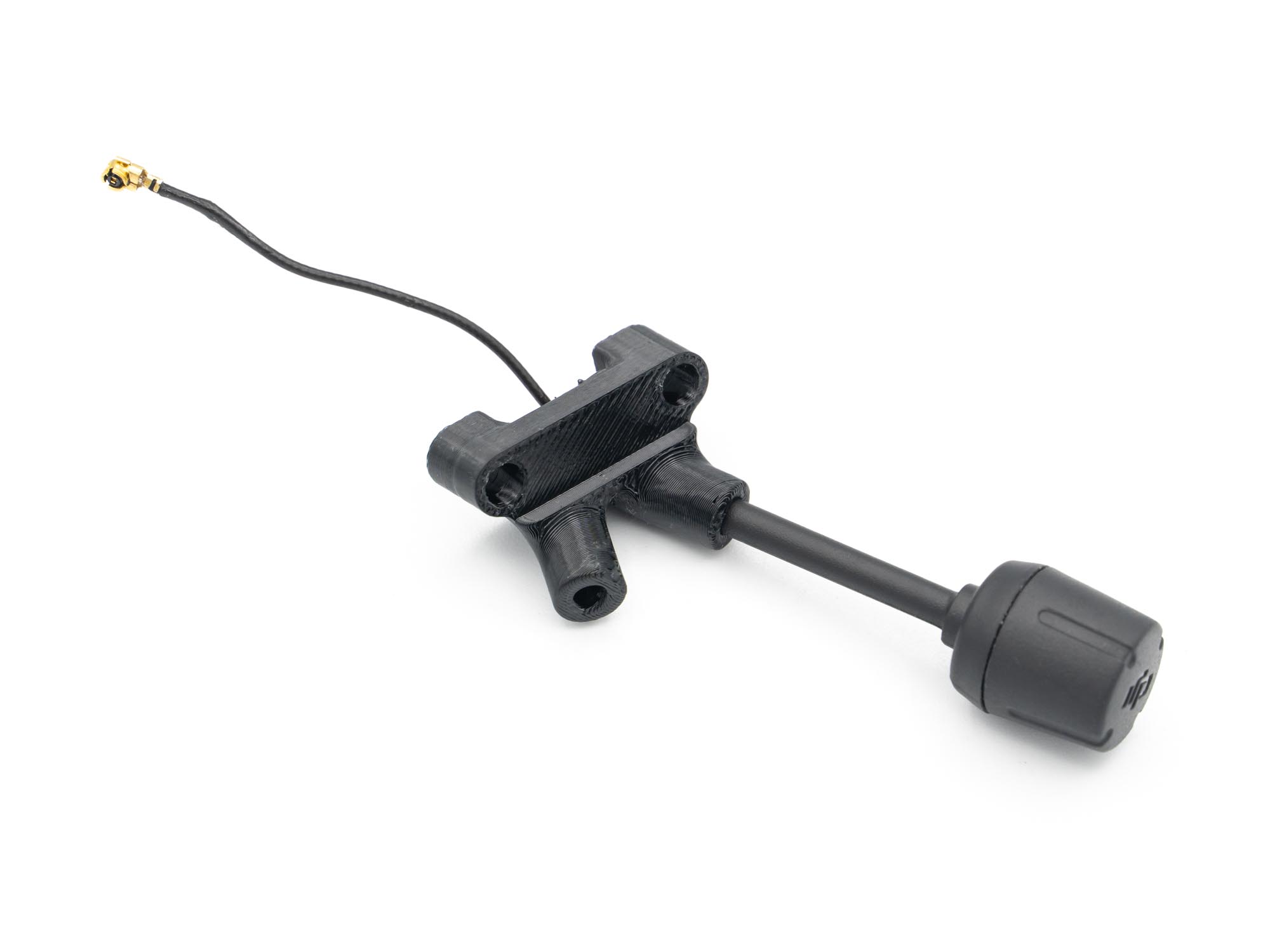
• Feed antennas through the TPU VTX antenna mount
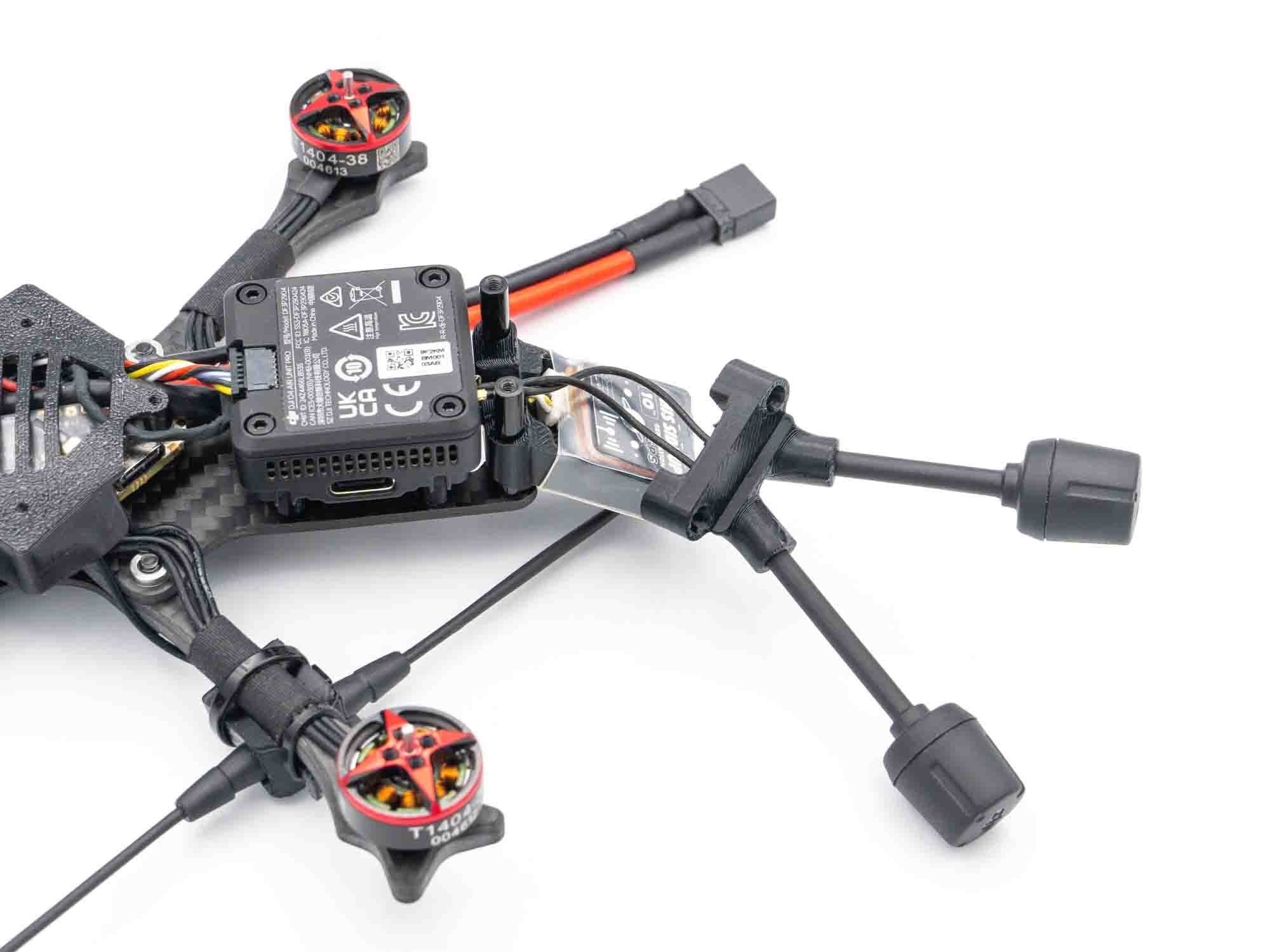
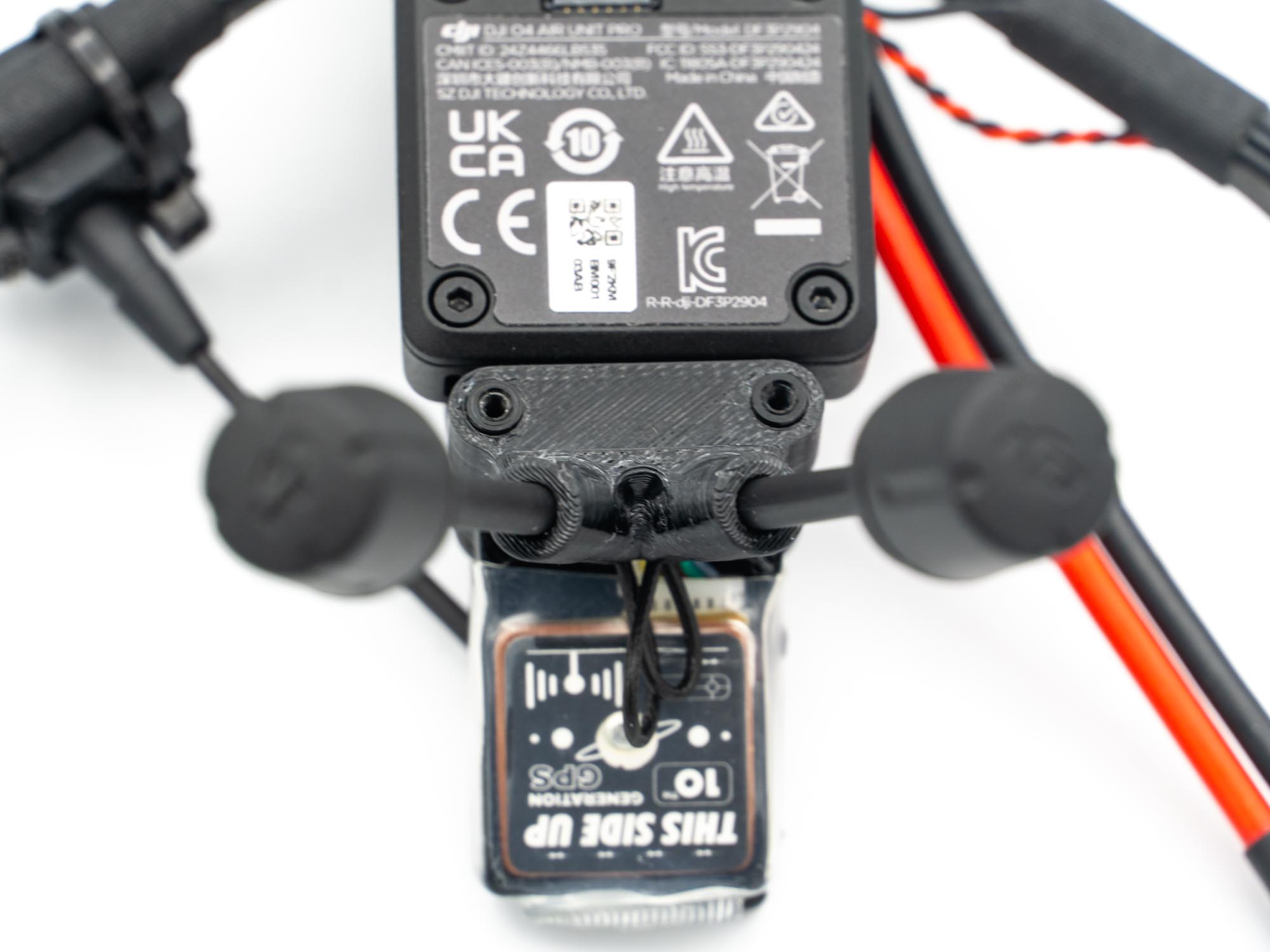
• Reconnect U.FL antennas
• Close the air unit
• Push the TPU antenna mount onto the rear standoffs
Step 20 – Camera Pod
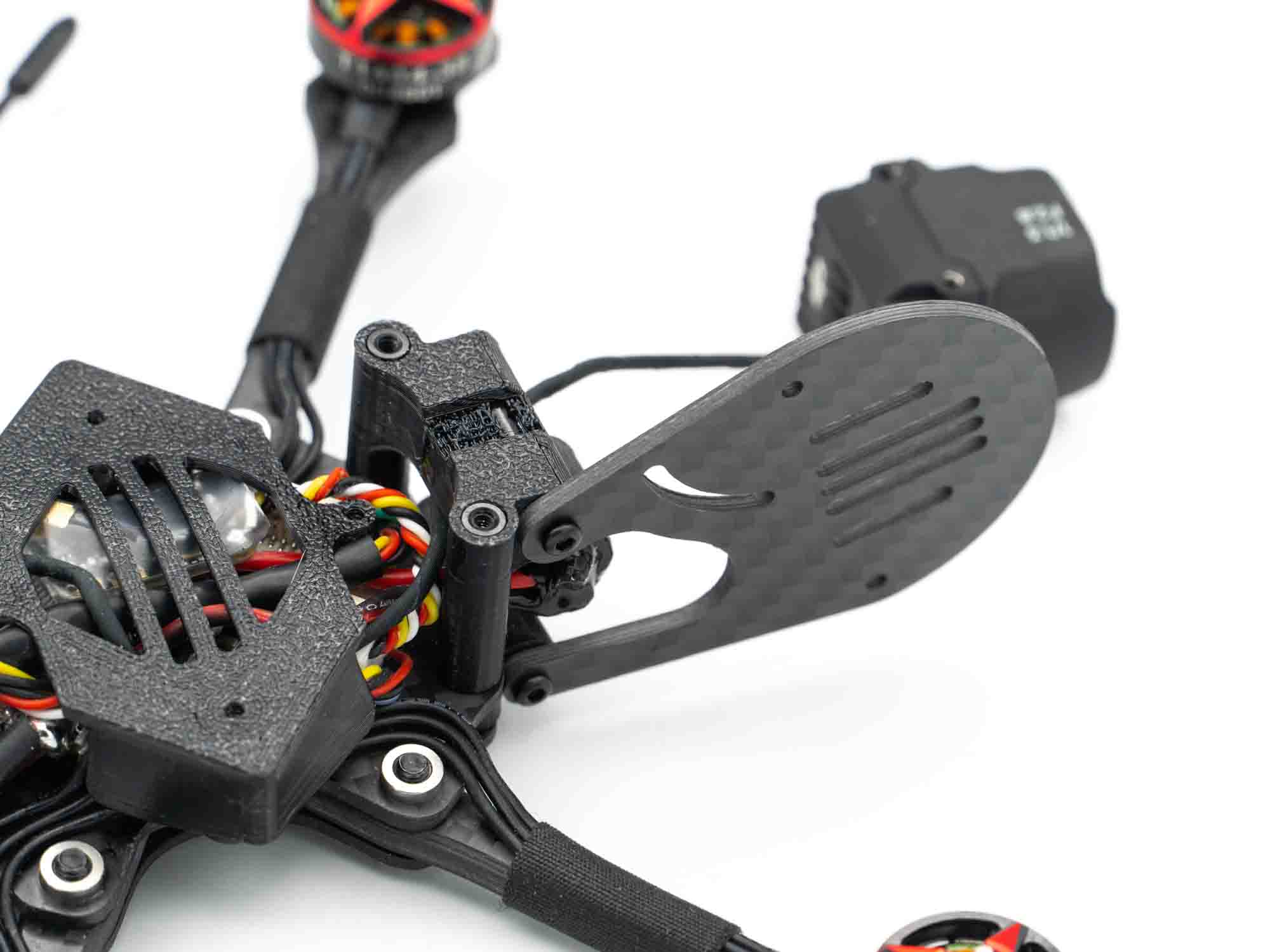
• Install the first camera pod plate using M2x8 mm screws
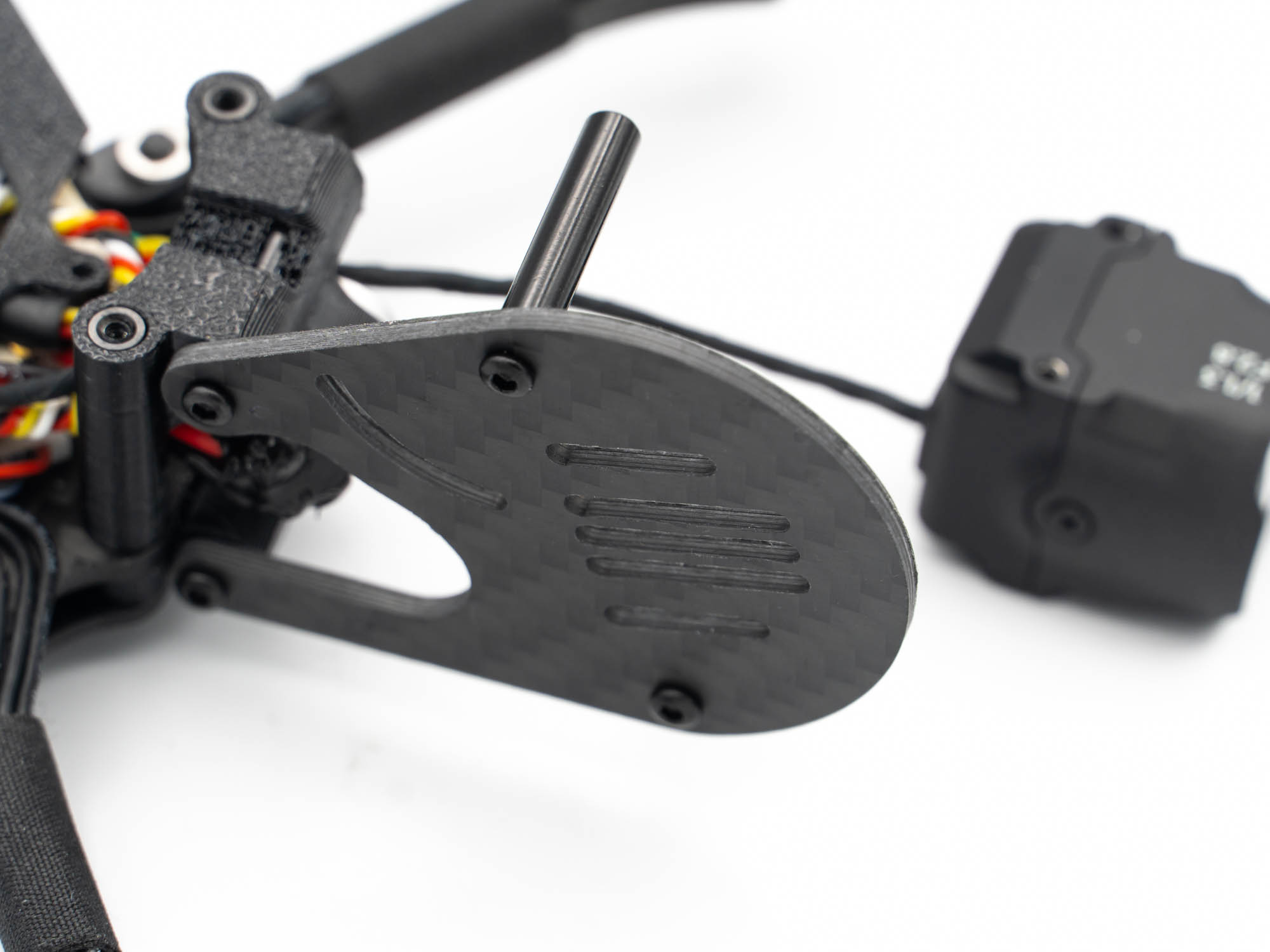
• Install two M2x20 mm standoffs
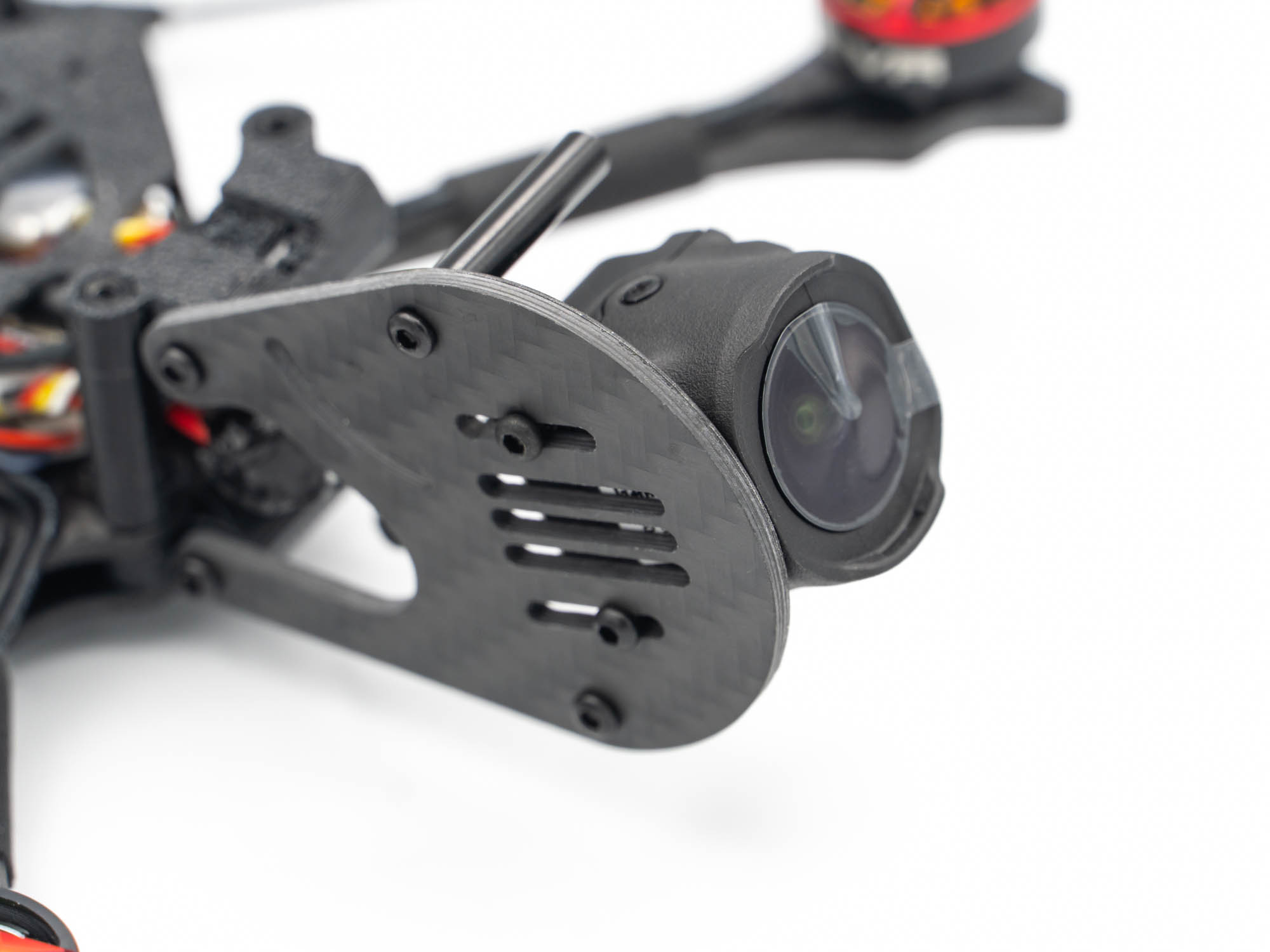
• Install the O4/O3 camera using M2x5 mm screws
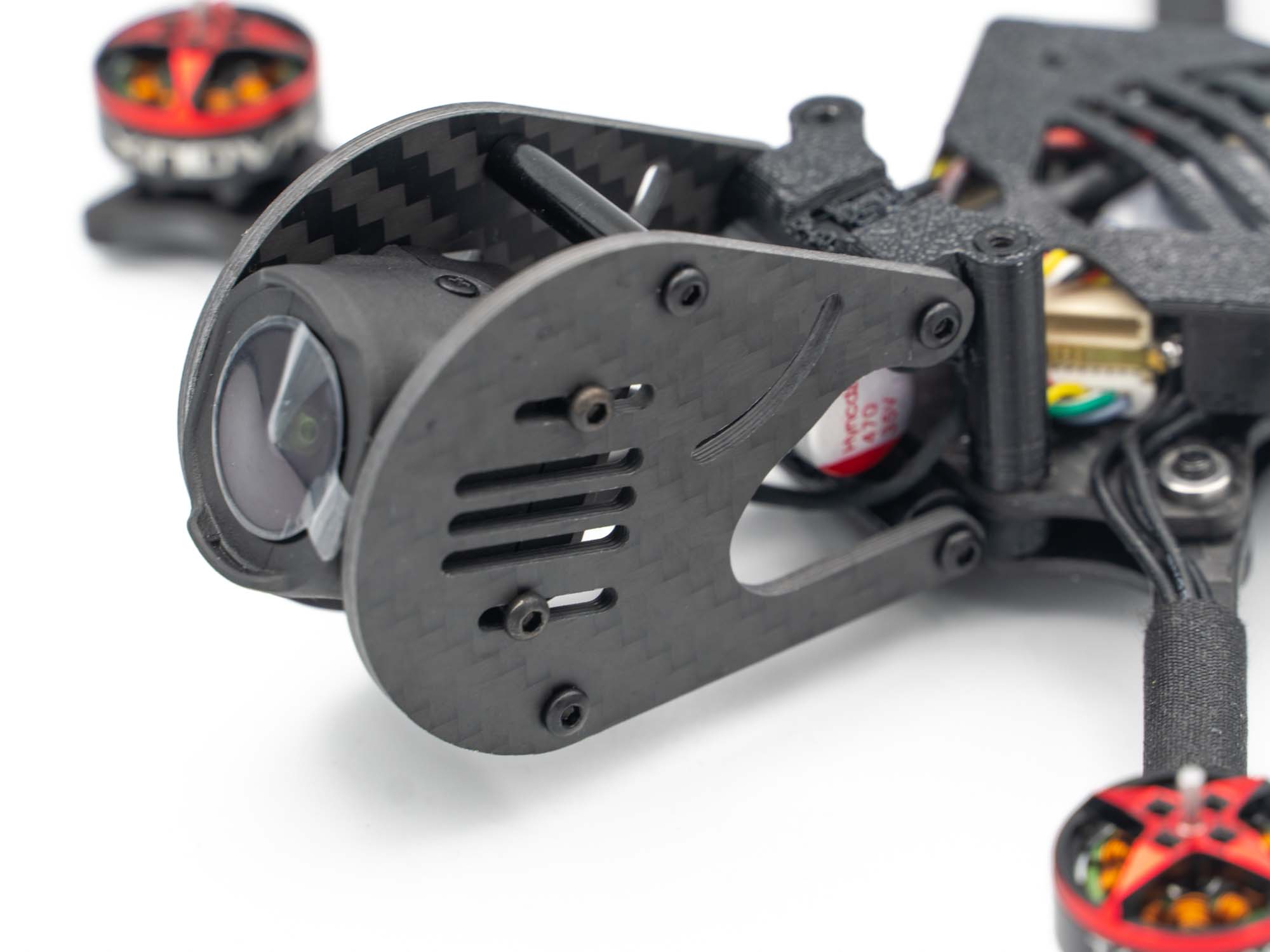
• Install the second pod plate
Step 21 – Top Plate
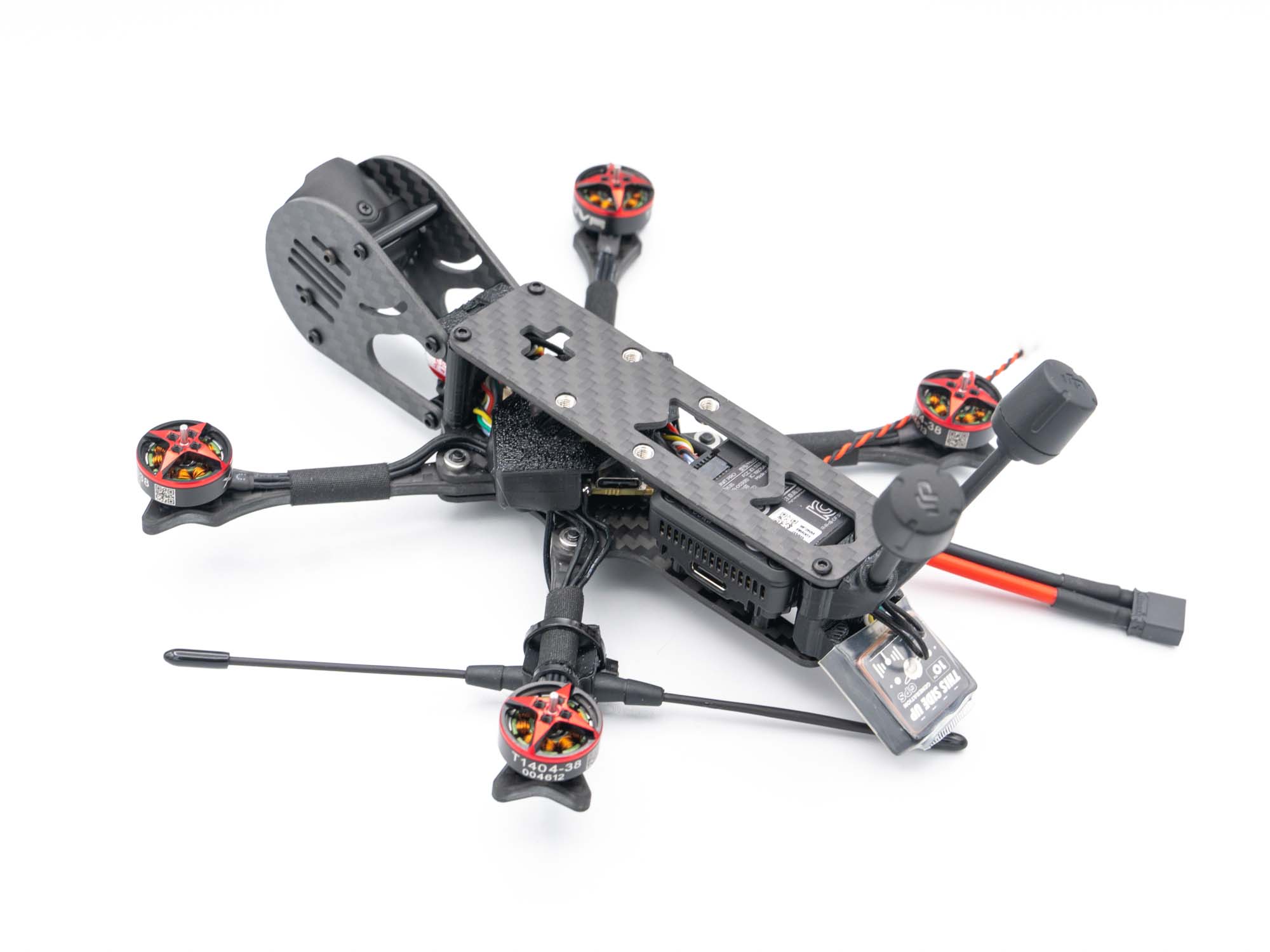
• Install the top frame plate
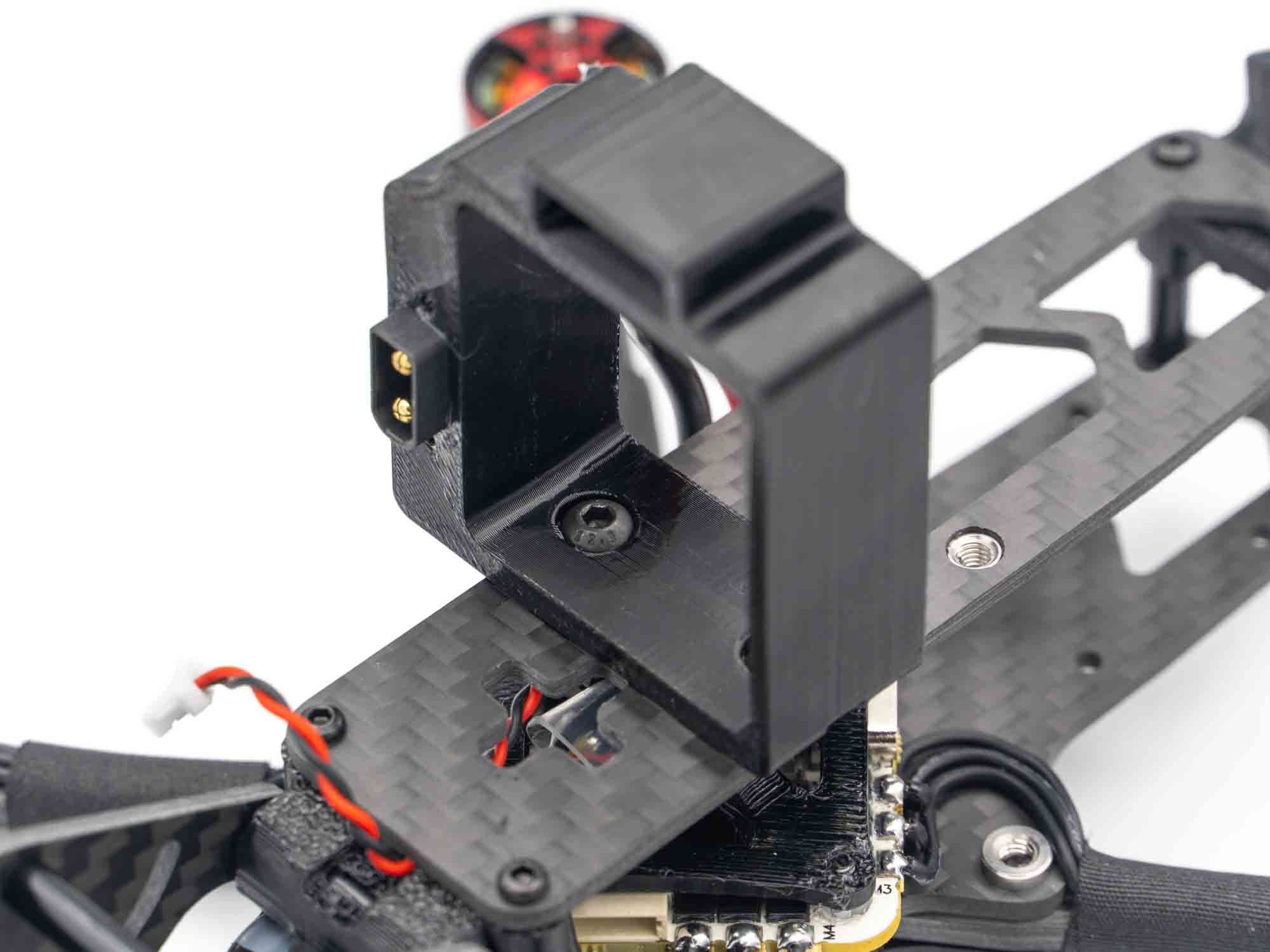
Step 22 – Battery Mount Options
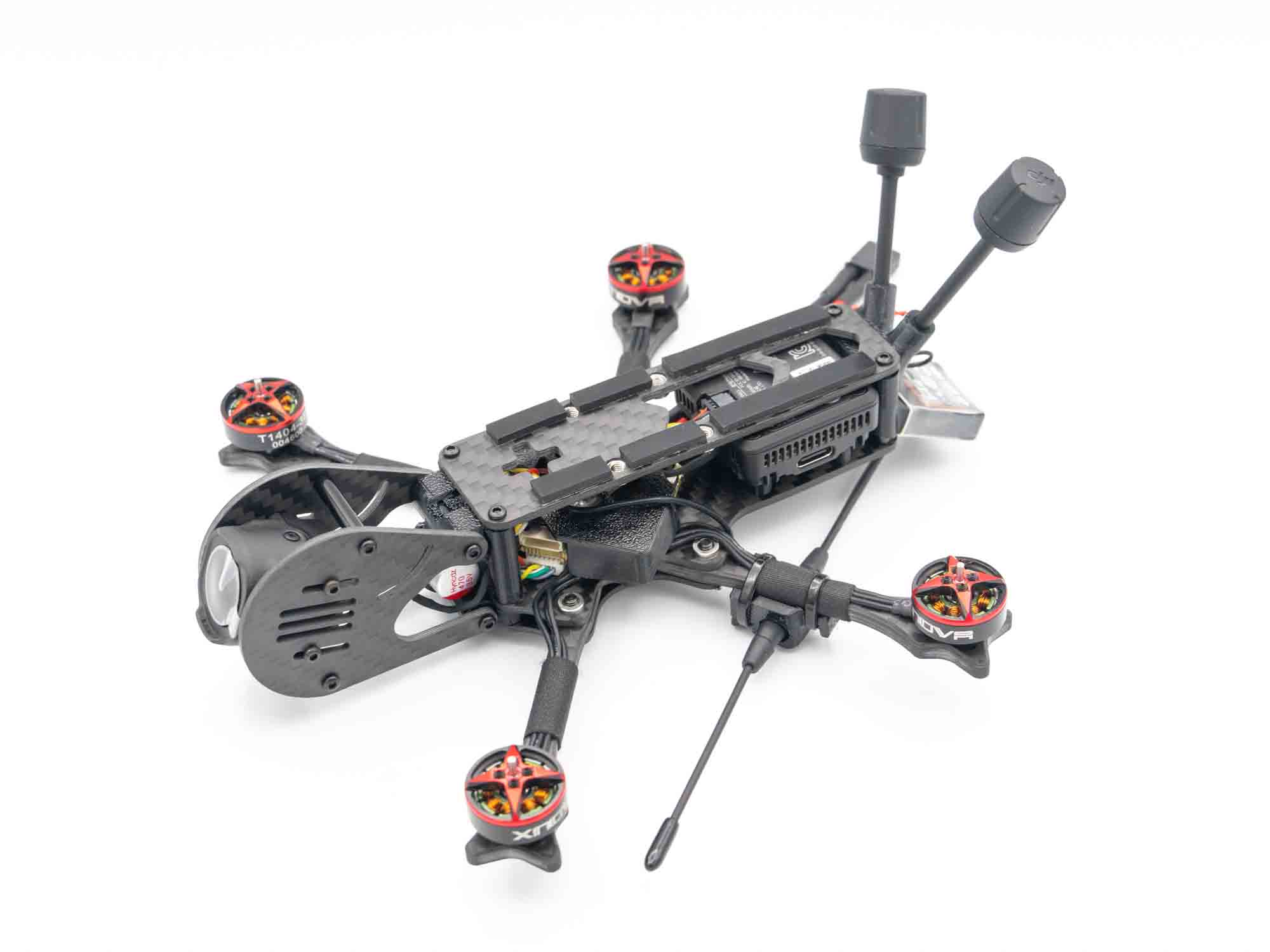
• Mixed batteries: Use the silicone battery pad
• Same batteries only: Use the TPU battery mount
TPU battery mount installation: • Solder XT30 to PCB plate
• Insulate with liquid rubber
• Screw into TPU mount using M2x8 mm screws
Step 23 – Prop Guards
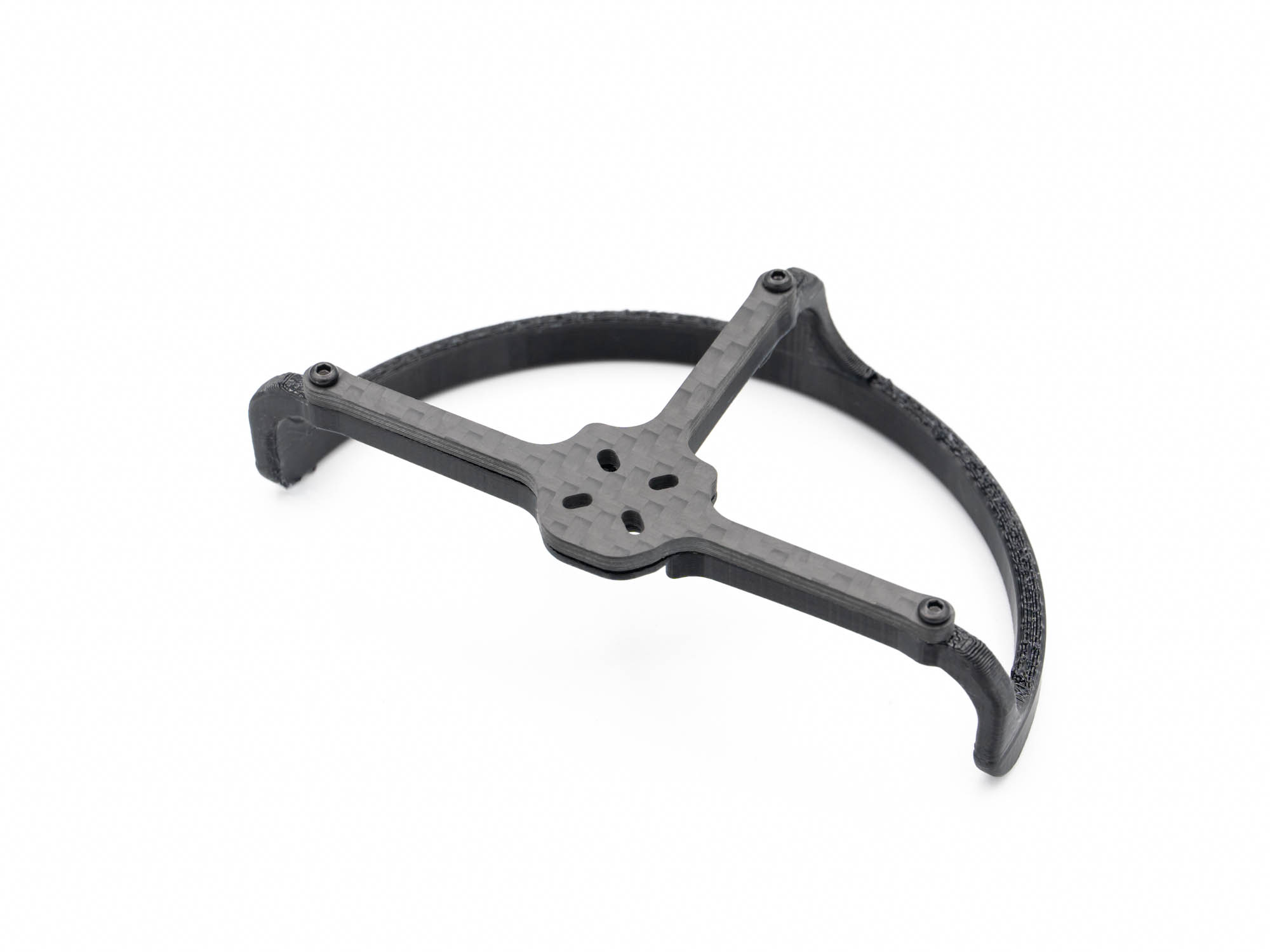
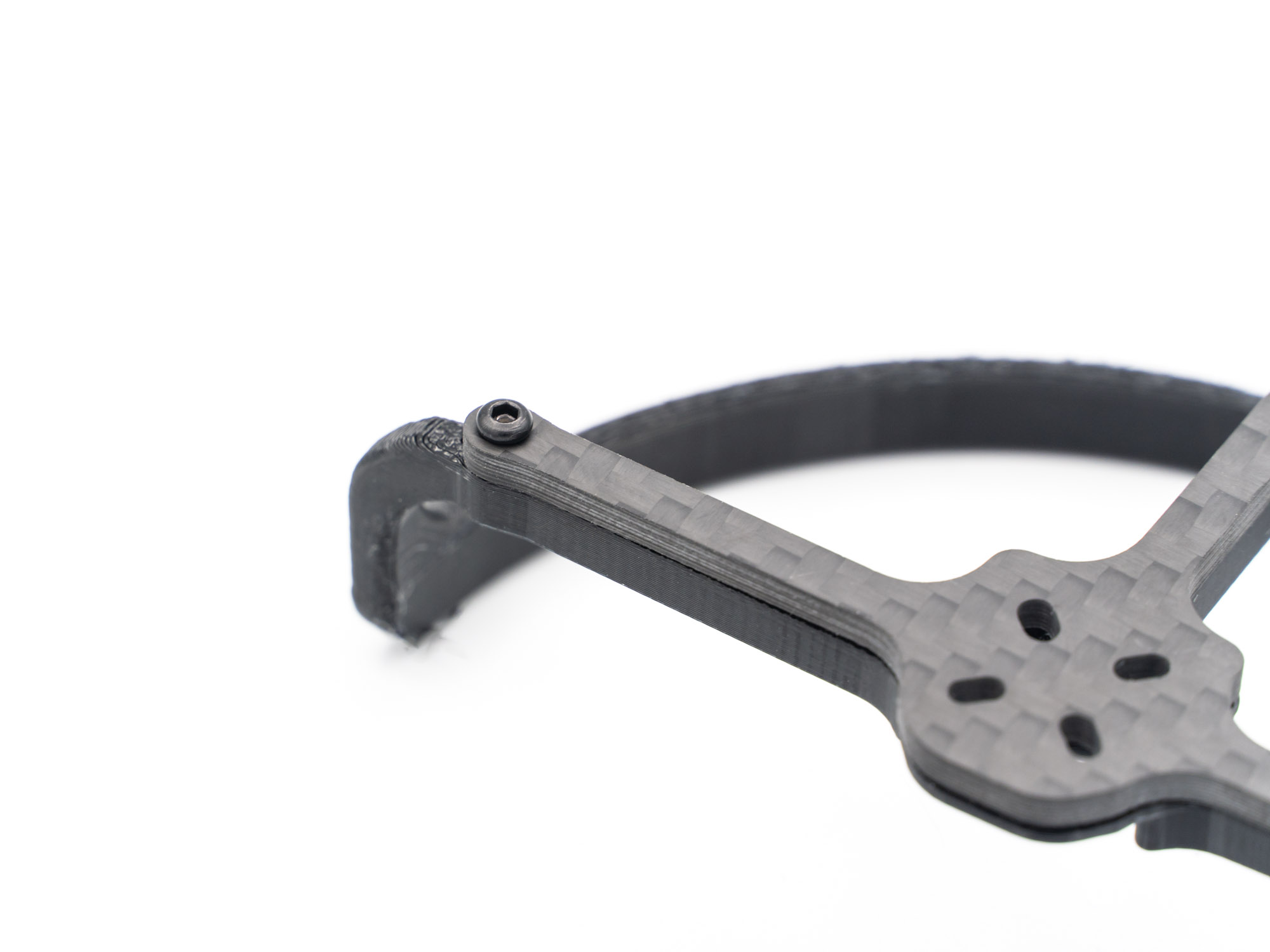
• Attach carbon parts to TPU prop guards using M2x7 mm screws
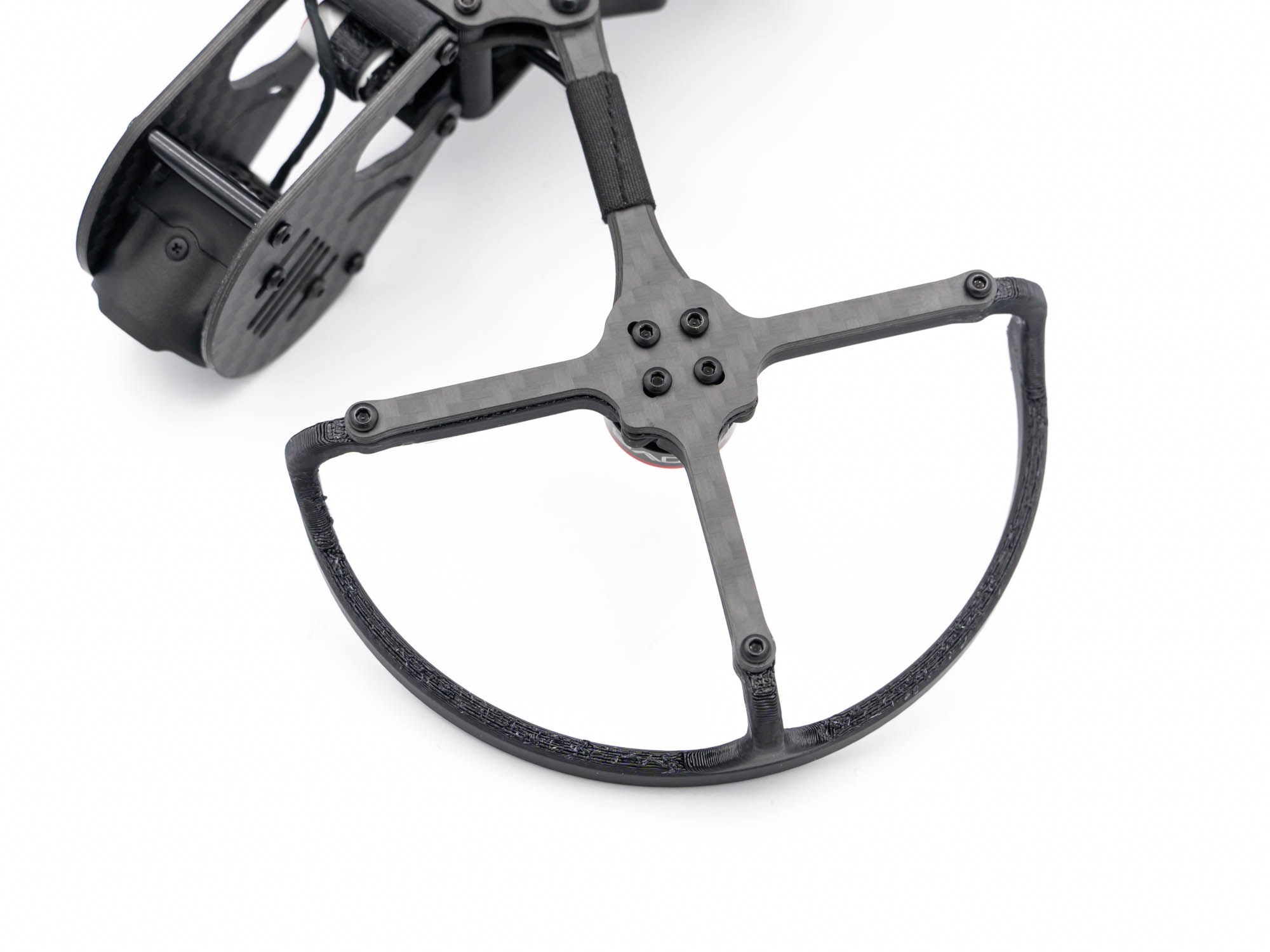
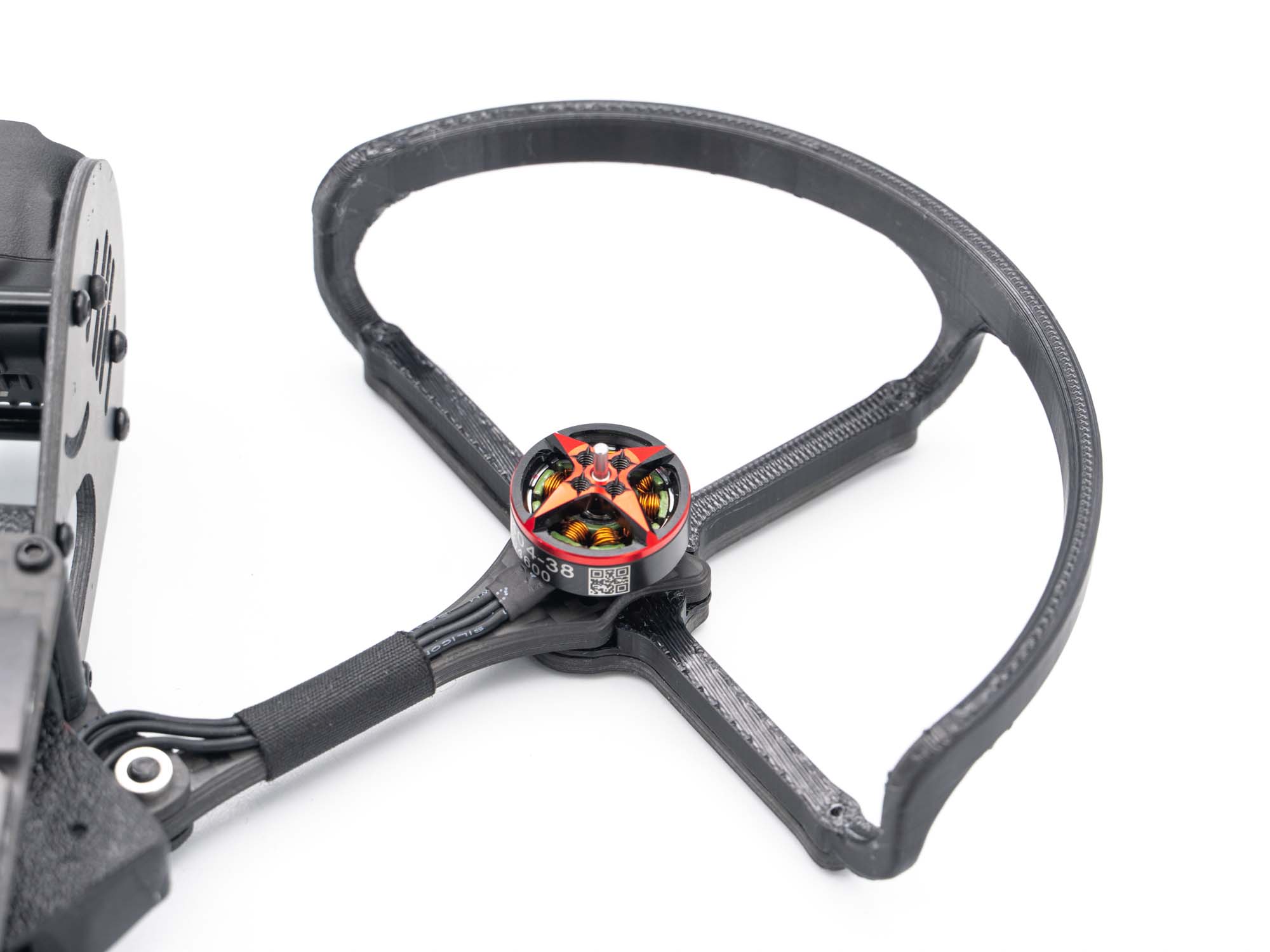
• Mount prop guards to the arms using M2x10 mm screws through motor holes
Finish
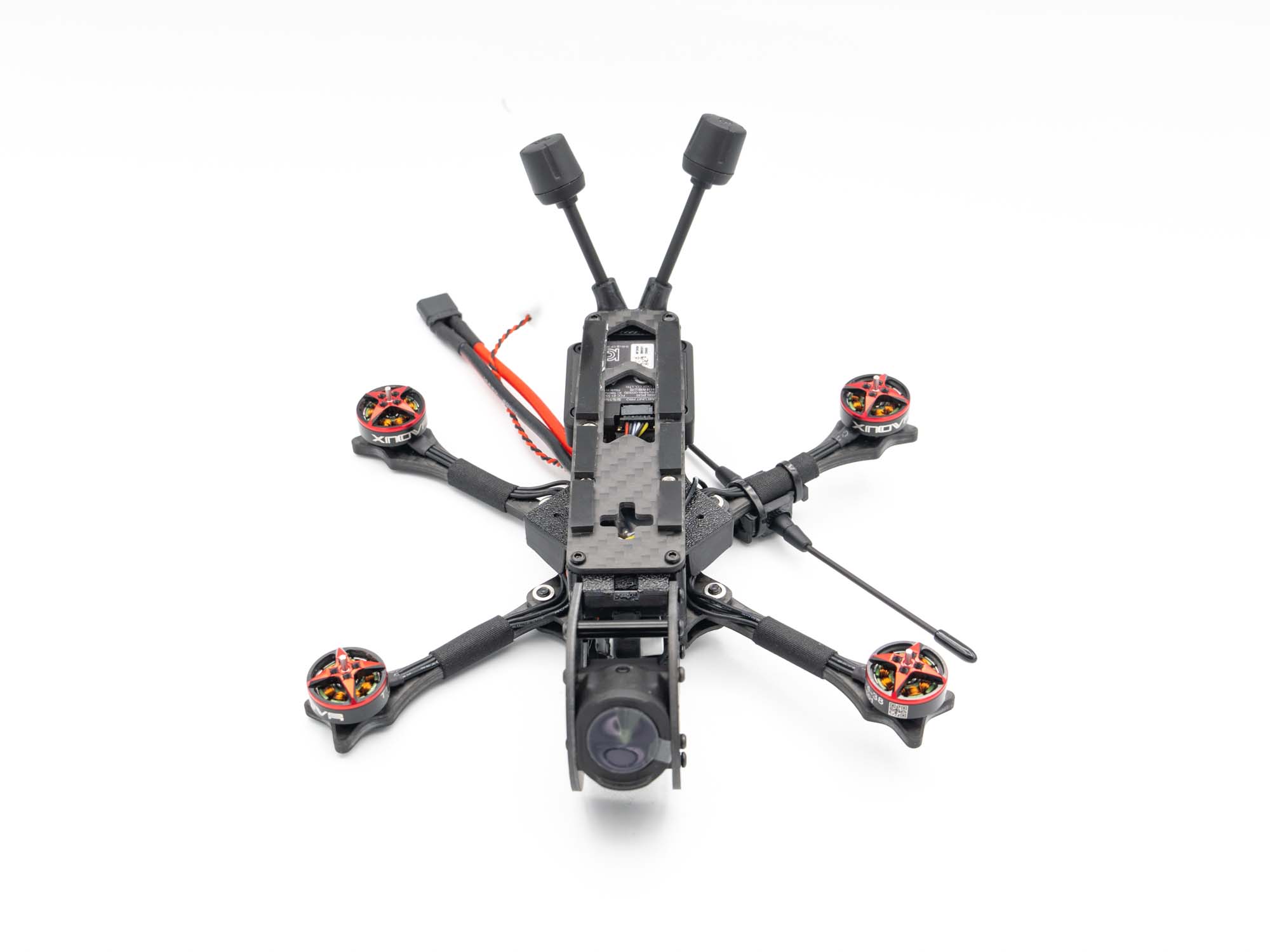
🎉 Congratulations! Your build is complete! All that’s left is Betaflight configuration, binding your transmitter and goggles, and installing propellers. You’re now ready to fly 🚀